The Sauté and the Fond
Three minutes of high heat, a splash of wine, and the pan does the rest — how browning and deglazing become a sauce.
The Crust That Isn't Just Colour
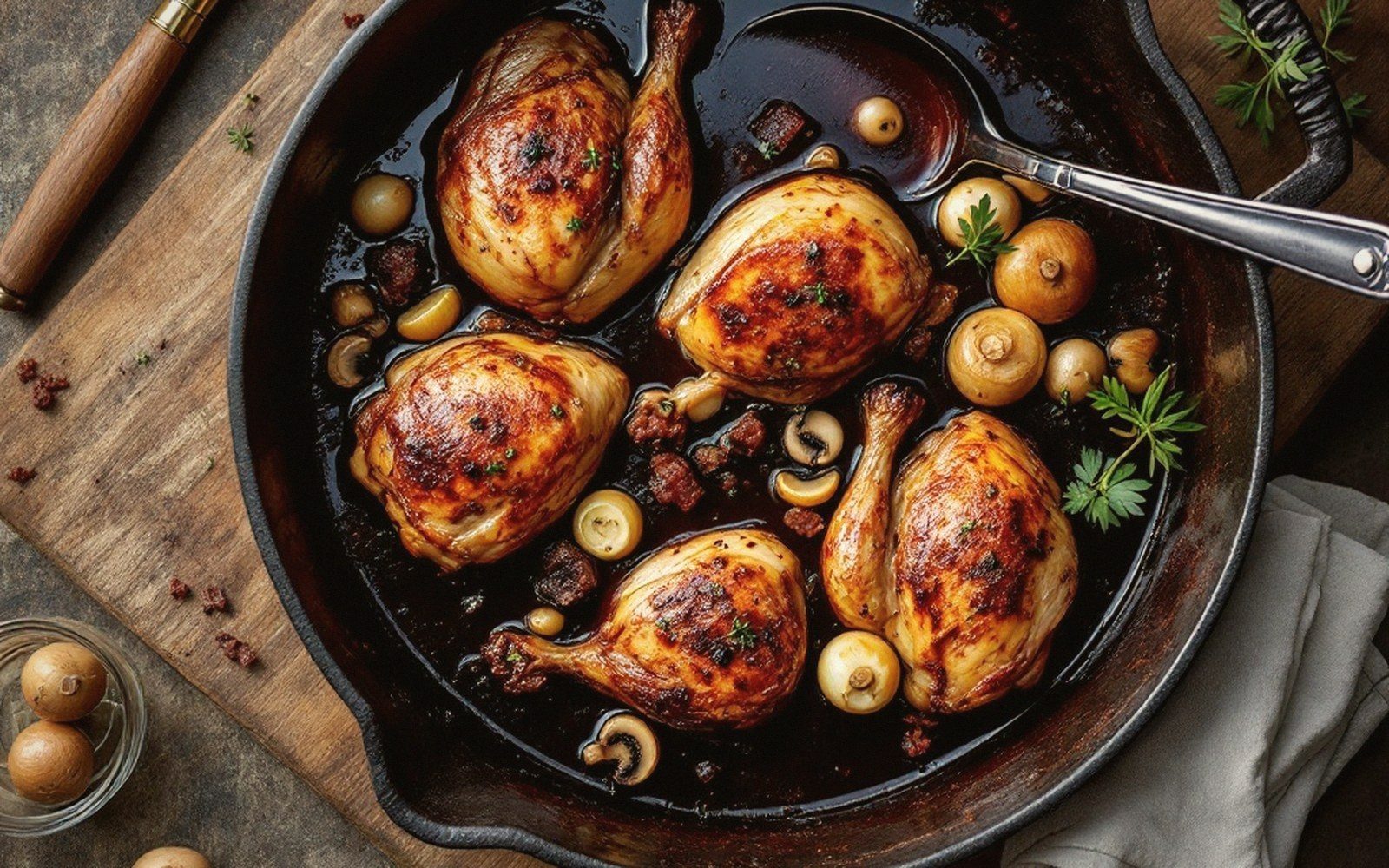
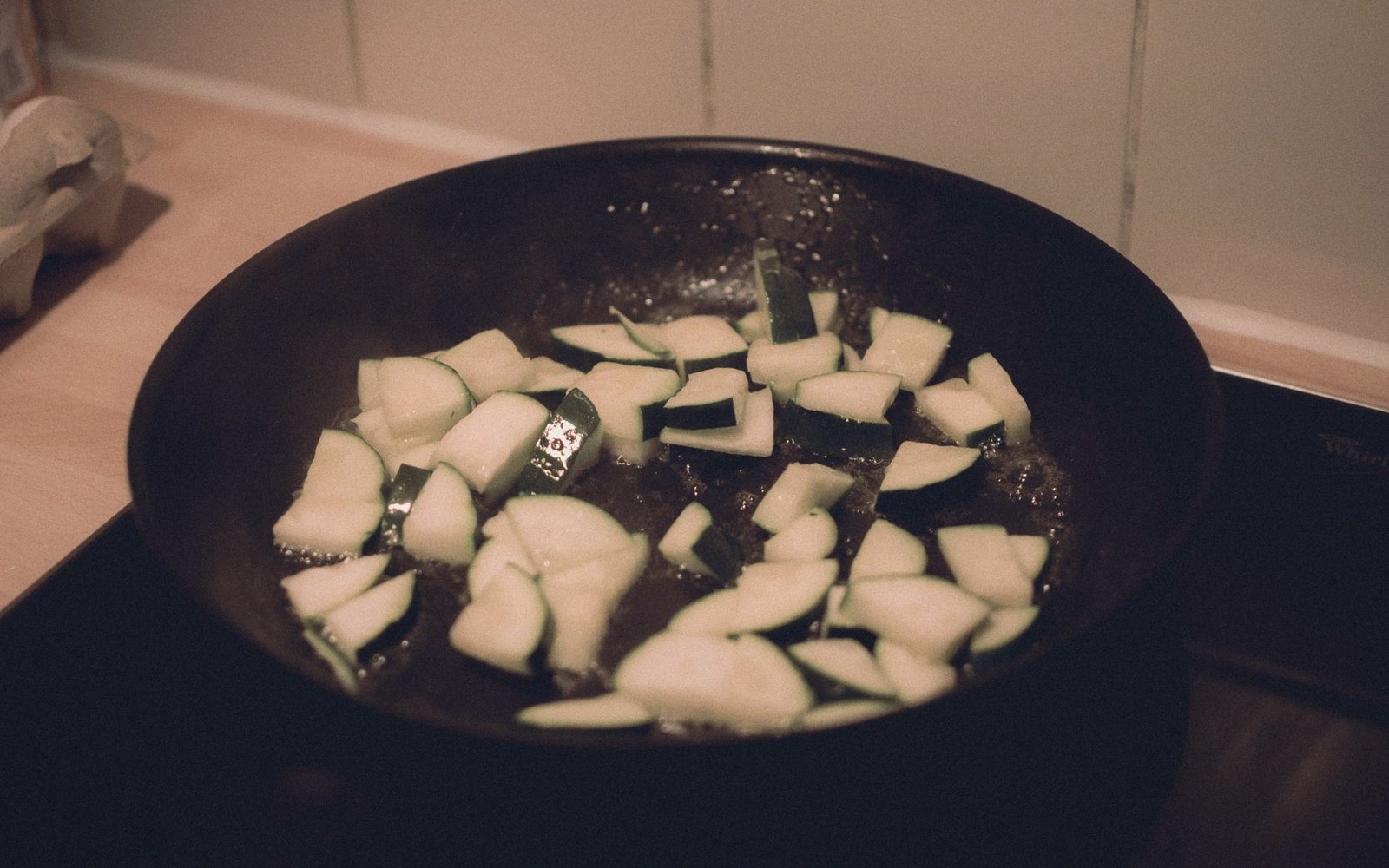
When a piece of chicken meets a hot pan with a little fat, two things begin immediately. The surface moisture flashes off as steam — and until it has all gone, the temperature at the meat's surface cannot climb above boiling point. Only once the surface is genuinely dry does the temperature spike, and the Maillard reaction begins in earnest: amino acids and reducing sugars rearrange into hundreds of new aromatic compounds, browning the meat and building flavour that simply does not exist in a poached or gently cooked bird. That is not caramelisation — caramelisation is the breakdown of sugar alone, and it runs hotter. Maillard reactions start around 140–150 °C and accelerate above that.
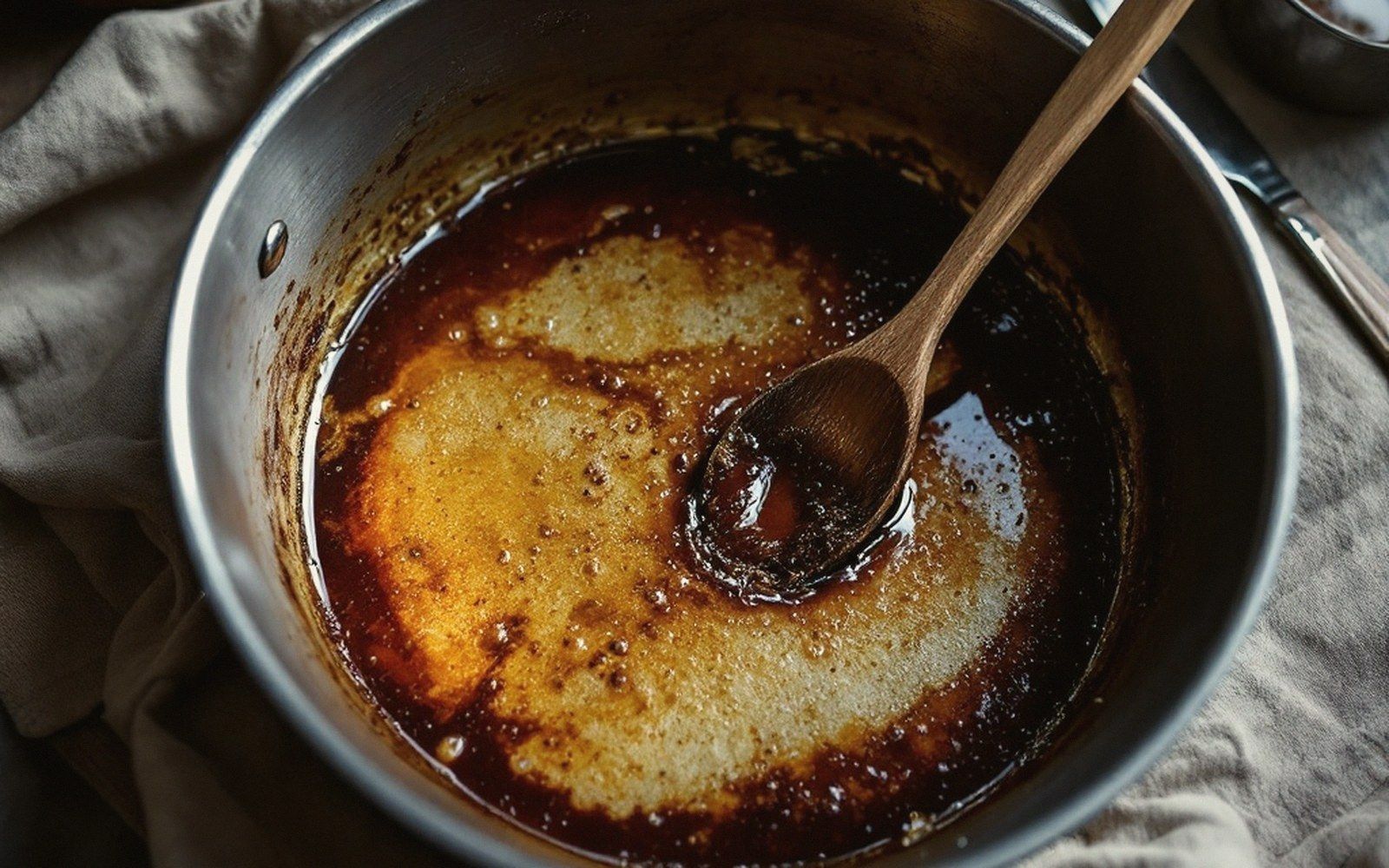
The fond (the French word, used here because no English equivalent is as precise — it means "bottom" or "base") is the concentrated residue left behind on the pan floor: proteins, sugars, and browned fats that have bonded to the metal. It looks like something that needs scrubbing off. It is, instead, the whole point of the exercise.
Heat, Fat and the Pan
The pan matters before anything else. A heavy pan — cast iron or stainless steel — holds its temperature when cold chicken goes in. A thin pan drops heat sharply, the surface temperature falls back below the critical threshold, and the meat sits in its own released moisture rather than browning. What you get is steam-cooked chicken with a pale, soft exterior that no amount of extra time will fully correct. The right pan doesn't just conduct heat; it stores enough of it to keep browning even as the protein cools the surface on contact.
Fat conducts heat from the pan to the meat more evenly than direct metal contact. Butter will burn before the Maillard reaction gets going properly; a neutral oil handles the temperature, with butter added later for flavour. Or use clarified butter, which has had its milk solids removed and will behave at high heat without burning.
Dry the chicken. Pat it. Any surface moisture you leave behind must first be driven off before browning can start, and that takes time and heat you are wasting. A dry brine applied hours ahead draws moisture to the surface and lets it evaporate, which is partly why that technique improves browning so directly.
Leave the chicken alone once it goes in. Moving it breaks the contact needed for the fond to build and tears the developing crust before it has set. The piece releases from the pan when the crust is ready — if it resists, it isn't done yet.
The piece releases from the pan when the crust is ready — if it resists, it isn't done yet.
Deglazing and the Pan Sauce
Remove the chicken when it reaches temperature, and rest it. The pan stays on the heat. Pour off excess fat if there is a great deal of it, but leave the fond undisturbed. Now add liquid — wine is traditional, stock equally useful, a combination of both very good — and as it hits the hot pan it boils instantly, lifting the fond from the metal. Scrape every bit up; this is not optional. The fond dissolves into the liquid, and those concentrated browned compounds are now in suspension, ready to become a sauce.
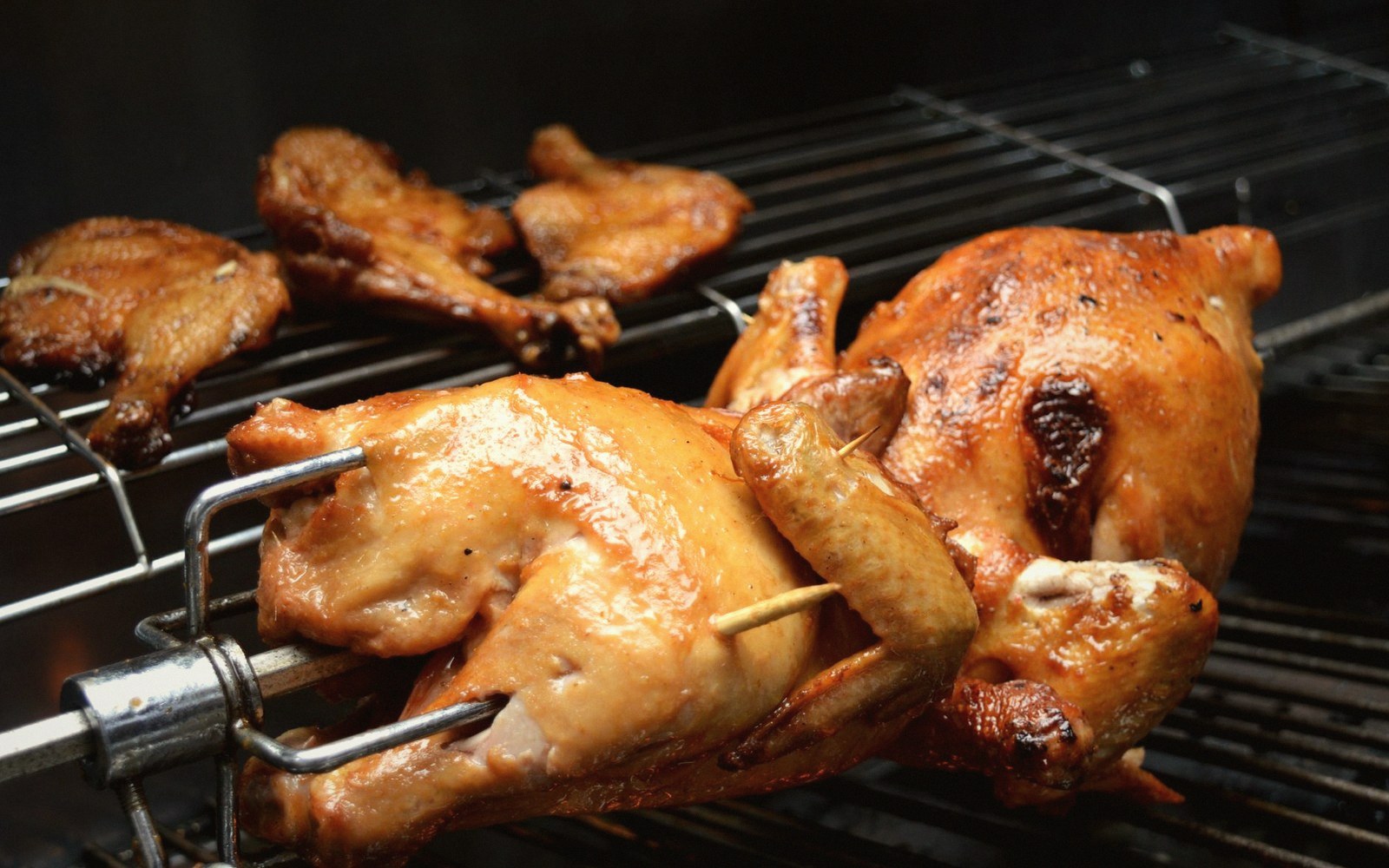
Reduce the liquid hard. Alcohol cooks off, the sauce concentrates, and the flavours compress. If you have used wine, its acidity brightens everything. Add a splash of stock if you want more body. A knob of cold butter swirled in off the heat — mounting the sauce — adds gloss and richness and slightly thickens it by emulsifying fat into liquid. Taste, adjust salt, pour.
The entire sequence — searing, resting, deglazing, reducing, mounting — takes perhaps eight minutes of active work and leaves one pan to wash. It produces a sauce that is specific to that bird, that fond, that moment. A jus made from a packet cannot do what this does, because it was never in contact with anything real. The chemistry is elementary; the result is not.
A Chicken in the Kitchen is an independent guide to cooking. It is not a restaurant, retailer or nutrition service.