Section 1 — Butchery
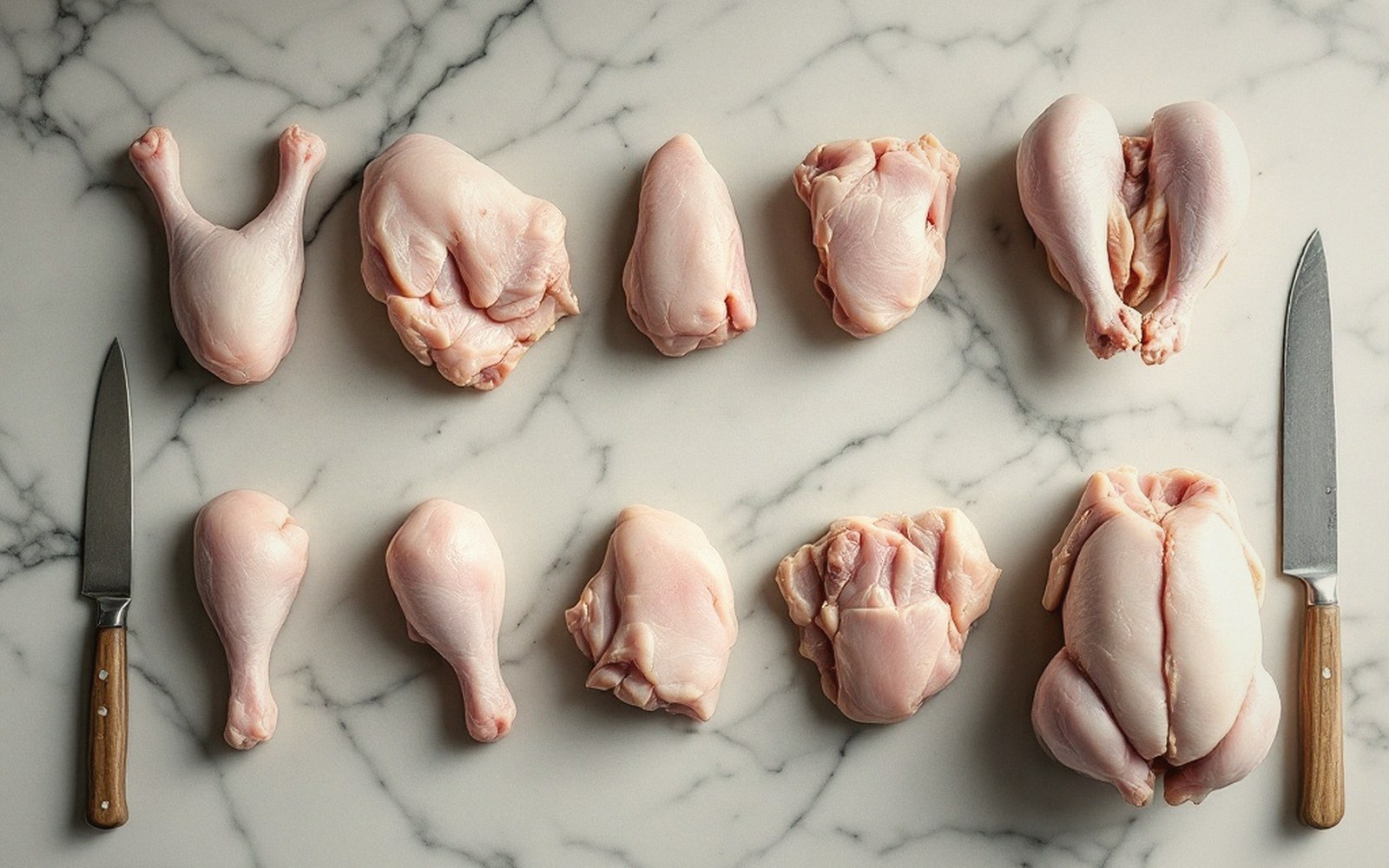
Eight cuts, and the joints between them.
The breakdown itself: where each joint separates, why the socket beats the saw, and the two oysters most people leave on the frame.
All 5 guides in Butchery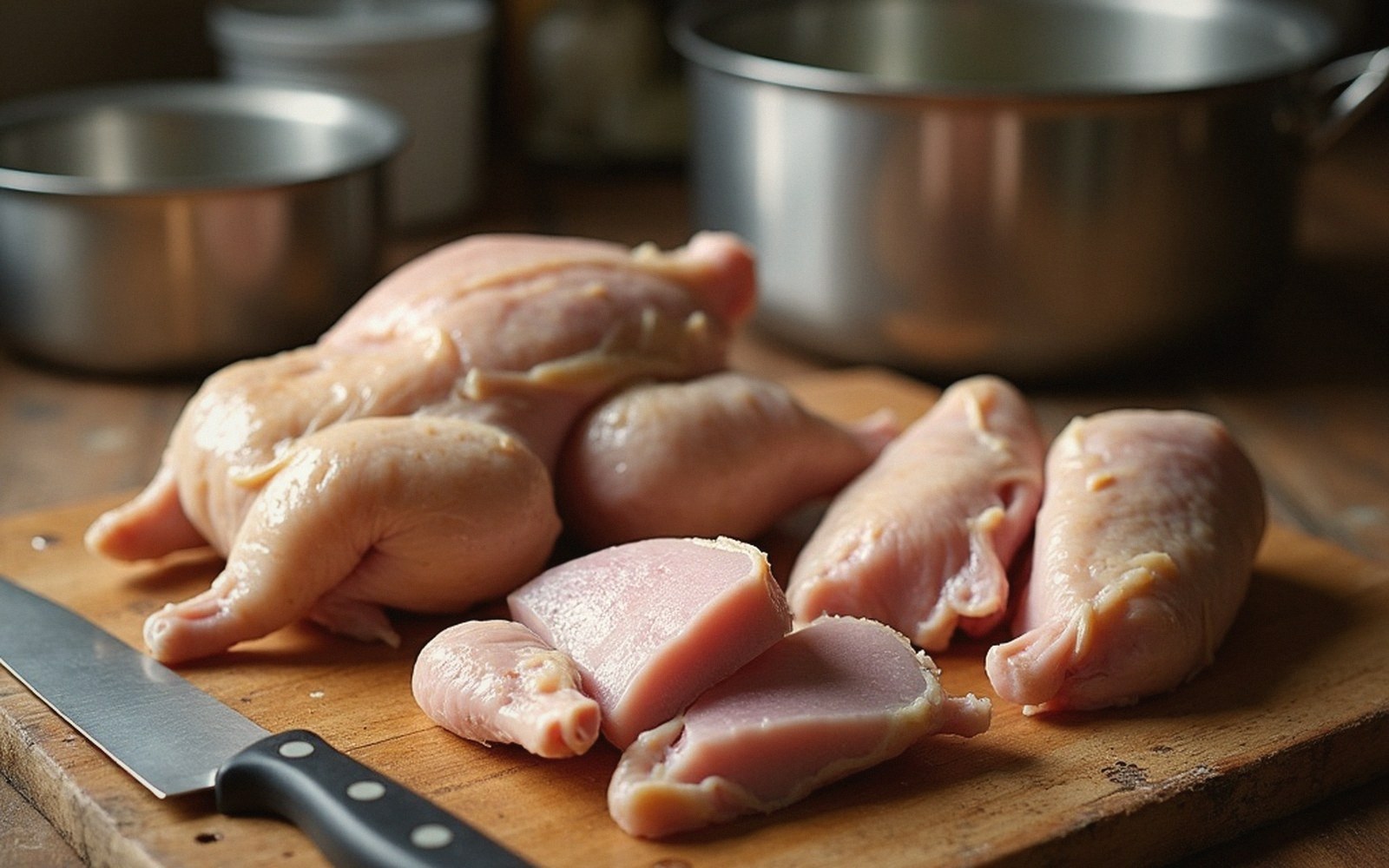
One bird, taken seriously
Anatomy first. Each piece starts from what the muscle actually is — how much it worked, how much connective tissue it carries — and the cooking follows from that.
Start with Eight Cuts, One CarcassEight pieces and the frame. The knife never went through bone.
A chicken is not one ingredient. Breast and thigh sit inches apart and behave nothing alike, the wing is three joints pretending to be one, and the frame that holds them together is where the stock comes from. Everything here is filed by what you are doing to the bird — taking it apart, heating it, drawing the last of it out in water — and every technique is explained from the anatomy that makes it necessary.
Section 1 — Butchery
The breakdown itself: where each joint separates, why the socket beats the saw, and the two oysters most people leave on the frame.
All 5 guides in Butchery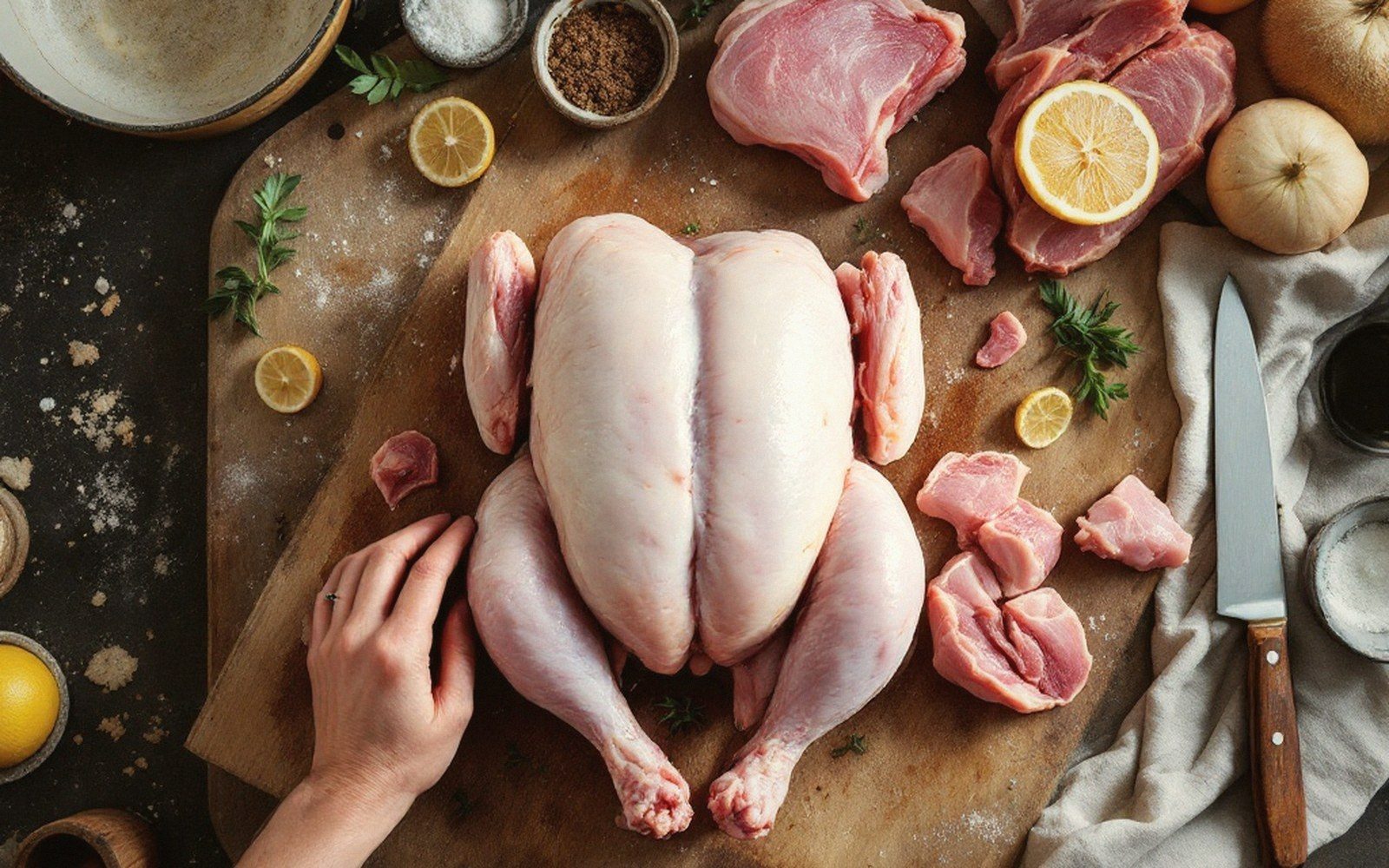
Section 2 — Heat
Proteins set in stages at specific temperatures, connective tissue yields much later, and water leaves throughout. The sequence, and the conventional figures that go with it.
All 6 guides in Heat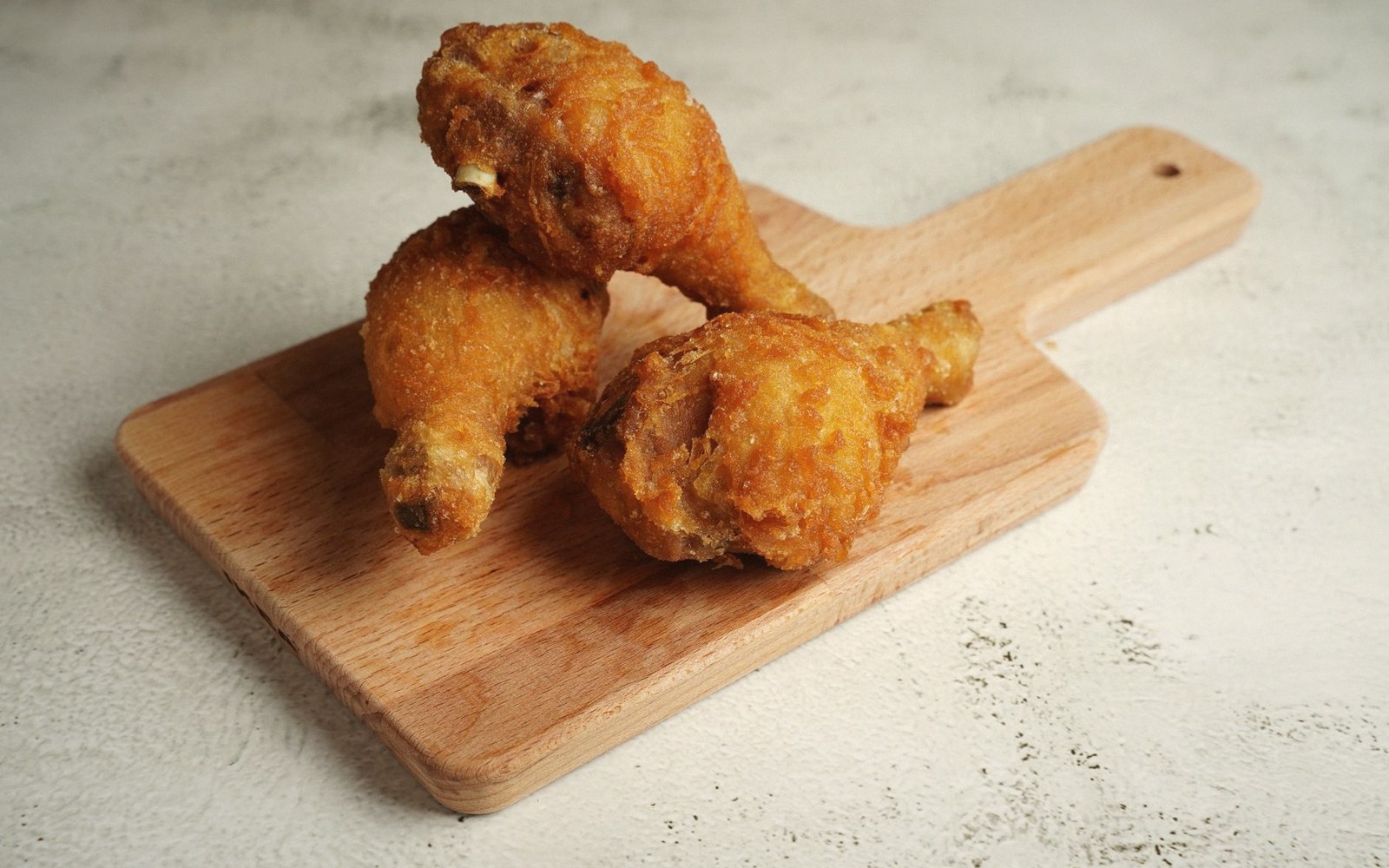 Photograph: Kai-Chieh Chan / Pexels
Section 3 — Stock
What is actually being extracted from bones, skin and wing tips, over what timescale, and at what surface temperature.
All 5 guides in Stock Photograph: Diana ✨ / Pexels
Section 4 — Preparations
The classics read backwards from the animal: a sauté because jointed pieces cook at their own pace, a poached poule because an old bird is mostly collagen.
All 6 guides in Preparations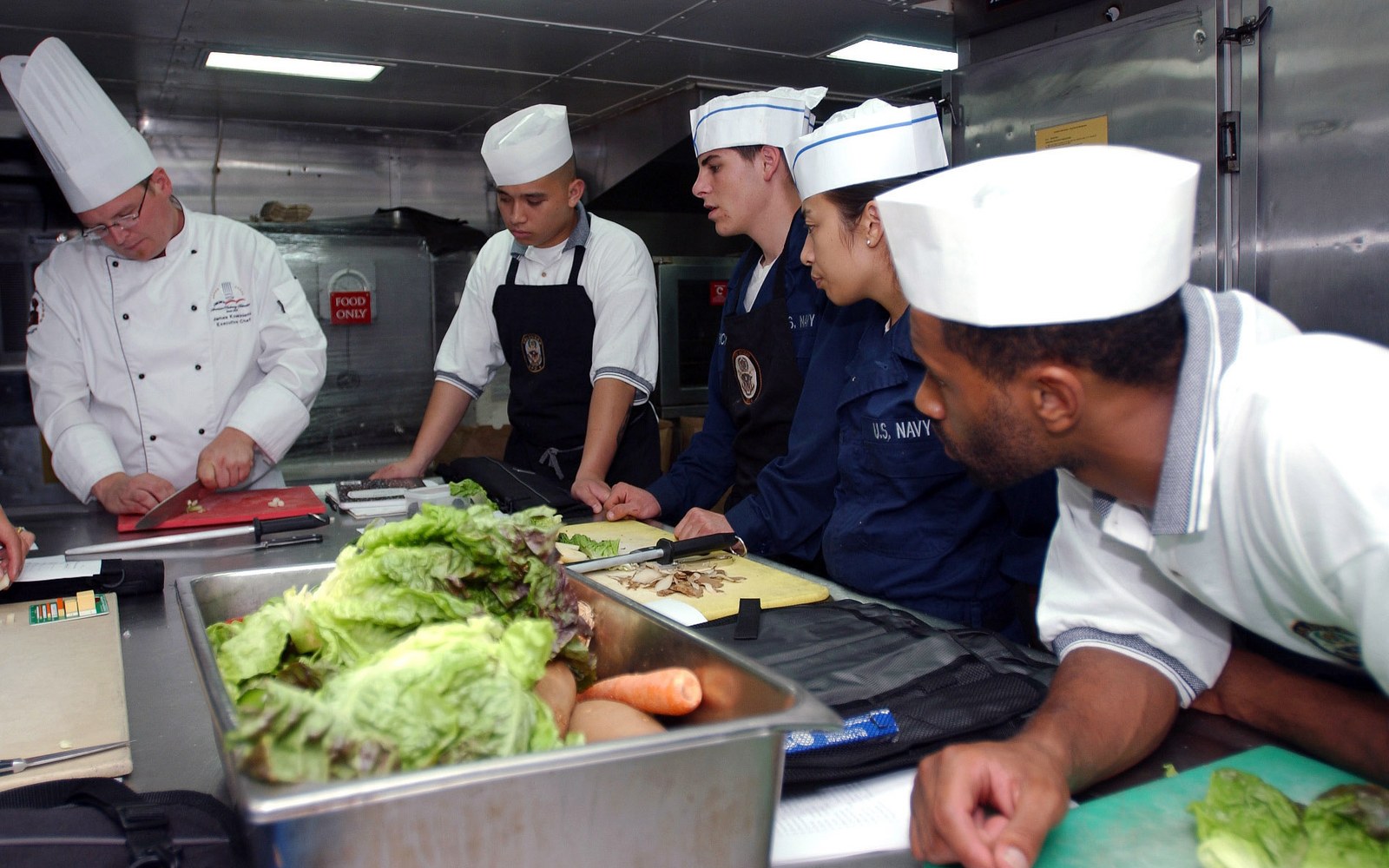 Photograph: US Navy 070714-N-9150R-055 Culinary specialists watch as Executive Chef James Koskiniemi demonstrates his knife-handling skills aboard amphibious assault ship USS Boxer (LHD 4) / Wikimedia Commons
Section 5 — The Bench
Four tools and what each one is for. A flexible knife follows bone, mass in a pan holds temperature, a probe measures what other tests only imply.
All 4 guides in The BenchSupported by
Every guide is filed against a part of the animal or a stage of heat, so a question about dry breast and a question about a tough leg land in different places for the same reason.
Supported by
Conventional figures, stated plainly. Poultry is cooked to a safe internal temperature of 165 °F (74 °C), measured in the thickest part of the thigh away from bone.
Supported by
Twenty-six pieces across five sections. No dropdown required.
Eight cuts, and the joints between them
What muscle does as the temperature climbs
The carcass is the second half of the bird
Classics that exist because of the anatomy
Knives, pans and the few tools that matter
Supported by
One from each of the working sections.
Two wings, two thighs, two drumsticks, two breasts — and the oysters most people leave behind.
Proteins denature at staggered temperatures: firming, then squeezing out water, then collagen finally yielding.
Bones, skin and the bits nobody eats become the most useful thing in the kitchen.
Browning, deglazing and the pan sauce built in the same pan.
Supported by