Poached, and the Broth as the Point
When you poach a chicken, you are making two things at once — and the broth is the one that earns its keep.
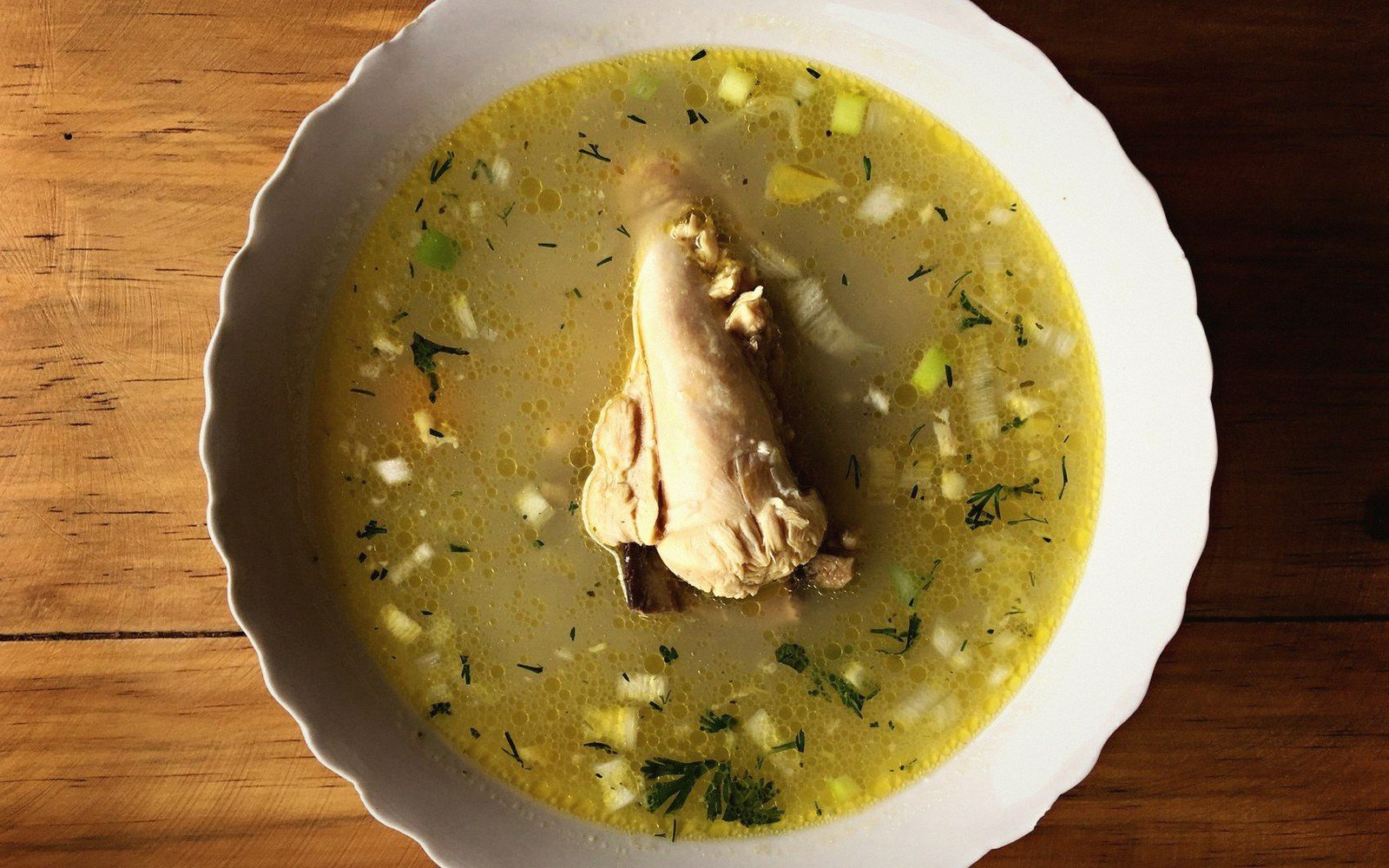
The Liquid Is Never Neutral
Drop a bird into cold water, bring it up slowly and the muscle proteins release a fine cloud of dissolved solids — flavour, collagen, a little fat — into the surrounding liquid. The chicken absorbs the aromatics you have added; the aromatics and the chicken together become something neither was alone. This is the logic that distinguishes poaching from every other preparation: the cooking medium is also the product.
The aromatics are not decorative. A halved onion browned cut-side down in a dry pan, a few parsley stems, a bay leaf, a stick of celery, peppercorns — these are not a bouquet to be discarded. They build the broth while the bird cooks in it. The same process that keeps the muscle tender also concentrates the liquid, gently, into something you will want to eat.
Because the breast and the thigh cook at different rates and to different ideal temperatures, poaching the whole bird calls for some attention. Breast meat is done earlier; if the liquid is kept at a bare shiver — somewhere well below a simmer — the window between an acceptable breast and a ruined one widens considerably. A rolling boil is the enemy of both the meat and the clarity of the broth.
Once the bird is cooked, lift it out and rest it while you taste the liquid. This is where the dish is finished or failed. Strip the meat while it is still warm — it pulls cleanly from the bone — then return the carcass to the pot and let it simmer on for another thirty minutes. You will taste the difference. Those bones still have work to do.
Once the bird is cooked, lift it out and rest it while you taste the liquid.
Serve the broth alongside, or beneath, or with noodles and fresh herbs pooled in it, or reduce it toward a sauce. What matters is that you treat it as a first-class output. The chicken poached in water that is then thrown away is a missed opportunity; the chicken poached in liquid that becomes the meal is a different — and considerably better — thing.
A poached bird is quieter than a roasted one. It requires patience rather than heat. But the cook who finishes with two results from one bird has understood what the preparation is actually for.