Salt, Early
Seasoning the night before is not a matter of preference. It is a matter of physics.
What Salt Actually Does Given Time
Sprinkle salt on a chicken breast and walk it straight to the pan, and you have flavoured the surface. The muscle underneath is untouched. Salt dissolves in the thin film of moisture on the surface, draws more liquid out by osmosis, and sits there — useful, but shallow.
Give that same salt thirty minutes and something different begins. The brine that formed on the surface starts to move back in, carrying dissolved salt with it. Proteins along the way begin to denature slightly and loosen their structure, creating more space for water to be retained rather than expelled. Leave it overnight, uncovered in the refrigerator, and the salt has penetrated the muscle deeply enough to change how it behaves under heat.

The technical term is water-holding capacity — the muscle fibre's ability to grip moisture as proteins contract during cooking. Salt increases it. A chicken that has been salted well ahead will lose measurably less juice when it hits a hot pan or a hot oven than one seasoned at the last moment. The difference is not subtle.
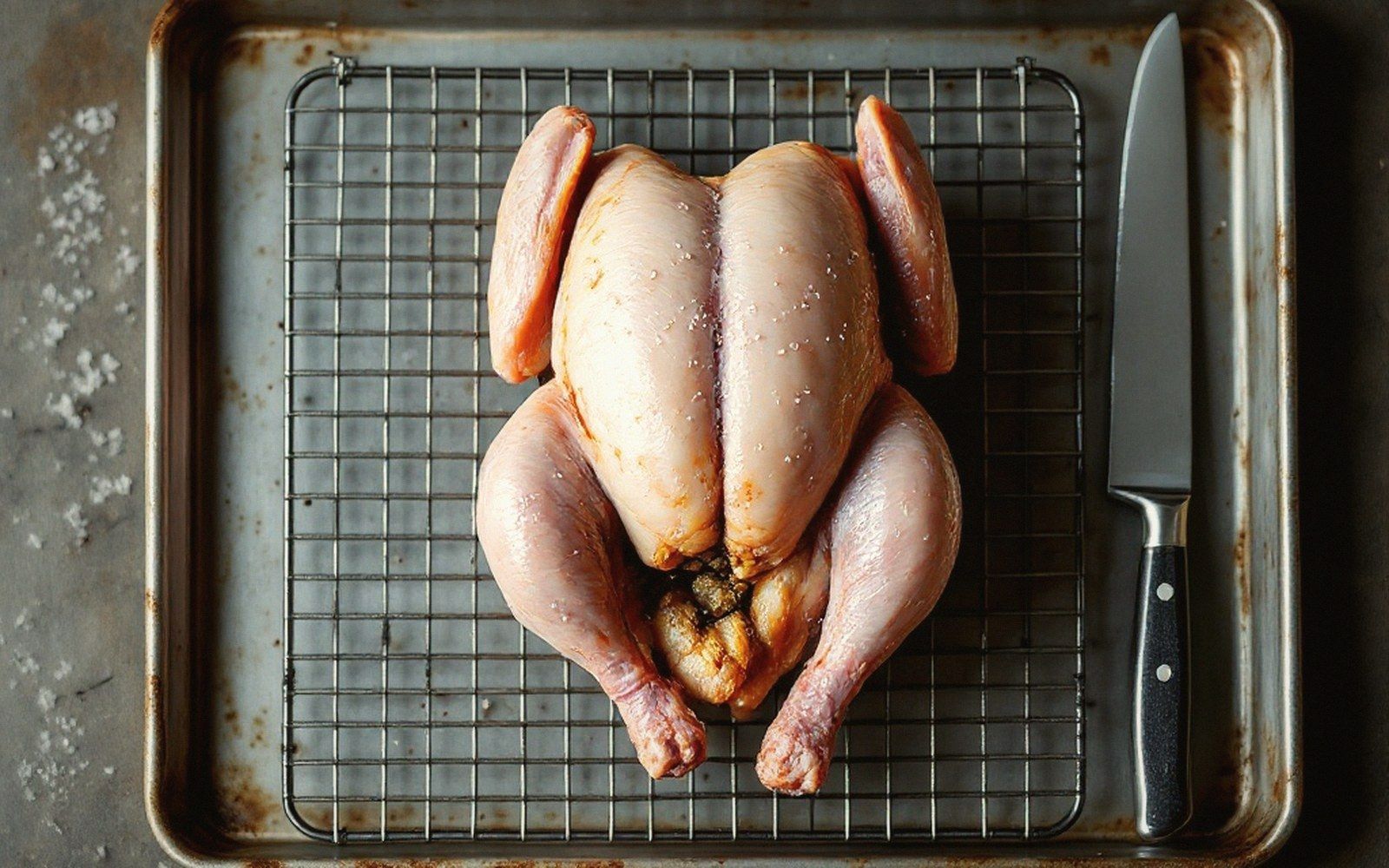
There is a second effect, and it matters at least as much: the surface dries. Uncovered in the refrigerator, the skin loses surface moisture to the cold air. Dry skin is the condition that produces crispness; wet skin steams before it renders. Getting the skin right depends almost entirely on what happens before the bird goes anywhere near heat.
The Practical Version
For a whole bird, salt the evening before — the night ahead is the honest minimum. Season generously, including the cavity and under the skin where the breast and thigh are exposed. Set it on a rack if you have one, uncovered, in the coldest part of the refrigerator.
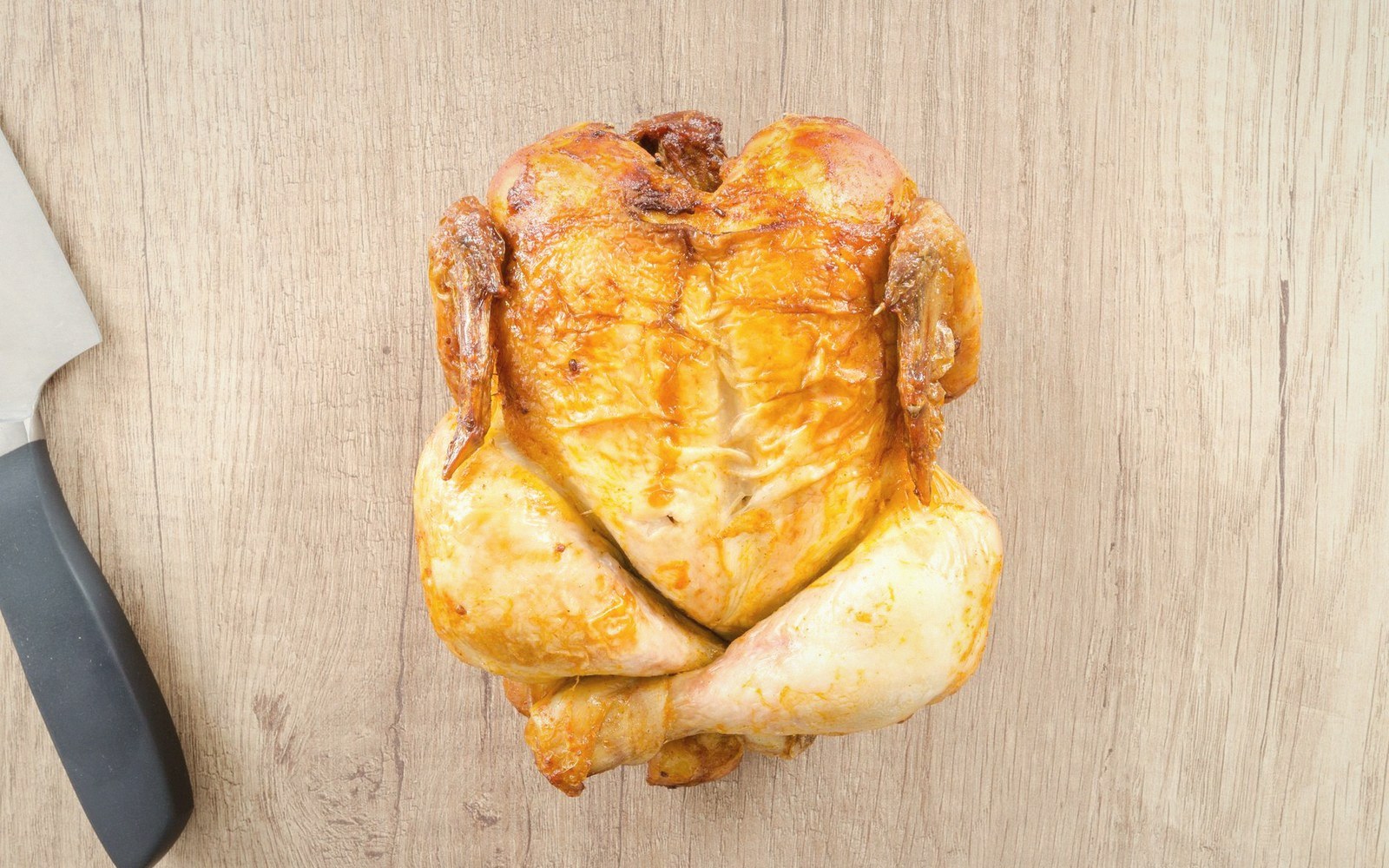
For individual pieces, a few hours is enough because the distances are shorter. A thigh half-way to room temperature before it goes into the pan will still benefit from salt applied that morning.
Dry skin is the condition that produces crispness; wet skin steams before it renders.
What not to do: salt and immediately cover tightly with film. The surface stays wet, osmosis stalls, and you get none of the drying effect. The whole point of the uncovered refrigerator is that both processes — penetration inward, drying outward — happen at once.
Last-minute salt is not worthless. It seasons the surface and it is always better than nothing. But it is doing a fraction of the work that early salt does, and the muscle in the centre will behave exactly as if it were unseasoned — contracting hard under heat and squeezing out the moisture you were trying to keep.