A Long Braise
The tenderising technique that assumes toughness — and why the most forgiving preparation in the kitchen is built around an animal you can no longer buy.
When Time Does the Work
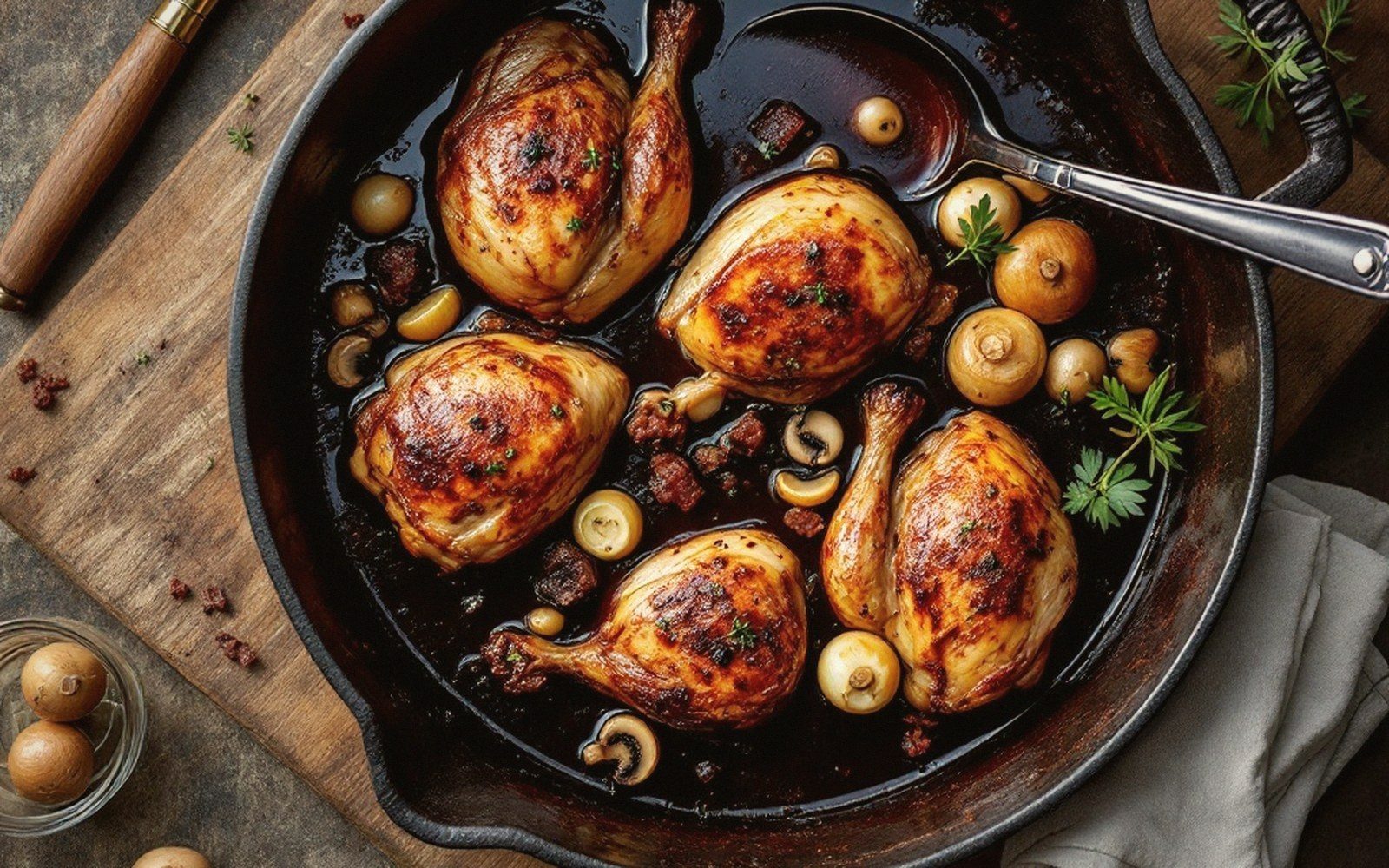
Classical braise recipes — coq au vin, poule au pot, the various regional stews of France and Italy — specify a coq or a poule: a rooster past its laying life, or a spent hen. These birds were rarely eaten young because they were too valuable alive. When they finally went into the pot, they were tough, deeply flavoured and dense with collagen. The braise was not a preference; it was the answer to a biological fact.
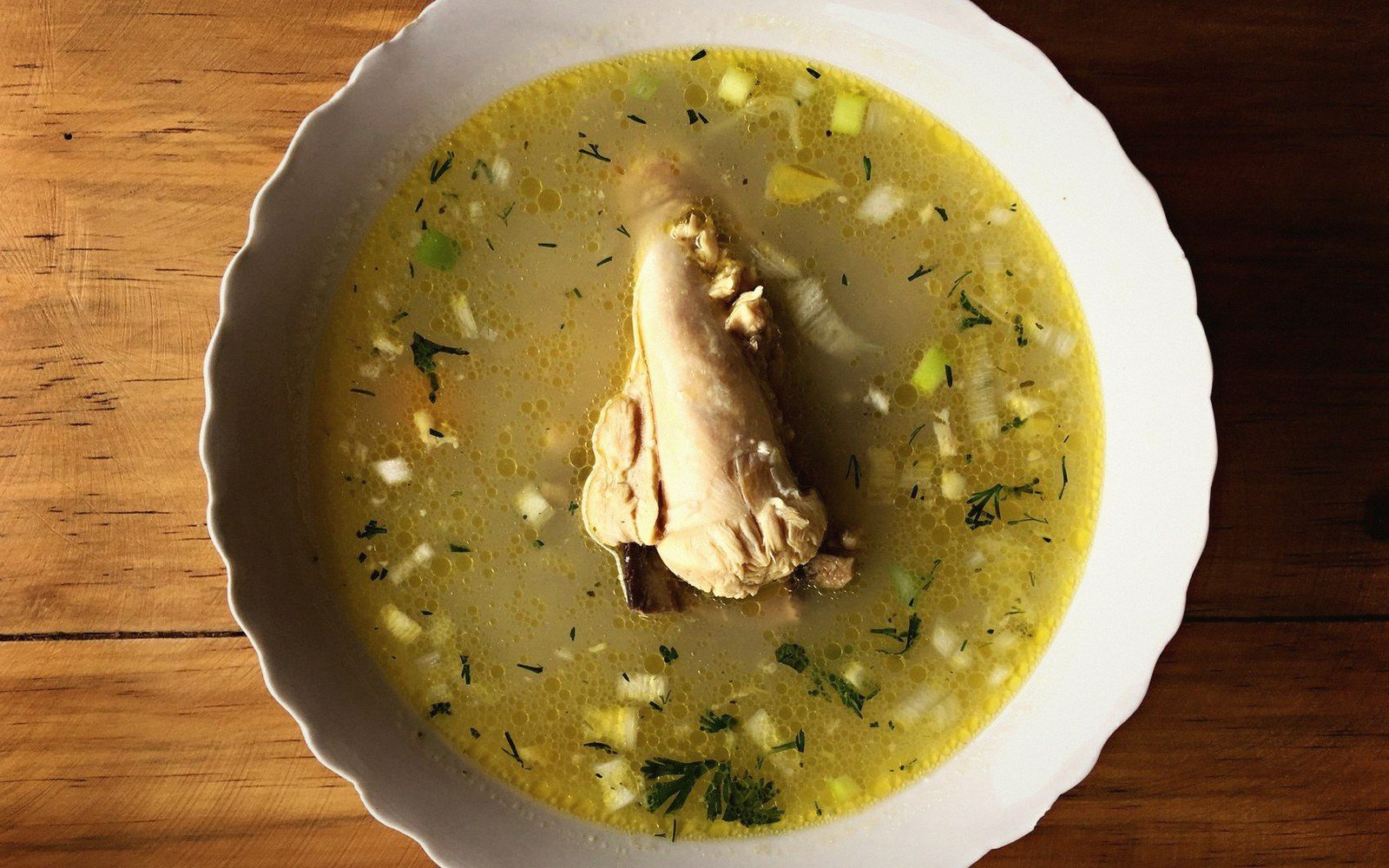
That animal is effectively gone from the domestic market. What you find now is a broiler: a bird bred and slaughtered at around six to eight weeks, with little connective tissue, mild flavour and muscle that can turn dry in twenty minutes. Braising it in the classical manner — two hours, low and wet — produces something soft to the point of falling apart, but not in the way the recipe intended. The texture is surrender rather than silk.
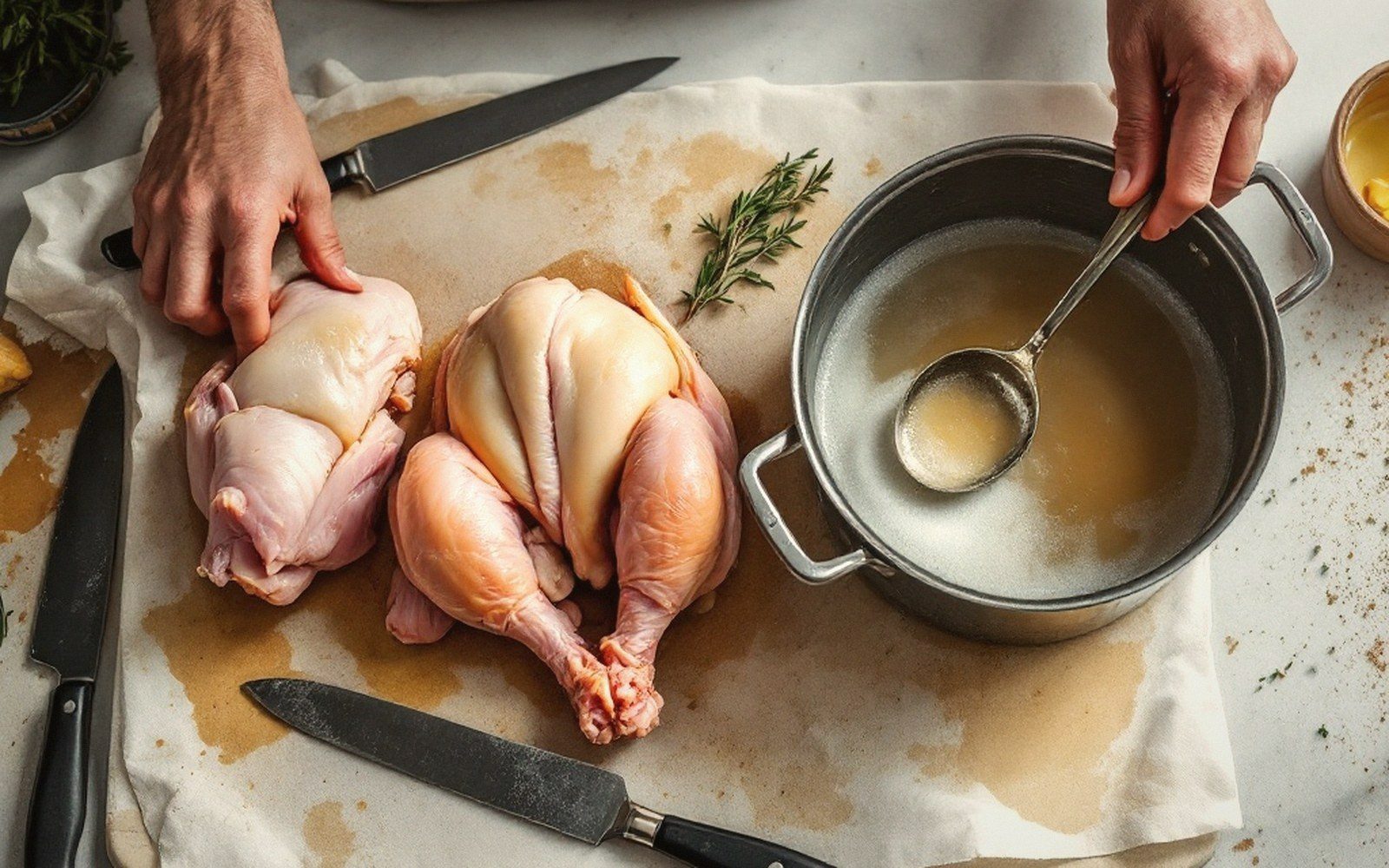
The fix is honest rather than clever. Accept that you are not cooking a coq. Use the cuts that still benefit from long, moist heat — thighs and drumsticks, which carry more collagen and intramuscular fat than the breast — and keep your temperature lower and your time shorter than the old recipes demand. An hour to an hour and a half in a covered pot, at a bare simmer, produces meat that yields without disintegrating. The breast has no place in a braise unless you add it late and pull it before it passes roughly 65°C internally; at that point it is just poached in flavoured liquid, which is not the same thing.
What a braise does produce, regardless of the bird's age, is liquid worth keeping. The collagen in the skin and bones converts slowly to gelatine, giving the braising liquor a body that no reduction alone can manufacture. If you remove the meat and reduce that liquid by half, you have a sauce that coats without starch and clings without gum. Skim it properly — fat clouds it and blunts the flavour — and the braise justifies itself on the sauce alone.
The collagen in the skin and bones converts slowly to gelatine, giving the braising liquor a body that no reduction alone can manufacture.
The irony of the technique is that it was designed for a bird that took effort to produce and years to mature. Applied to a modern broiler, it still works, but it demands more restraint: less time, better cuts, more attention to the liquid than the meat. The coq is gone. The braise adapted.
A Chicken in the Kitchen is an independent publication about cooking. It is not a restaurant, a retailer or a nutrition service.