The Two Numbers That Matter
Breast done at one temperature, thigh done at another. Understanding why makes every roast chicken simpler.
The Gap, and Why It Exists
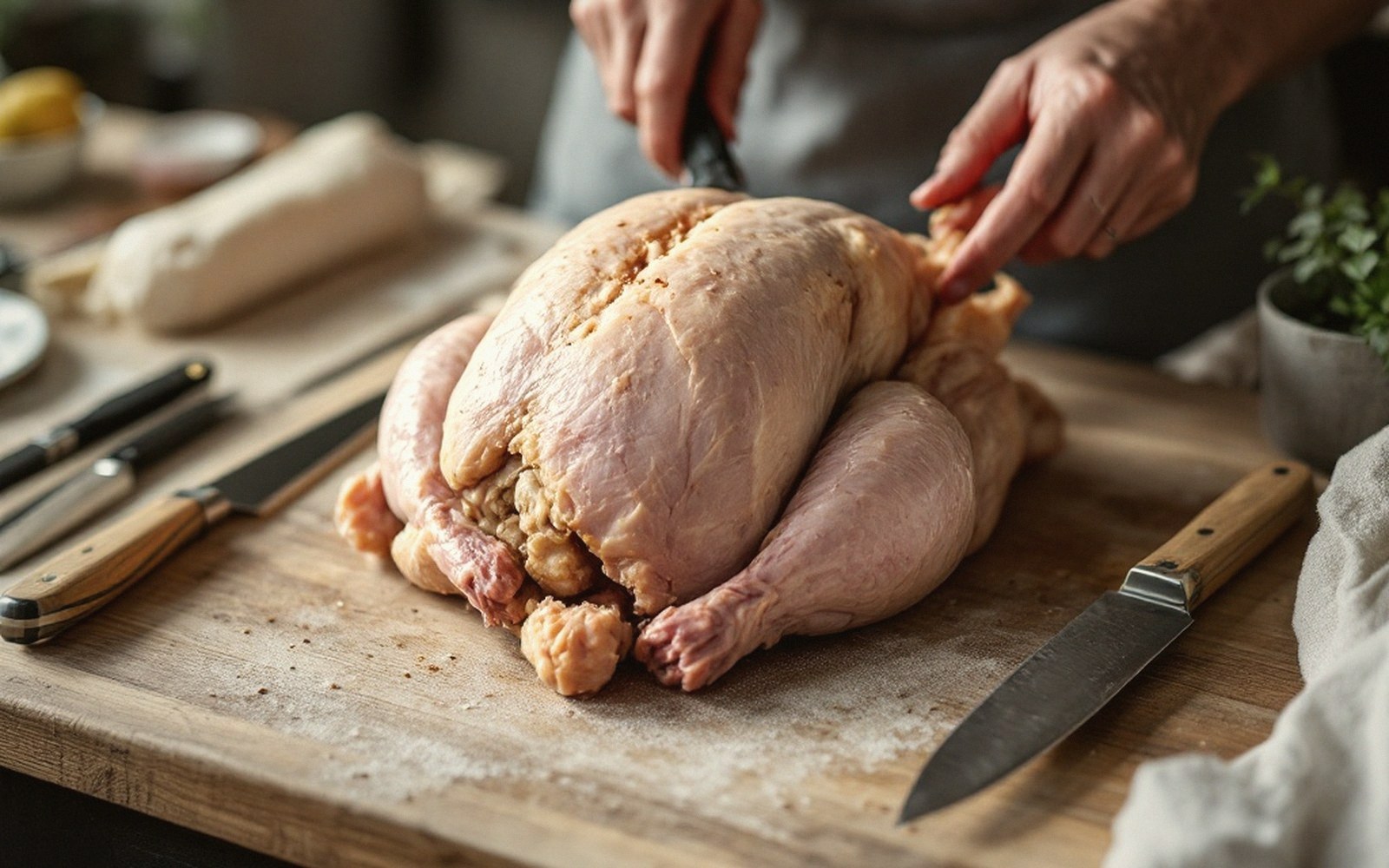
Pull a chicken from the oven when the breast reads 165 °F (74 °C) and the thigh is often still underdone. Wait for the thigh to catch up and the breast is dry. This is not a recipe failure — it is anatomy expressing itself.
The breast is pale, fast-twitch muscle that barely worked in the bird's life. It contains little connective tissue and almost no myoglobin. It firms quickly as temperature climbs, and it has nothing to fall back on once the moisture is gone. The thigh, by contrast, spent the bird's entire life carrying weight. It is dense with collagen and myoglobin, and that collagen needs time and heat to soften into gelatine. At 165 °F the thigh is technically safe but still slightly tough; at 175–185 °F (79–85 °C) it has relaxed, and the converted gelatine keeps it moist even though the temperature is higher. The numbers that feel contradictory make complete sense once the difference between these two muscles is understood.
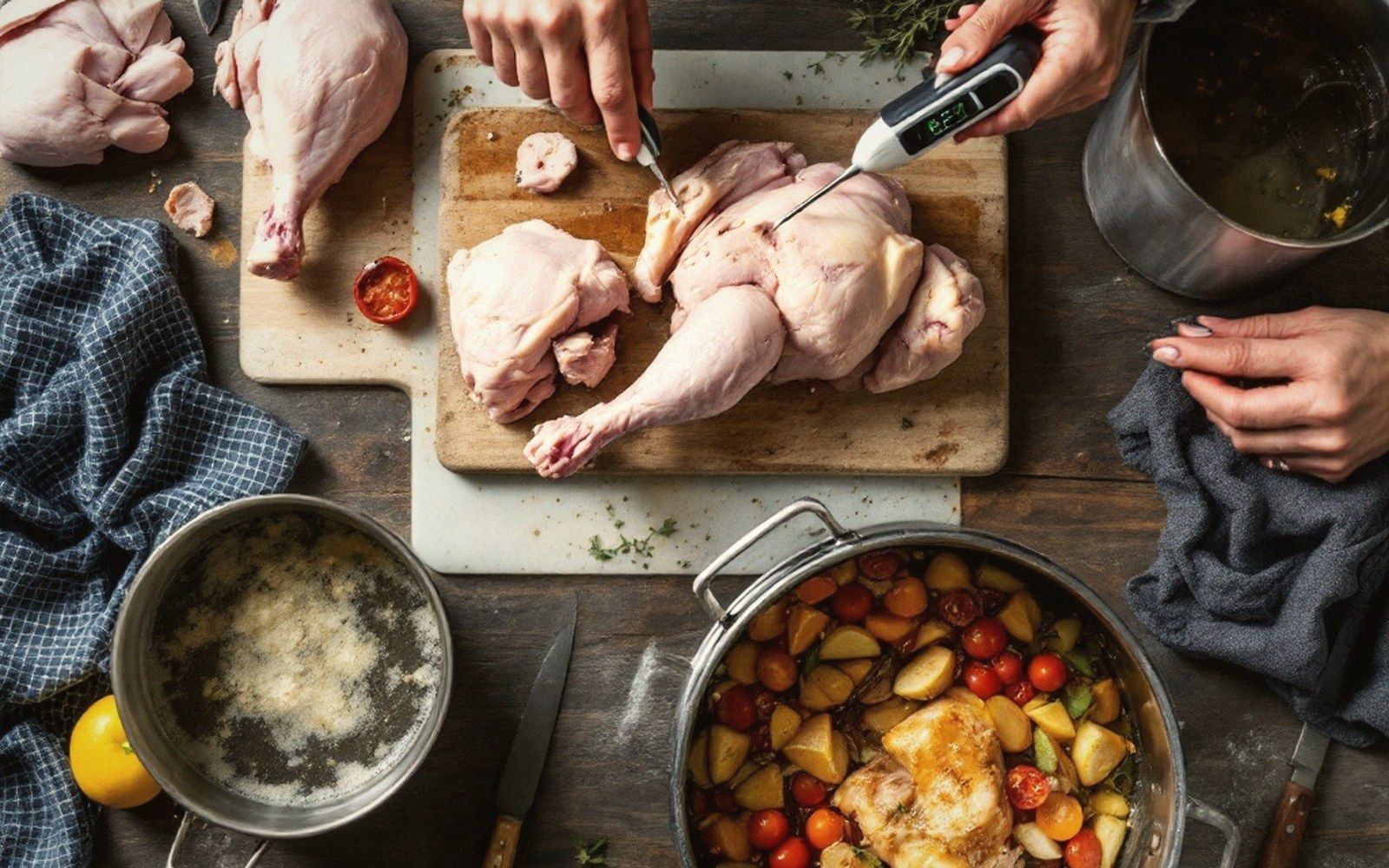
So: breast to 160–165 °F, thigh to 175–185 °F. Those are the two numbers worth remembering.
Safety Is Also a Function of Time
A common misread of food safety guidance is treating 165 °F as a magic line — below it dangerous, above it safe. The fuller picture is that pathogens are destroyed by combinations of temperature and time. Hold chicken at 160 °F for about 15 seconds and it is safe. Hold it at lower temperatures for longer and safety is also achievable, but the margins shrink and the method requires precision most home kitchens cannot guarantee. The conventional and reliable rule — hit 165 °F in the breast, go higher in the thigh — builds in a comfortable buffer without demanding laboratory control.
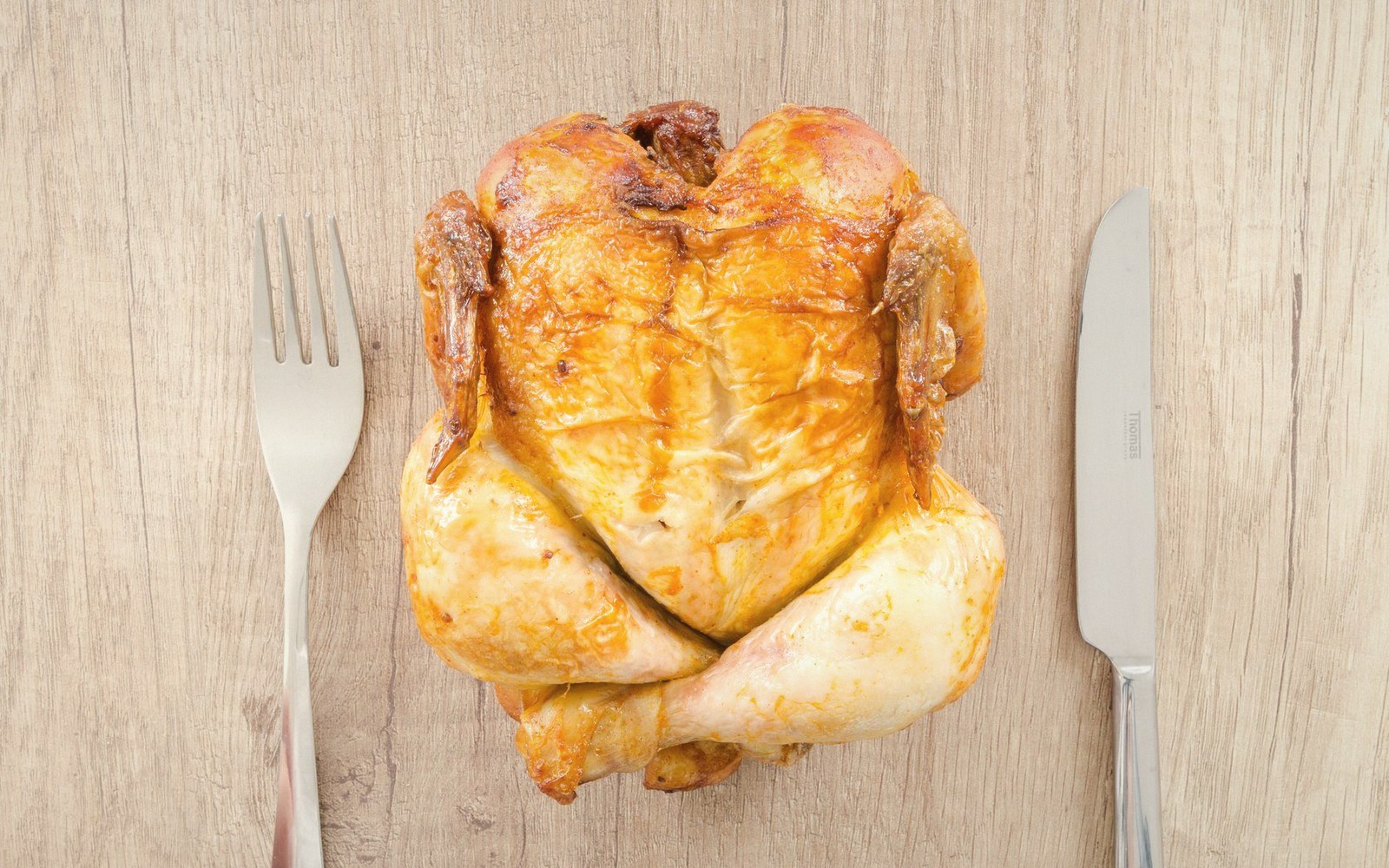
What this means practically: probe the thigh at its thickest point, away from the bone, and pull the bird when that reading sits between 175 and 185 °F. The breast will be at or above 165 °F at that point, which is where it needs to be. If it reads notably higher and the breast already looks dry, the oven was too hot or the bird too small and the problem was upstream of the thermometer.
The thigh, by contrast, spent the bird's entire life carrying weight.
A good instant-read probe removes every other variable. No pressing, no cutting, no colour-checking — the thermometer tells you what nothing else can.