Why a Roast Rests
Cut too soon and the board turns pink. Wait five minutes and it doesn't. Here is what changes and what doesn't.
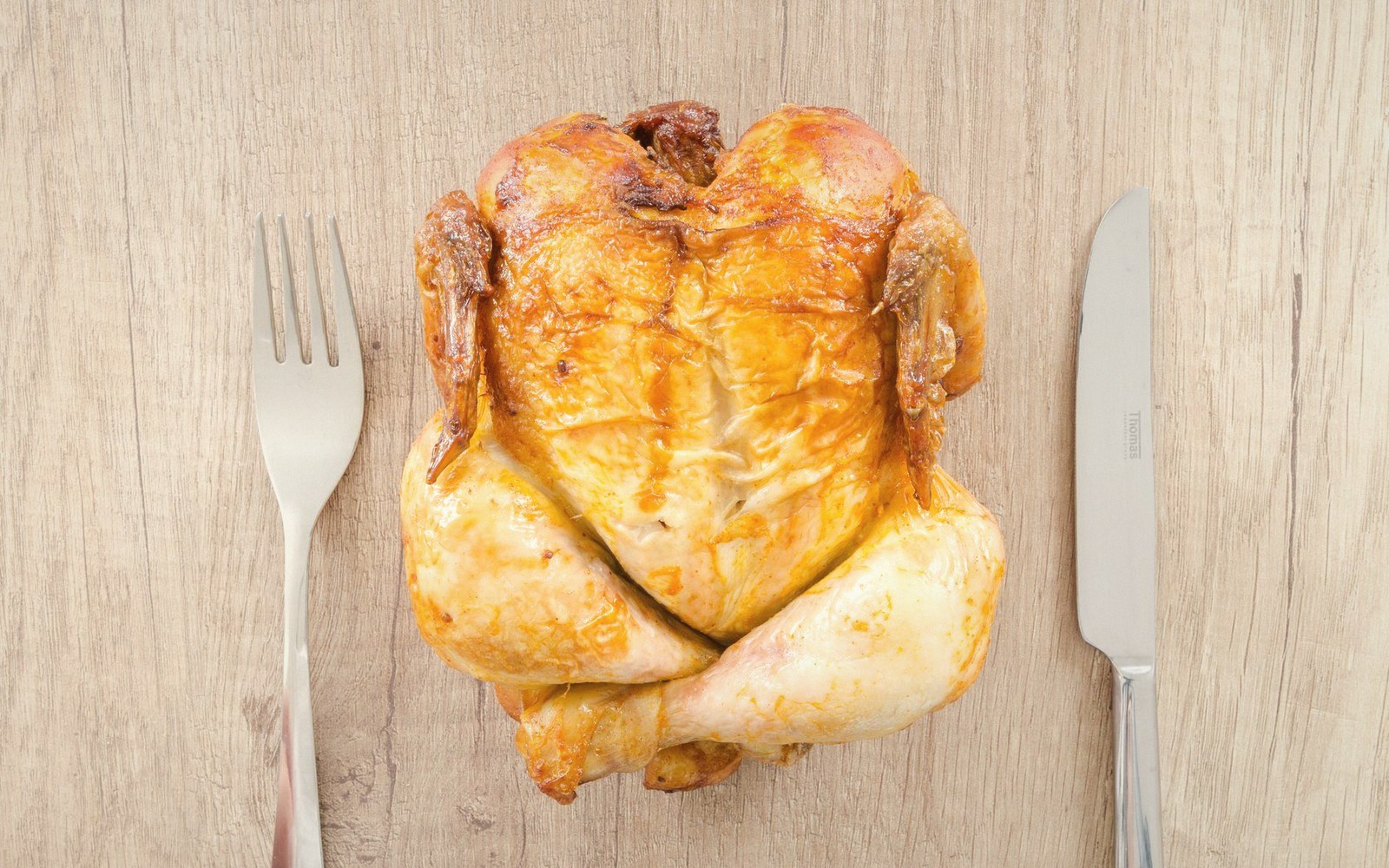
What the Rest Actually Does
When a roast comes out of the oven, the muscle fibres near the surface are hotter than those at the centre — and they have been contracting hard. Heat drives proteins to denature and squeeze: the fibres tighten, and the pressure near the outside is high enough that any cut made now will release juice across the board in a visible rush. That liquid is not lost flavour; it is the water the muscle held, now pushed outward by the contracted exterior before it can reabsorb.
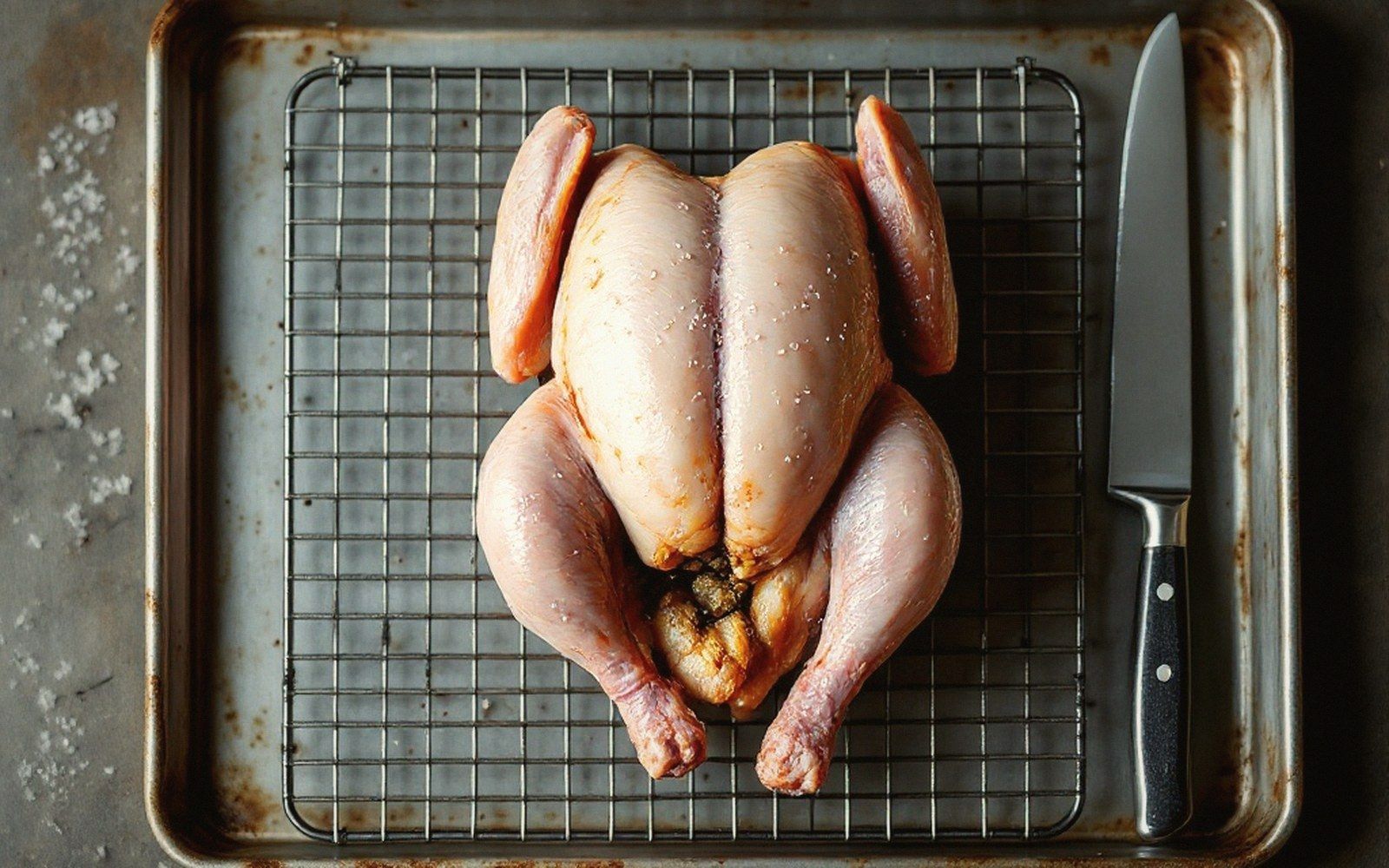
Resting lets the temperature equalise. As the outer layers cool slightly and the centre continues to rise — carryover, the ongoing cooking that happens without a flame — the pressure gradient relaxes. The fibres loosen just enough that the moisture redistributes rather than fleeing the moment a knife enters. Cut after a proper rest and the same juice stays inside because the muscle is no longer clenched around it.
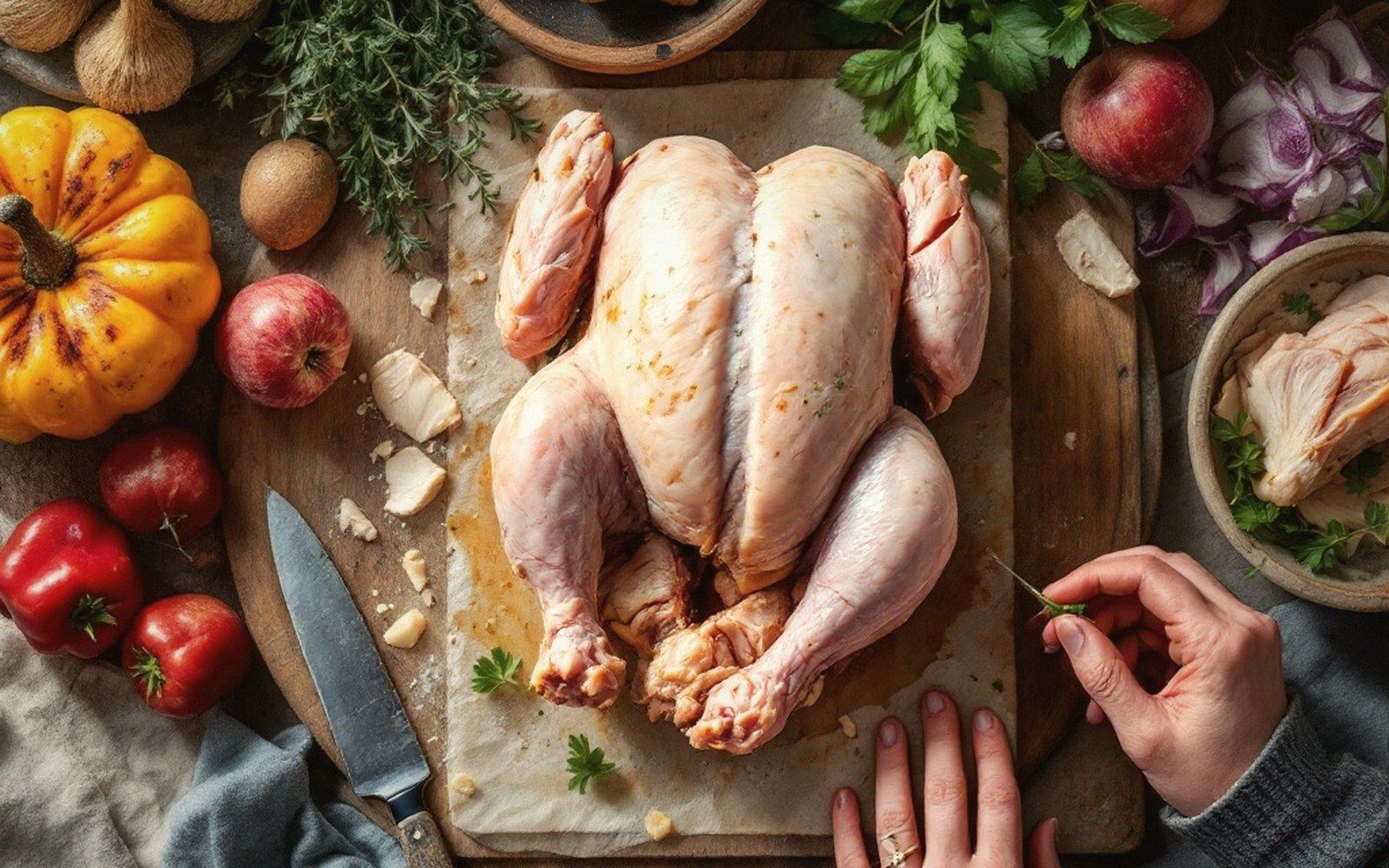
Two things matter here. First, carryover is real: a whole chicken pulled at the right internal temperature will still gain a few degrees as heat migrates inward. Pull it slightly early and the rest finishes the job; pull it on the dot and you risk overshooting. The thermometer is how you track which situation you are in. Second, resting does not undo overcooking. If the breast has already passed the point where the proteins have expelled most of their water, no amount of waiting brings that back. Resting preserves juiciness in correctly cooked meat; it cannot restore it.
How long? For a whole bird, ten minutes on a warm board, loosely tented — not sealed tight, which traps steam and softens the skin. For a breast portion, five minutes is enough. The tent is optional; open air loses heat faster and keeps the skin crisper, which is usually the better trade.
If the breast has already passed the point where the proteins have expelled most of their water, no amount of waiting brings that back.
The rest is not a ritual or a precaution. It is the final, passive stage of cooking, and skipping it wastes what the oven just did.
A Chicken in the Kitchen is an independent publication about cooking. It is not a restaurant, retailer or nutrition service.