Spatchcocking, and What It Fixes
The breast overcooks before the thigh is done. Removing the backbone addresses it structurally.

The Problem Is Geometry
A whole roasting bird sits in the oven like a dome: breast proud and exposed, thighs tucked low and protected. The breast meat, already prone to drying out above 65 °C or so, takes the full force of the heat first. By the time the thighs reach a safe 74 °C, the breast has been there for ten minutes longer. This is not a seasoning problem or a resting problem. It is a shape problem.
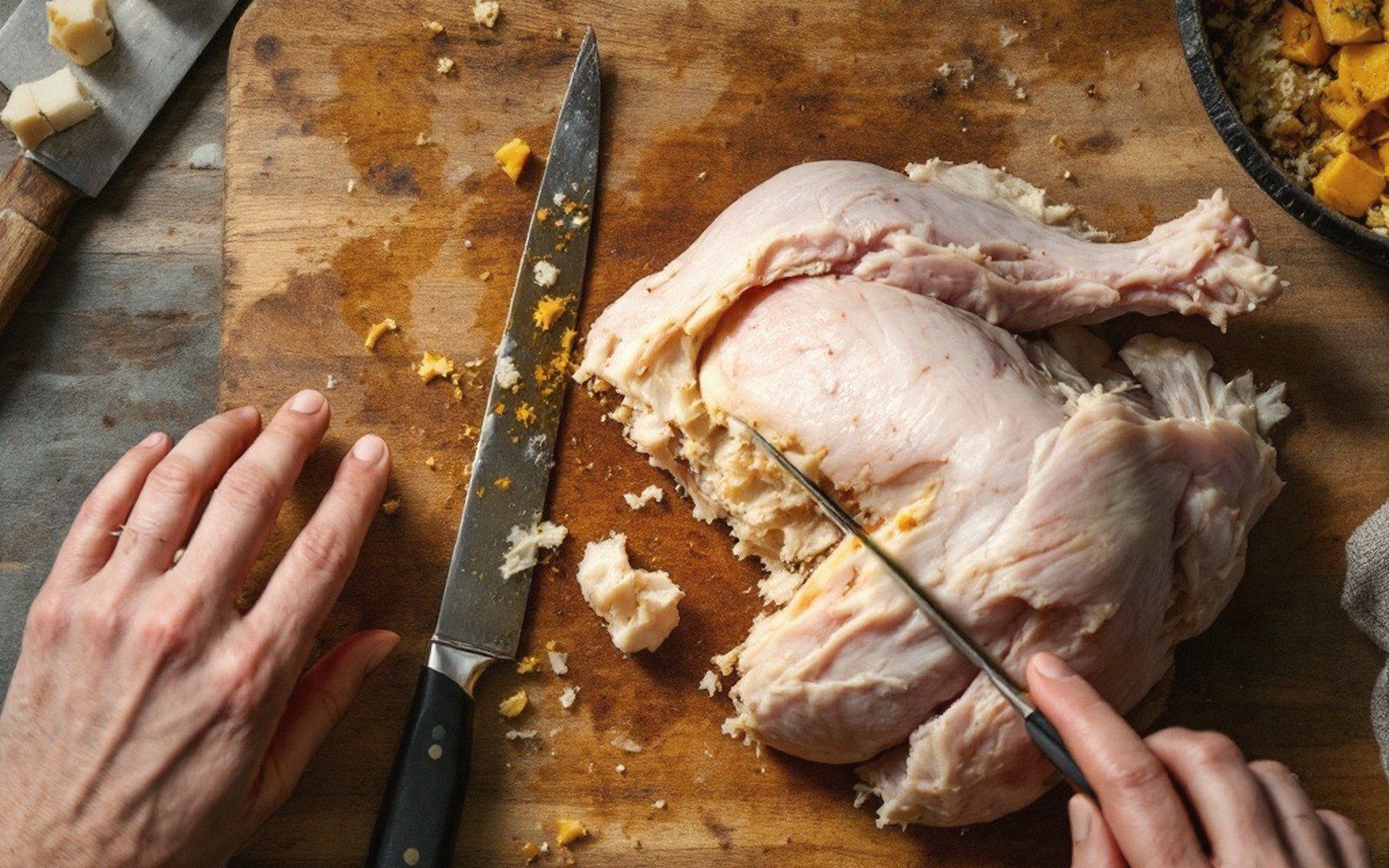
Spatchcocking — also called butterflying — removes the backbone entirely and presses the bird flat. Done correctly, it takes under two minutes with kitchen shears: cut along each side of the spine from tail to neck, pull it free, then press down on the breastbone until the carcass cracks flat. The thighs, no longer folded beneath the body, spread outward and now face the heat more directly. The breast, no longer elevated, sits lower and loses some of its exposure. The bird becomes something closer to a single plane, and a single plane heats more evenly than a dome.

The practical result is significant. Roasting time drops — sometimes by a third — because the increased surface area draws heat more efficiently and there is no insulated cavity to work through. More importantly, the temperature differential between breast and thigh narrows. They still want different targets, but the gap shrinks to something manageable rather than structural. The breast and thigh finishing at different rates remains the central tension of the whole bird; spatchcocking reduces it without eliminating it.
The backbone is not waste. Set it aside — along with the flat of the breastbone if you choose to remove that too — and add it to the carcass when you make stock. Nothing is lost.
The breast, no longer elevated, sits lower and loses some of its exposure.
This is a technique with one purpose. It does not improve flavour, change the seasoning or make carving easier. It fixes geometry, and geometry was the thing that needed fixing.