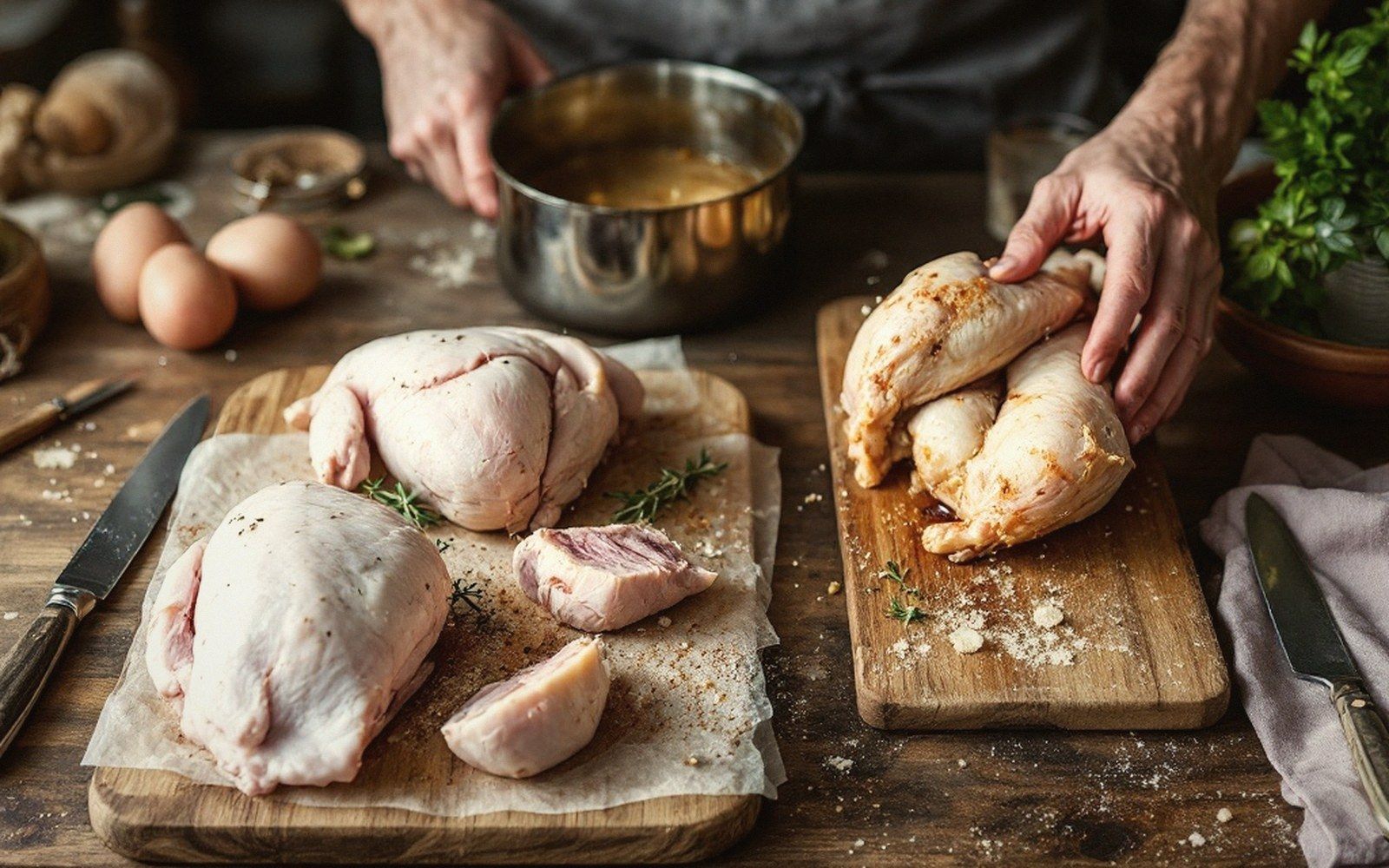
Eight Cuts, One Carcass
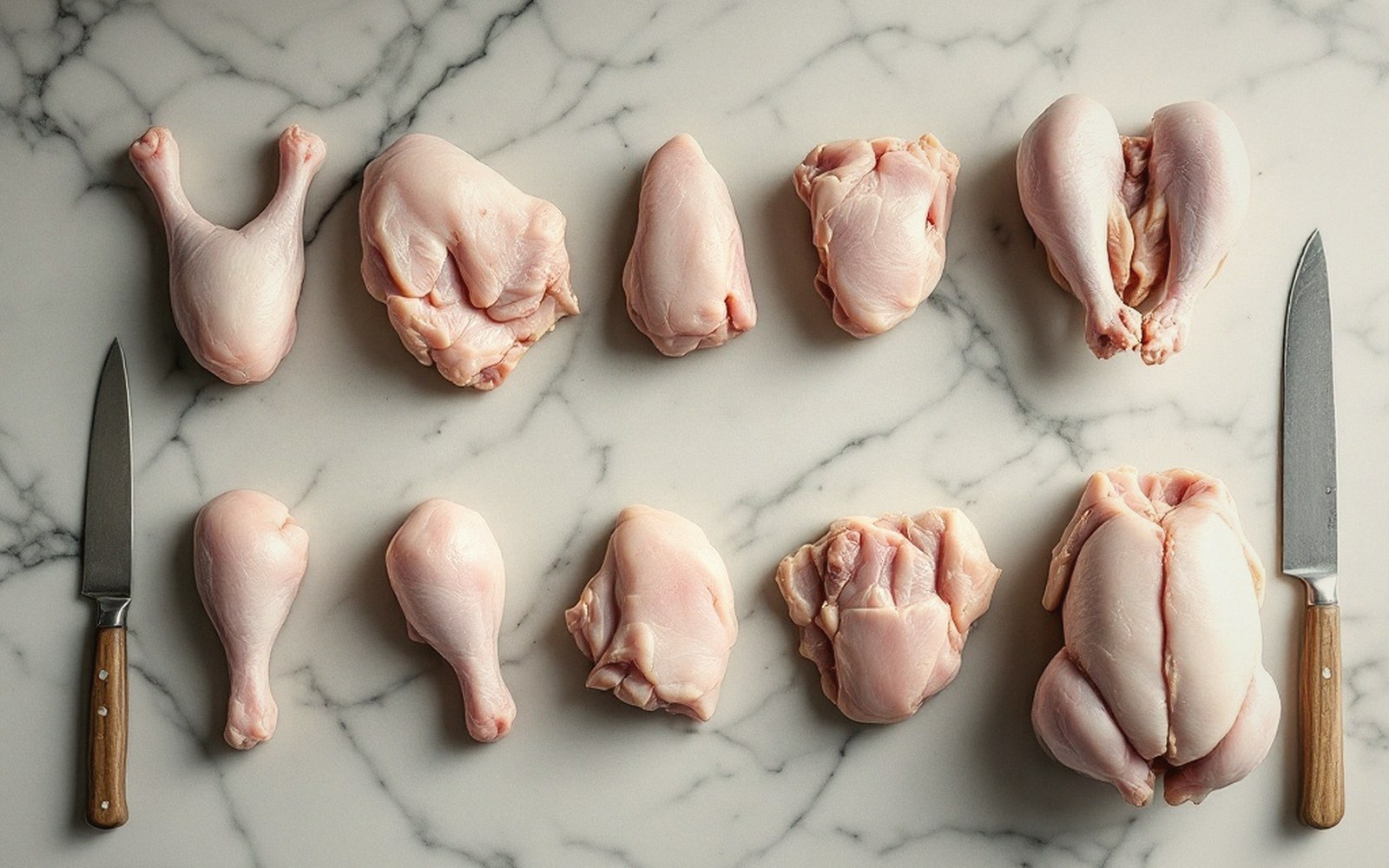
A chicken has ten useful pieces if you know where to look. The knife follows the joints instead of sawing through bone.
Where the Joints Actually Are
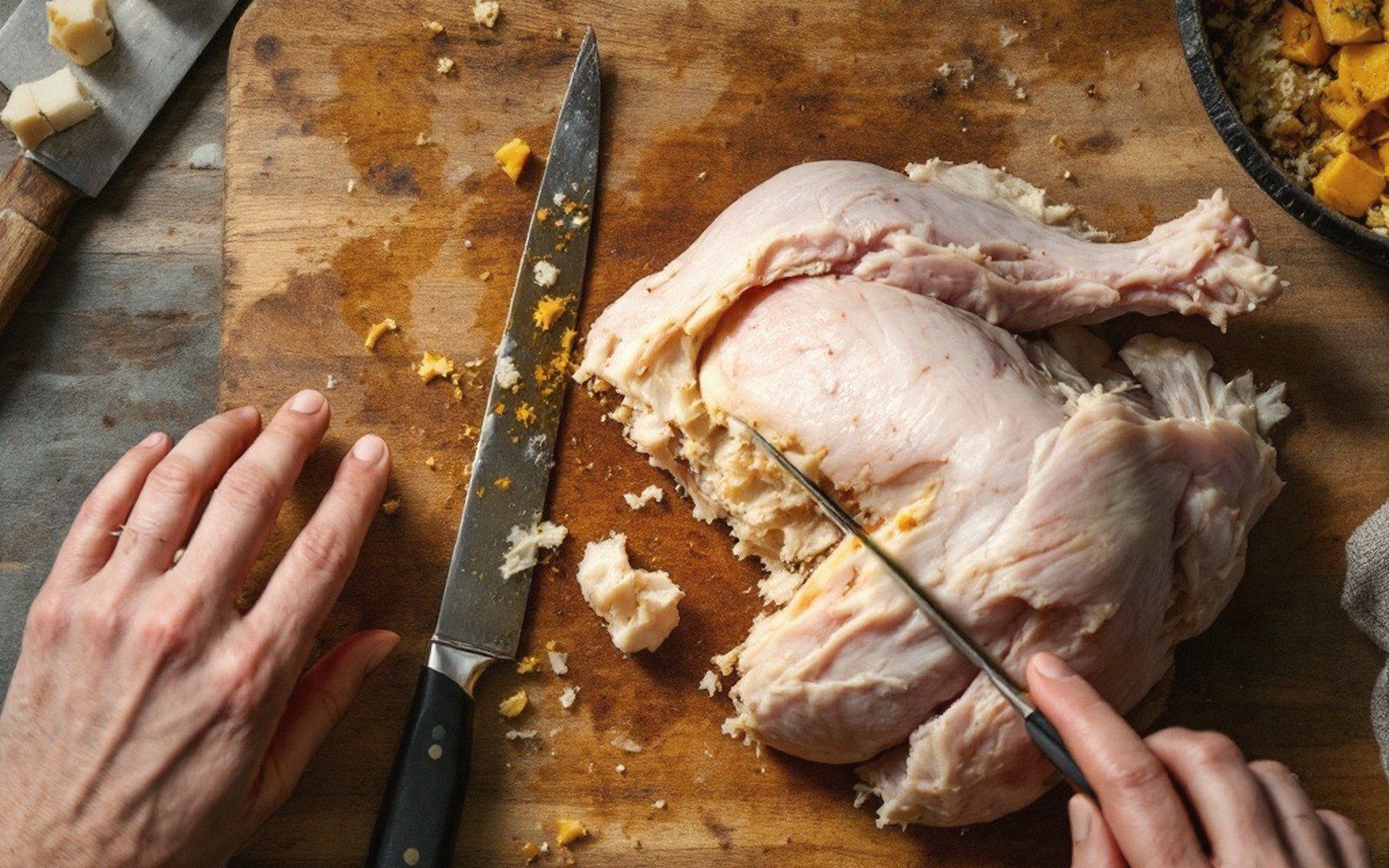
Start with the bird breast-side up and pull a leg away from the body. The skin stretches, then resists — stop there, because underneath is the joint you want, not the thighbone itself. Slip the knife through the skin, follow the natural crease toward the carcass, and push the leg outward until the ball pops from the socket. You'll hear it. Cut through the exposed joint capsule and the leg comes free cleanly. If the knife grinds on bone, you've missed the joint; redirect rather than force.
Before setting that leg aside, run a thumb along the back edge of the carcass near where the thigh was seated. There's a small, round depression in the frame of the backbone, and sitting in it is the oyster — a nugget of dark, deeply flavored meat that most people leave on the carcass when they carve at the table. It isn't technically one of the eight standard cuts, but it belongs to the cook who breaks the bird down. Loosen it with the tip of the knife before the leg goes anywhere.
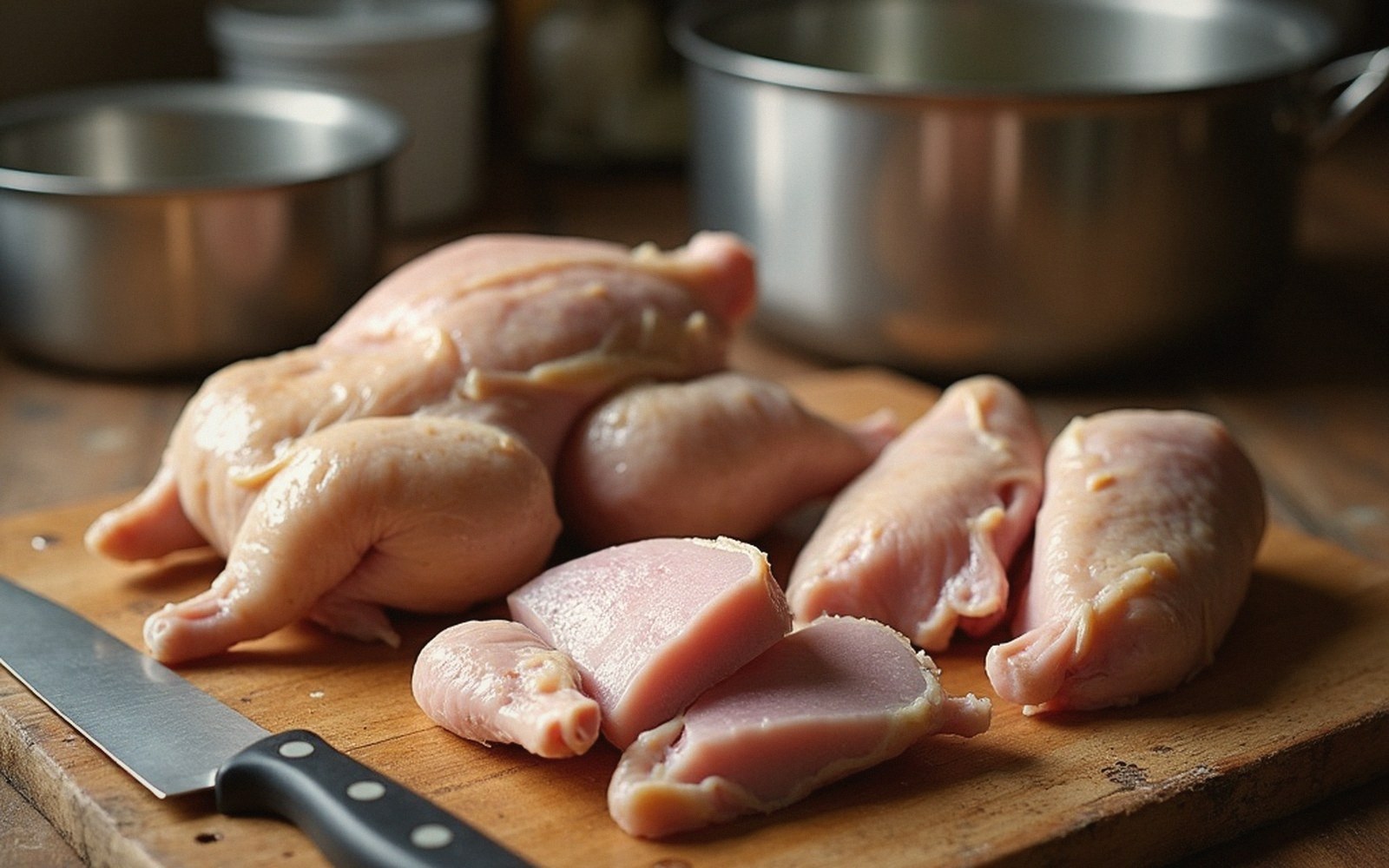
Now separate the drumstick from the thigh. Lay the leg skin-side down and bend it at the knee until you can see the joint line — a thin white crescent of cartilage. The knife goes straight through it with almost no pressure. This is the only cut in the whole breakdown where you genuinely have nothing to find; the joint simply opens. Two cuts, four pieces.
The wings come off next. Pull each wing away from the body and probe the shoulder joint with your fingertip — it sits higher than you expect, close to the neck. Push the wing backward to open the joint, cut through it, and the wing separates. If you'd like a cleaner result, remove the wing tip at the second joint and keep it for stock rather than eating. Wings cooked whole are entirely legitimate; the tip just has little to offer beyond collagen.
Push the wing backward to open the joint, cut through it, and the wing separates.
The breasts are last and require the most attention. The breastbone runs dead center, and the meat sits on either side of it, curved over the ribcage. A knife following the bone will drift off course; the correction is to keep the blade pressed lightly against the sternum and let contact guide you. Work from the wide end toward the wishbone, angling inward as the ribs narrow. The tenderloin — the small, loosely attached strip of muscle on the inner face of each breast — will either stay with the breast or peel away on its own. Either way is fine.
What remains is the carcass: backbone, ribs, sternum, neck if you left it on. This is not waste. Roasted or raw, it goes straight into a pot and becomes the most useful thing the bird yields.
Why Socket Over Saw
The logic behind finding every joint rather than cutting through bone is practical, not ceremonial. Bone is hard and blade edges are ground to a finite angle; meeting one destroys the other slowly, and the knife that saws through a joint tonight is a duller knife tomorrow. More immediately, a knife glancing off resistance moves unpredictably, which is the actual source of most kitchen cuts.
Joints exist because the bird needed to move. They are gaps in the skeleton, lined with cartilage, held by ligaments that a sharp edge cuts through in a single stroke. The same anatomy that let a living bird flex its leg is the anatomy that lets a knife pass through without drama. You are not breaking the bird down so much as following instructions it was born with.
Eight pieces — plus two oysters for whoever does the work. The carcass earns its place too.