The Carcass Is the Second Half of the Bird
After the meat is carved, what remains is not waste. It is the starting point for the most useful liquid in the kitchen.
What the Carcass Holds
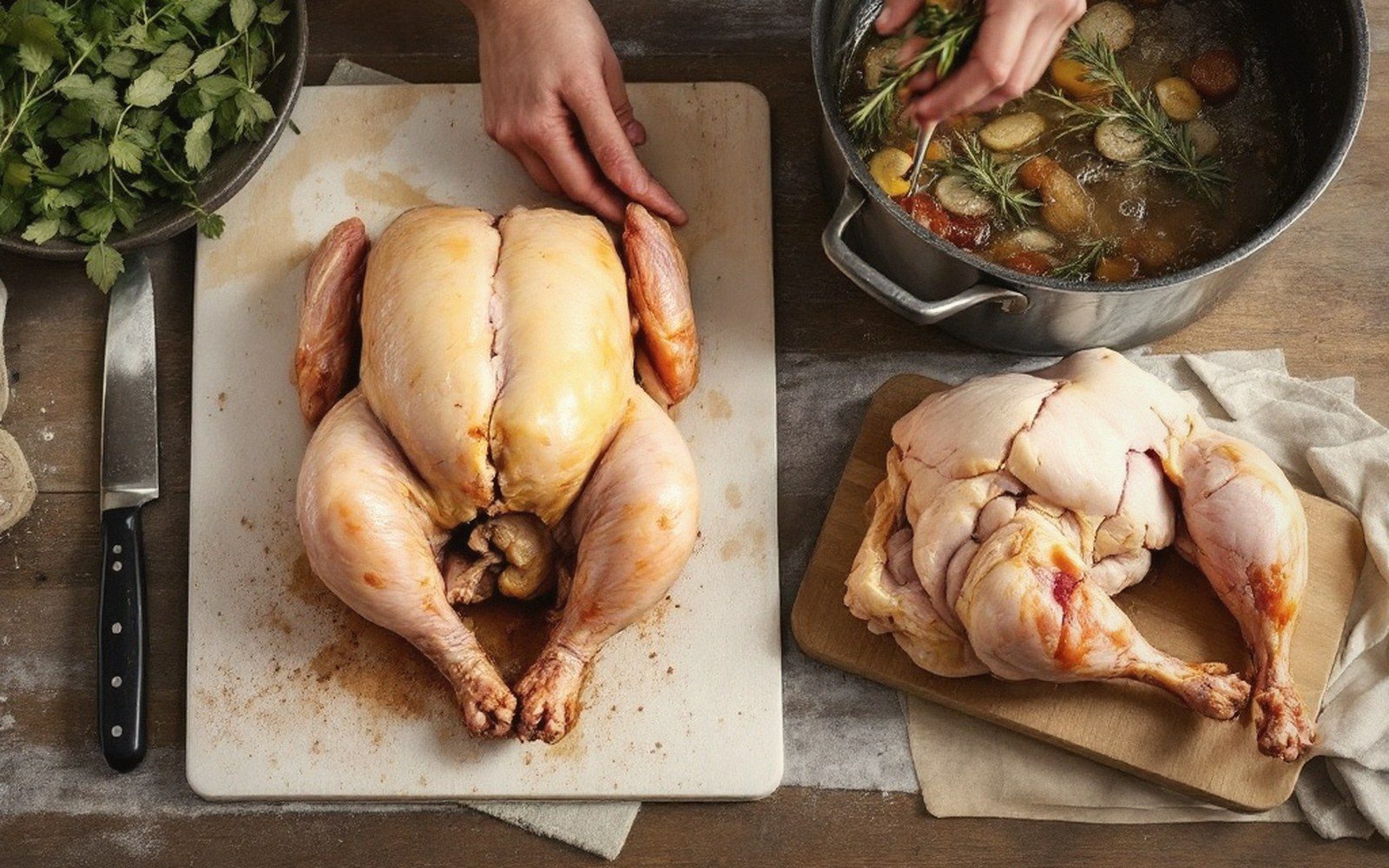
Strip a roast chicken to its bones and you still have something worth keeping. The carcass — spine, ribcage, the cartilage at the breastbone's keel, the wing tips left behind, any skin the carver peeled off — carries collagen in quantity. So do the joints: the knuckle ends of the drumsticks, the socket where the thigh met the pelvis, the ball joint of the wing. Collagen is the structural protein in connective tissue, and it is not soluble cold. But bring it into a long, quiet simmer and it converts to gelatine, which disperses through the cooking water and gives the finished liquid its body.
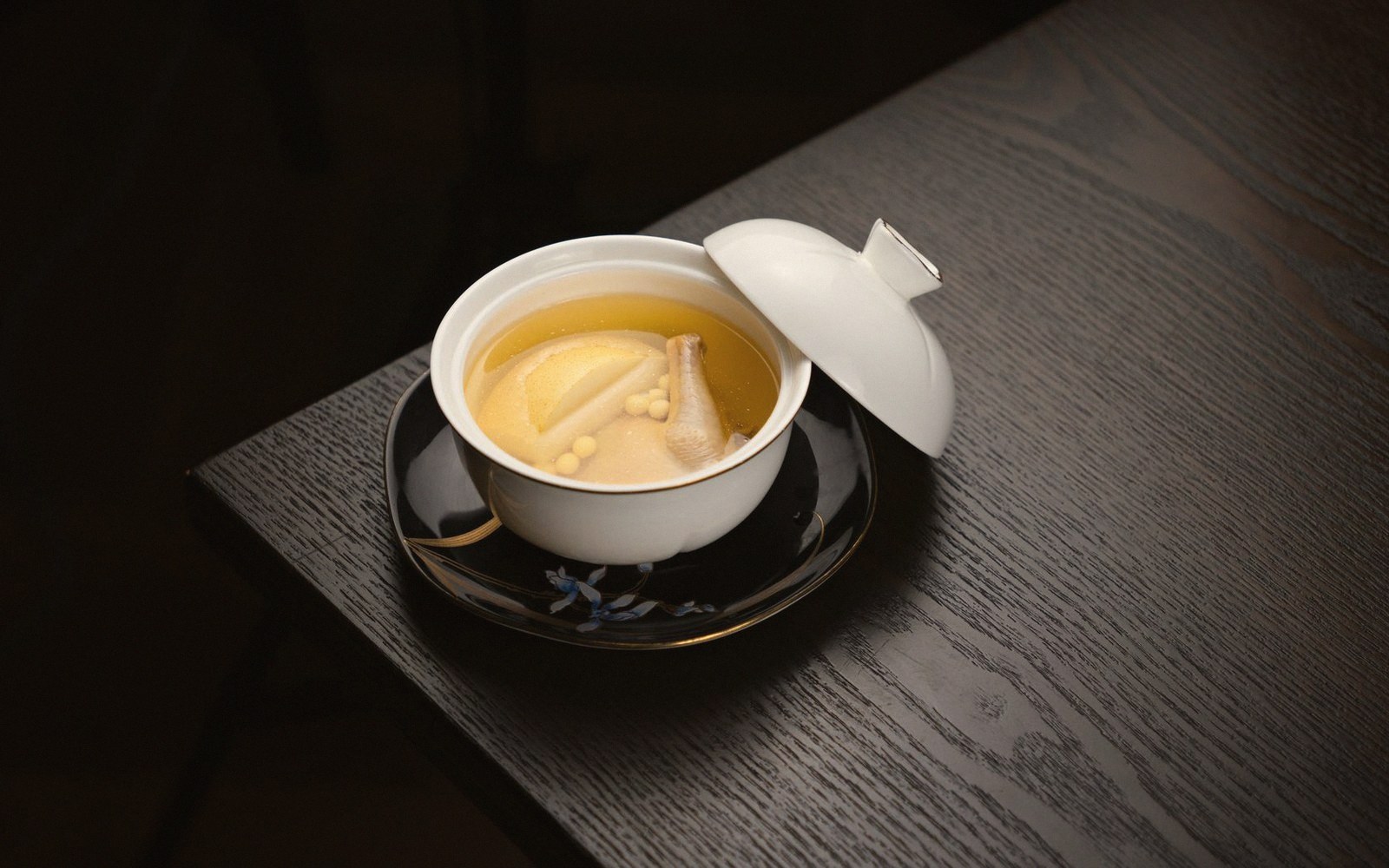
That conversion is the whole point. A stock built from a spent carcass is not flavoured water; it is a gelatine solution, and a good one sets to a soft jelly in the refrigerator. That body is what makes a reduction worth reducing, what makes a sauce coat a spoon, what makes a soup feel like food rather than warm liquid.
The bones themselves contribute minerals and some water-soluble proteins. The remaining scraps of meat add flavour. The skin — particularly if it was browned during roasting — adds colour and a richness from rendered fat. None of it is negligible, and none of it requires that the bird be freshly roasted. A carcass held in the freezer for weeks performs the same way; collagen does not degrade in the cold.
Time, Heat and What Gets Extracted
The single variable most cooks mismanage is temperature. Stock should simmer, not boil. A boil drives fine proteins into suspension as a permanent cloud and emulsifies fat into the liquid so it cannot be skimmed. A simmer — the surface just trembling, the occasional lazy bubble breaking through — keeps the liquid clear and extractable fat pooled on top, where it can be lifted or spooned away once the stock is cold.
How long depends on what you want. An hour produces a light, clean liquid with moderate gelatine content. Three hours pulls more collagen from the joints and cartilage, yielding a richer, stickier result. Beyond four hours the flavour can turn flat or slightly bitter, especially if the stock was made from already-roasted bones, which have less collagen remaining than raw ones. The practical range is two to three hours for a carcass stock; within that window, a longer extraction is almost always better than a shorter one.
Aromatics — the standard battery of onion, carrot and celery, perhaps a bay leaf and a few peppercorns — belong in the pot, but they are a secondary concern. They will not fix a stock that never developed body, and they are easy to over-steep. An hour in the pot is enough for most aromatics before their flavour turns reedy. If you are simmering for three hours, add the vegetables later.
Cold water starts the process correctly. Beginning cold allows proteins and impurities to rise slowly to the surface as the temperature climbs, where they can be skimmed before they dissolve back in. Starting in boiling water traps them.
Three hours pulls more collagen from the joints and cartilage, yielding a richer, stickier result.
What to Do With It
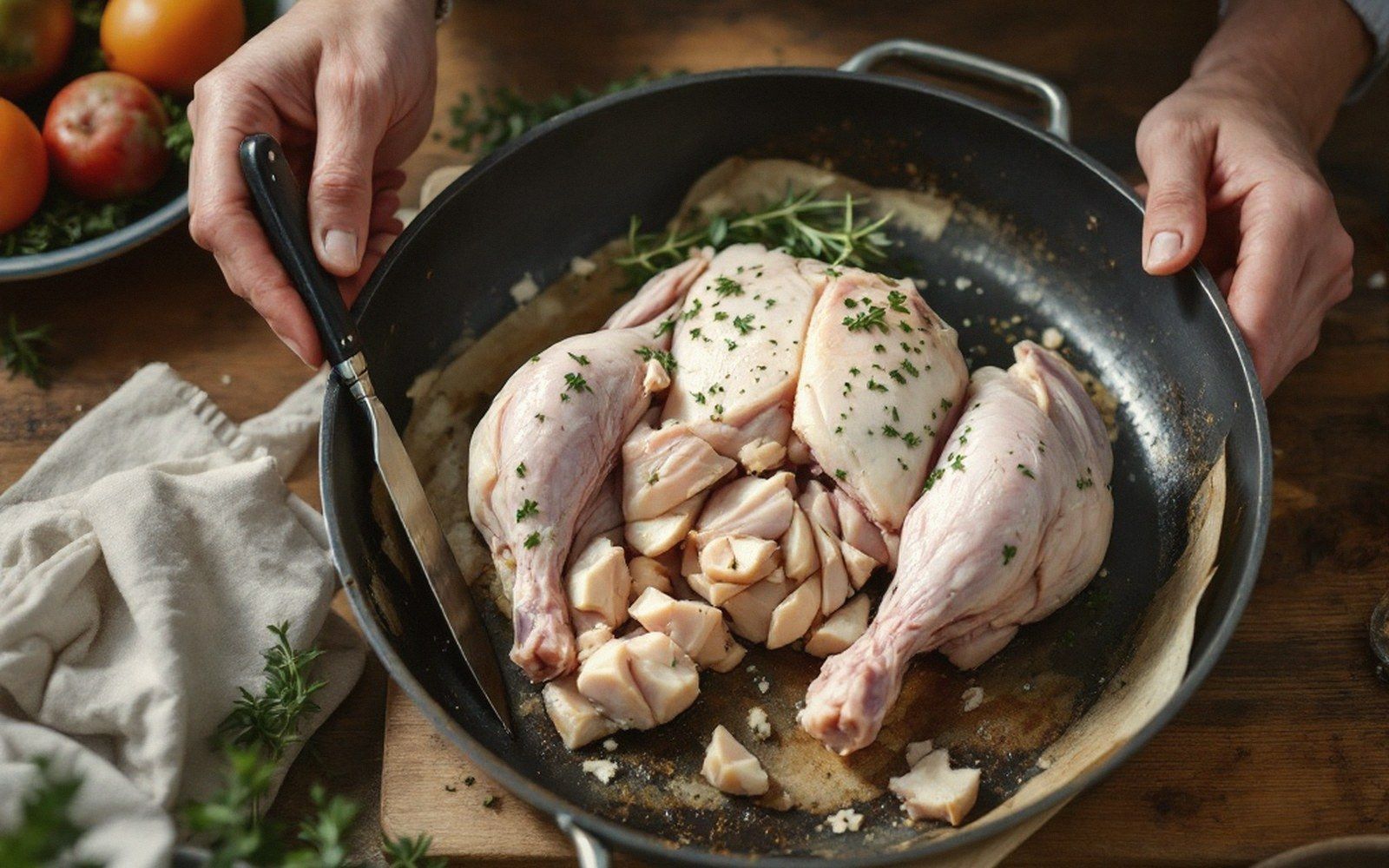
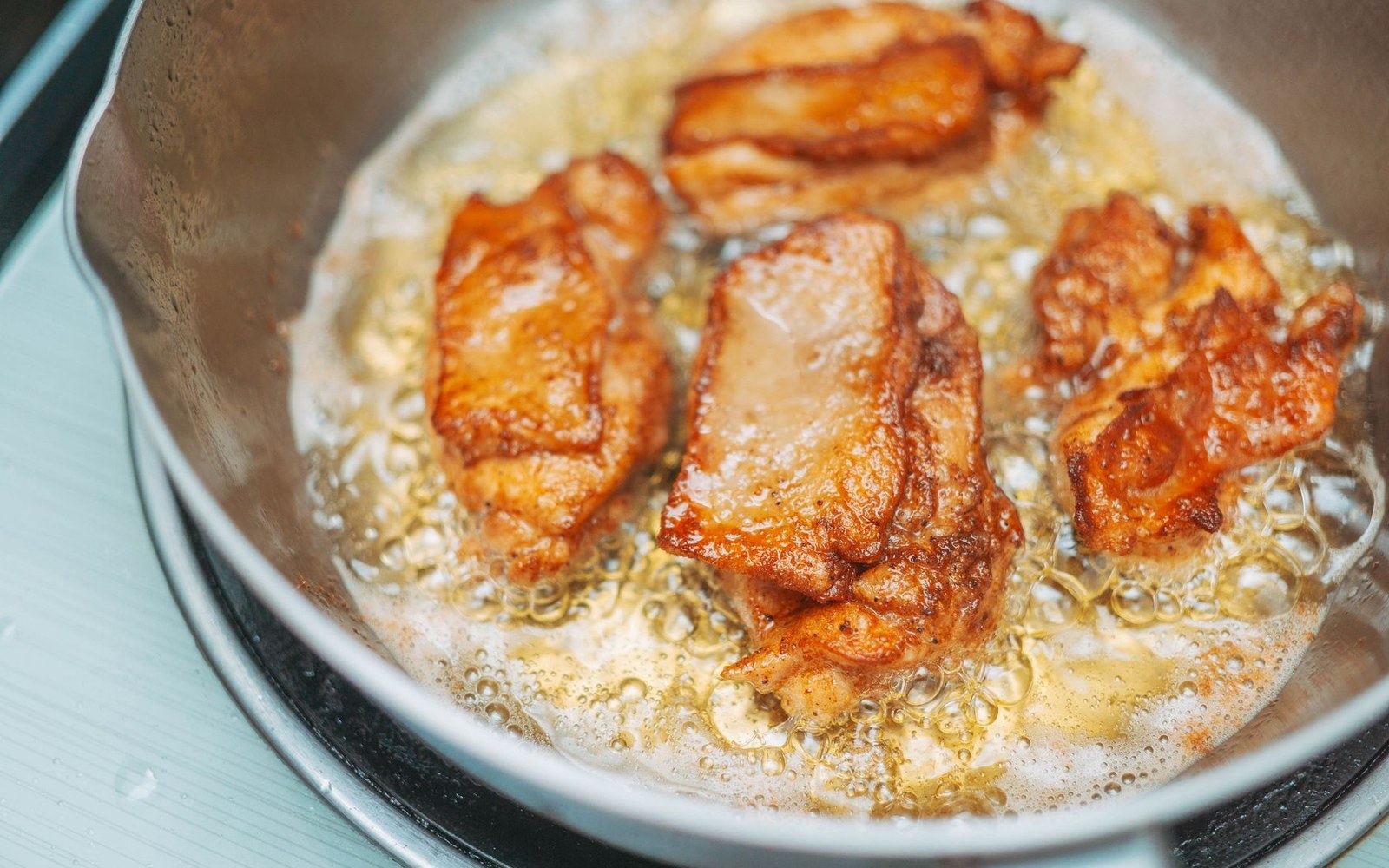
Once strained and cooled, the fat layer that solidifies on the surface lifts cleanly away. What remains under it is the stock, and if it set to a jelly, it is a good one. A concentrated version — reduced by half, or more — becomes a liquid that amplifies anything it touches. Stirred into a pan after sautéing chicken pieces, it becomes a sauce built in the same vessel the meat cooked in. Simmered with aromatics and finished with something acidic, it anchors a braise.
The carcass, in this sense, is not a by-product. It is the second use of the animal — the bones and connective tissue doing work the muscle never could. A chicken bought and roasted once becomes two separate things to cook with, and the second is often the more versatile of the two.
A Chicken in the Kitchen is an independent publication about cooking. It is not a restaurant, retailer or nutrition service.