Why the Thigh Is Not the Breast
The same bird, two entirely different muscles — and two entirely different problems to solve.
One Works, One Rests
The breast and the thigh come from the same animal, but they are not the same meat, and treating them identically is the first mistake a cook can make.
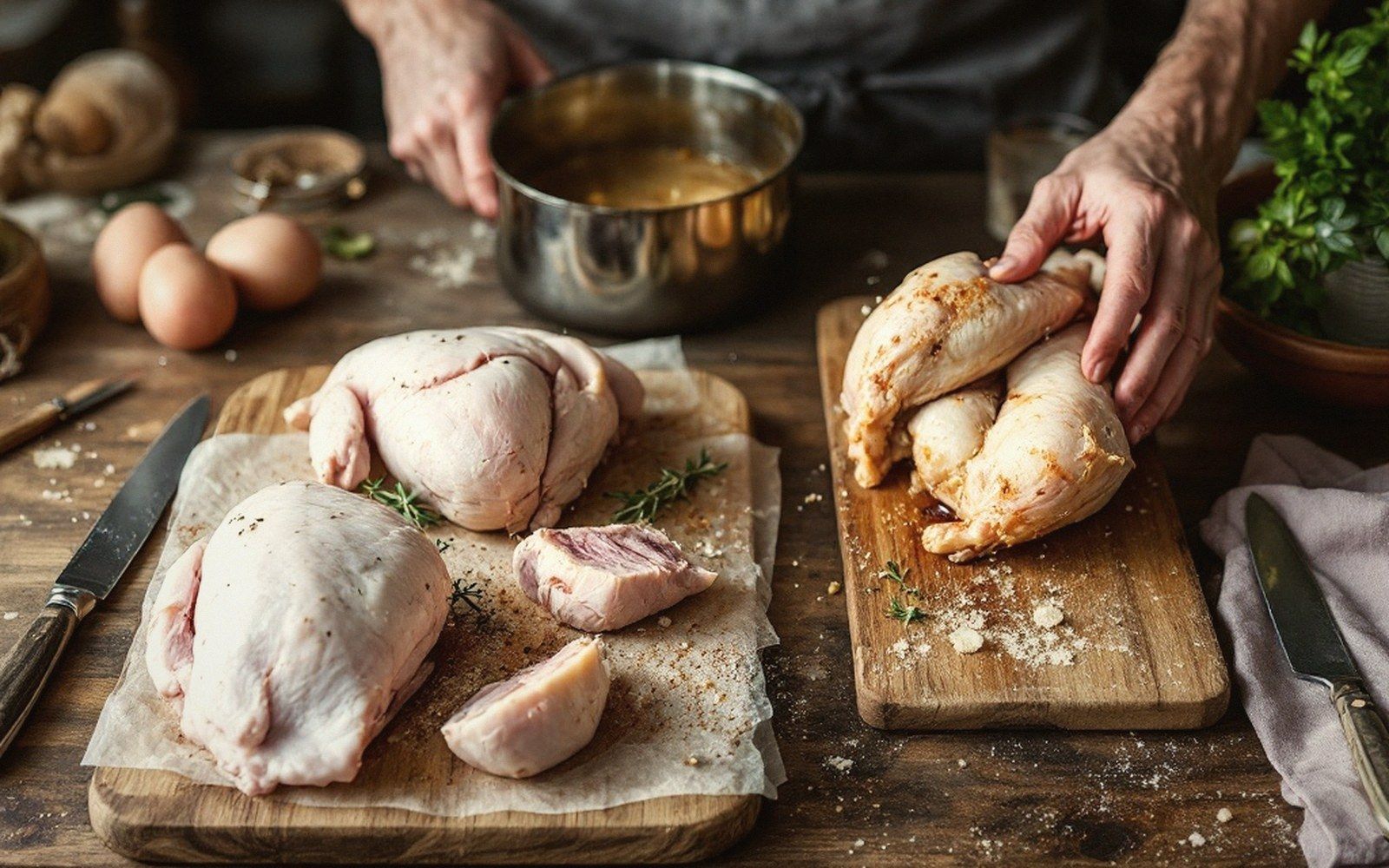
A chicken's breast muscles do almost nothing. The bird uses them only for the occasional burst of wing-flapping — brief, explosive effort that demands no endurance. The result is pale, lean muscle with very little myoglobin, the oxygen-storing protein that colours working muscle red, and almost no connective tissue. Without connective tissue, there is nothing to convert and no collagen to keep things moist when the temperature climbs. The breast is unforgiving precisely because it has no reserves: overshoot by ten degrees and the muscle fibres have wrung themselves dry.
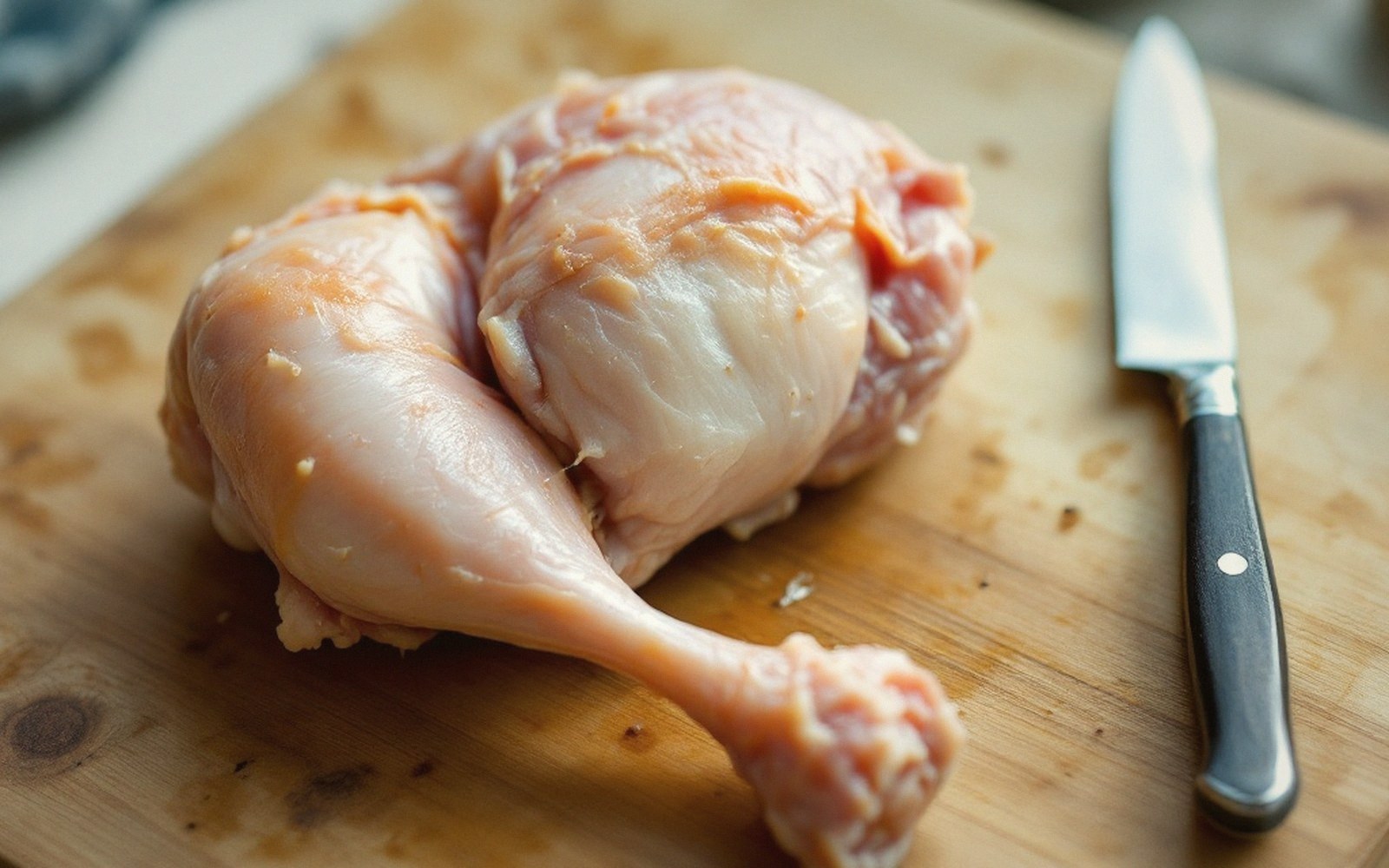
The thigh is the opposite. A chicken walks on its legs all day, every day. Sustained locomotion requires sustained oxygen, so the muscle carries more myoglobin — hence the darker colour — and it is laced with collagen-rich connective tissue. That connective tissue is not a liability; it is the whole point. Under prolonged heat, collagen converts to gelatine, and gelatine is what makes a braised thigh feel yielding and rich where an overcooked breast feels chalky and tight. The two numbers that matter are not arbitrary: breast meat is best pulled near 65 °C, while thigh meat actually improves as it pushes past 74 °C and the collagen finishes its work.
This is why the thigh forgives and the breast does not. Roast a whole bird and you are managing a conflict: the thigh needs time and the breast needs protection from it. Every technique — spatchcocking, starting the bird leg-side down, resting before carving — is some answer to the same structural disagreement. The breast has no collagen to tide it over. It hits its peak and falls away quickly. The thigh is still improving.
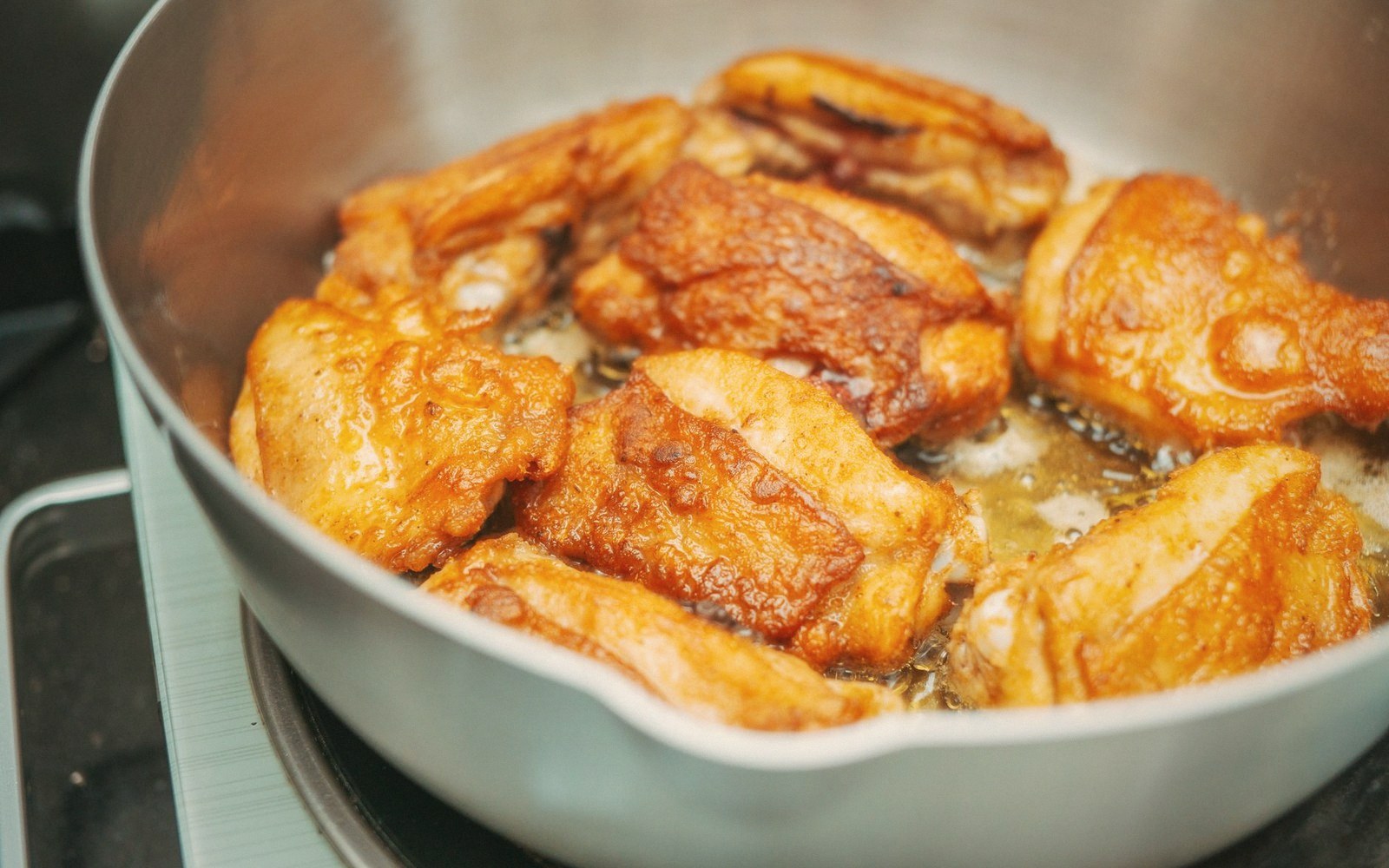
Fat content also affects how each cut behaves in a pan. The higher fat content threaded through thigh meat renders slowly and keeps the surface moist under dry heat; the leaner breast is susceptible to the surface drying before the centre is done. Getting the skin right on a breast is a race. On a thigh, there is more latitude — the fat underneath is working in your favour.
Understanding this is not an abstraction. It is the reason the same oven at the same temperature produces two different results, and the reason every classic preparation that calls for a whole jointed bird gives the dark and white meat different times, different treatment, and sometimes different pots entirely.
That connective tissue is not a liability; it is the whole point.