Over Fire
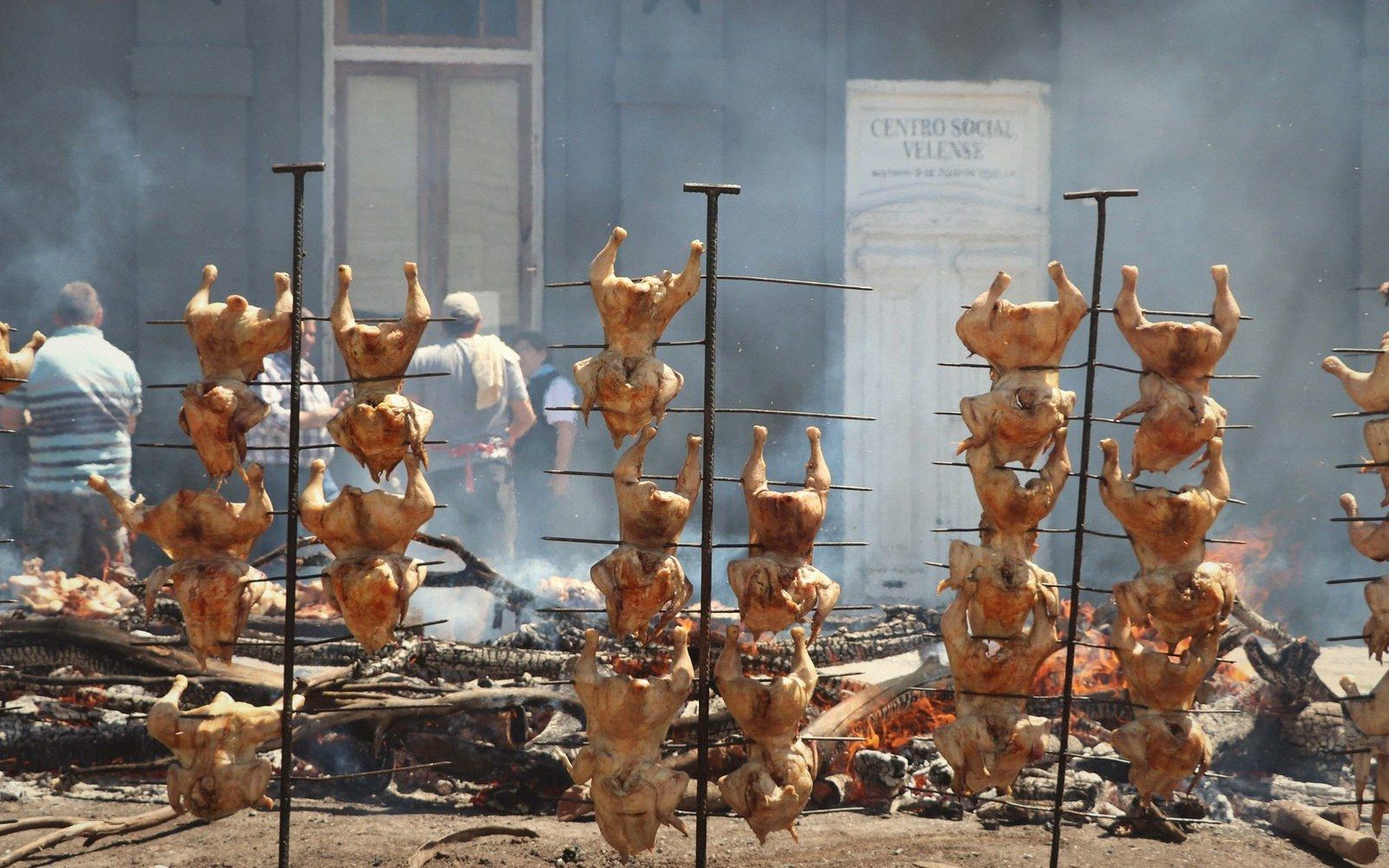
Grilling a chicken isn't the problem. Grilling a whole chicken is.
Direct heat is the most democratic cooking method there is — a grate, a flame, something to eat — but it is also the least forgiving of a bird that presents two fundamentally different muscles to the same temperature at the same time. The thigh and the drumstick are dark, fatty, shot through with connective tissue, and built to take punishment. The breast is lean, pale, and ruins fast. Put them both directly over the coals and one of them will be wrong.
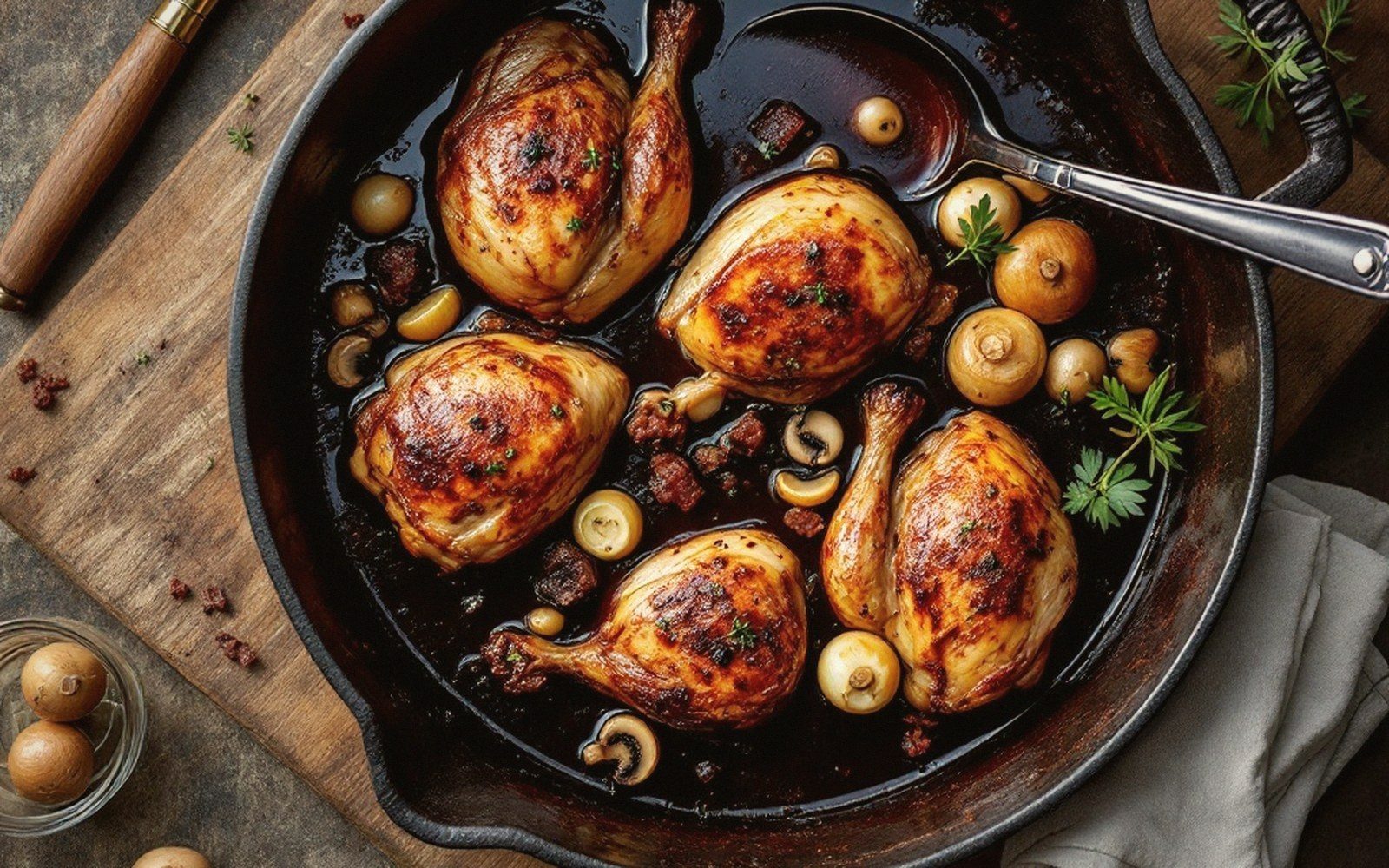
The practical answer is zone cooking: a hot side for colour and a cooler side for finishing. Sear the bird over direct heat to get the Maillard reaction working on the skin — the browning that is not caramelisation but a separate cascade of reactions between amino acids and reducing sugars, producing hundreds of flavour compounds — then move it off the flame to let the interior catch up without the outside burning. This is not a trick. It is just acknowledging that fire radiates far more energy than an oven and gives you no buffer.
Flare-ups come from fat dripping onto the heat source, and the thigh produces far more of them than the breast. A momentary flare is fine; it chars and moves on. A sustained one deposits acrid, sooty compounds on the skin. Managing drip means keeping the bird moving, not hovering over it with the lid open, and accepting that some char is the point — just not all char, and not everywhere.
The case for cooking thighs and drumsticks over fire, and keeping breast pieces for the oven, is anatomical. The thigh and breast want different finishing temperatures, and achieving both over live fire on a whole bird is genuinely difficult. Pieces give you control. Bone-in thighs with skin on are the most forgiving cut you can grill: the fat self-bastes, the bone slows heat penetration to the centre, and the meat can tolerate higher temperatures without drying out. A boneless, skinless breast over direct flame is one distraction away from leather.
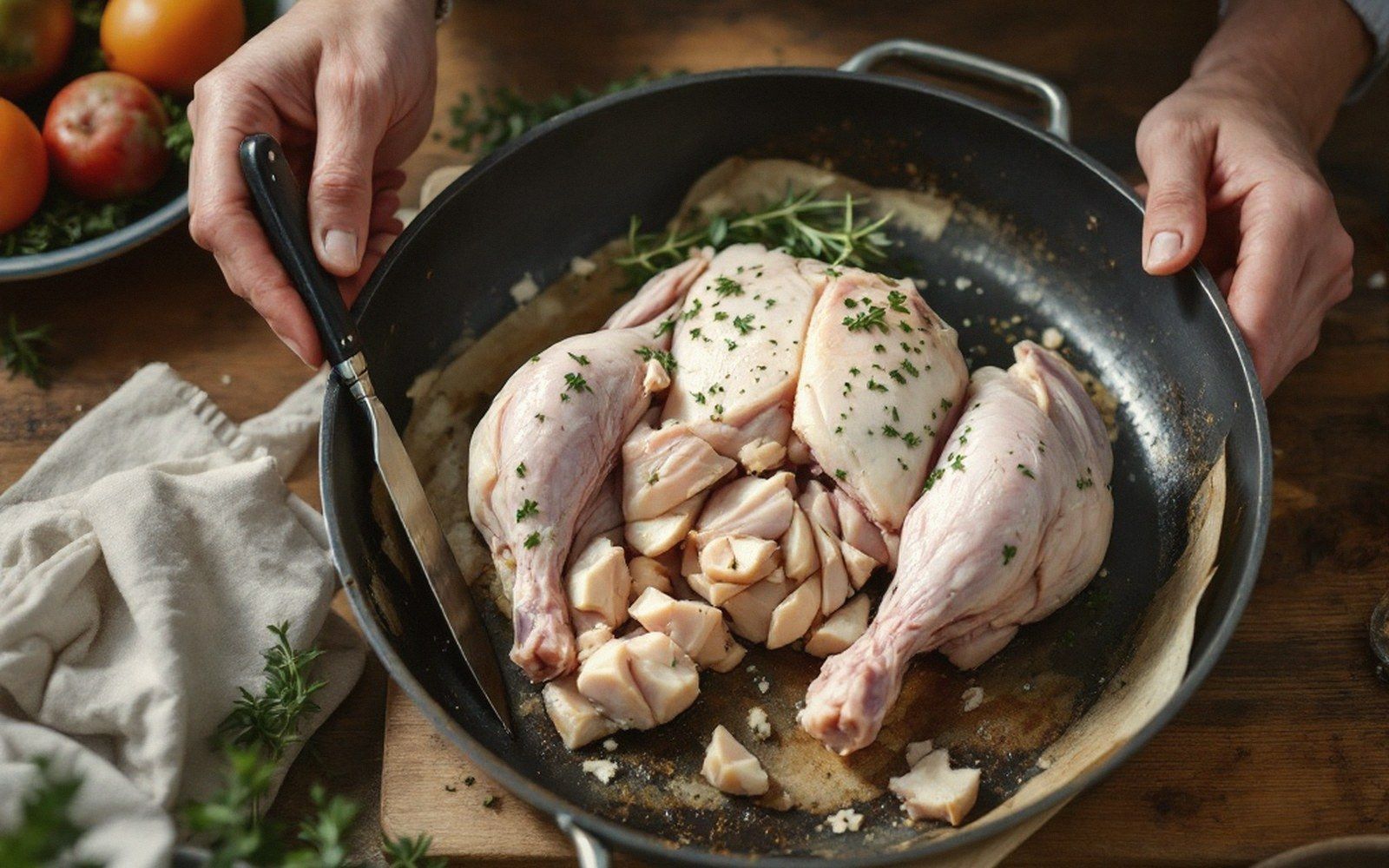
If you must cook a whole bird on the grill, spatchcocking — removing the backbone and pressing the bird flat — is the structural fix that brings thigh and breast closer to the same finishing time, because it reduces the thickness differential and pins the whole surface against the heat more evenly. It is not perfect, but it is better than nothing.
Fire rewards understanding the animal. A thigh is not a breast cooked at higher heat. It is a different muscle asking for a different approach, and the grill makes that distinction impossible to ignore.
Flare-ups come from fat dripping onto the heat source, and the thigh produces far more of them than the breast.