Cooked in Fat
Confit began as a way to keep meat through winter. What it does to texture is a side effect that became the point.
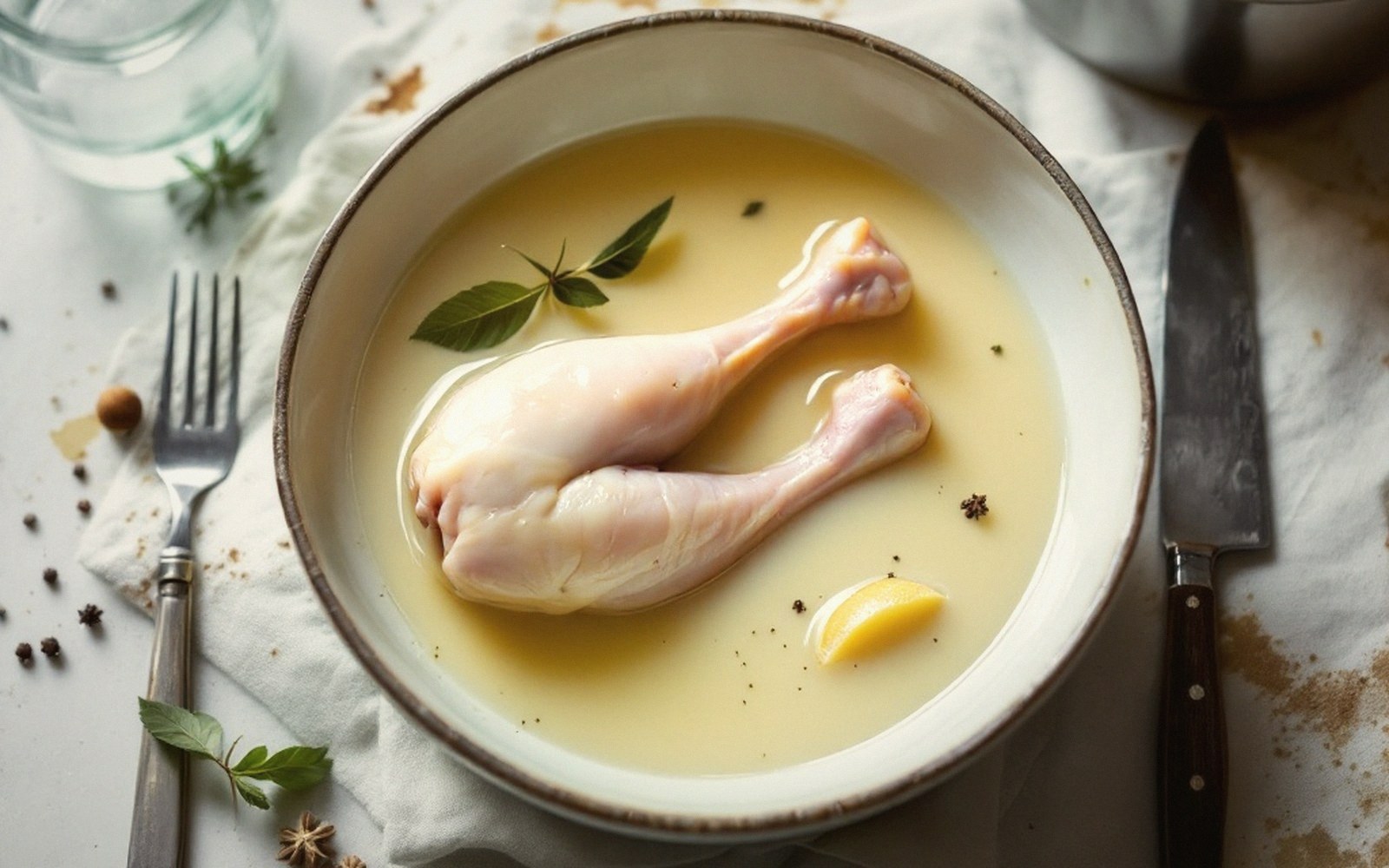
The Preservation Logic, and What Survived It
Before refrigeration, cooking duck legs — or goose, or pork — slowly in their own rendered fat and then sealing them under that fat in a cool larder was a way to keep them edible for weeks, sometimes months. The fat excluded oxygen; the salt drawn into the meat before cooking inhibited spoilage. This is confit (from the French confire, to preserve), and the method is old enough that it pre-dates any serious theory of why it worked.
What cooks eventually noticed was that the texture it produced was unlike anything else. The meat pulled apart in long, soft fibres. The connective tissue had dissolved. Nothing was dry. This was not the goal — it was a consequence of cooking at very low temperature for a long time — but it was good enough that the technique persisted long after the larder problem disappeared.
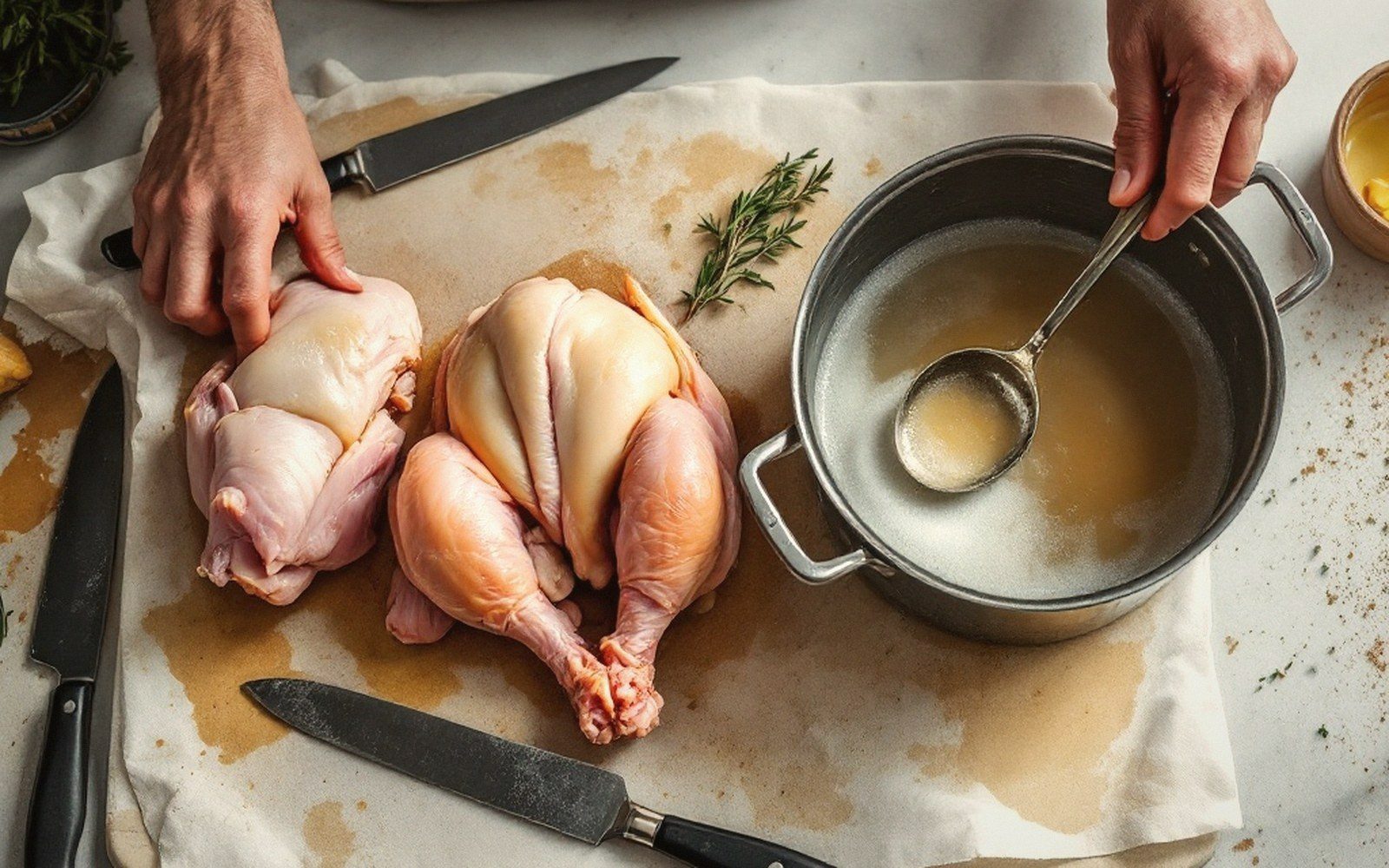
The mechanism is the same one that makes any long, slow cook tender. Collagen begins converting to gelatine at temperatures above roughly 70 °C, and the conversion accelerates with time. A thigh cooked at 80–90 °C in fat, held there for ninety minutes or more, arrives at a state where almost all the connective tissue has softened. The surrounding fat is an efficient, even heat-transfer medium that holds the temperature steady without the turbulence of water — so the surface and the centre finish at nearly the same point. Nothing seizes. Nothing dries.
The fat itself does not penetrate the meat in any meaningful quantity. What it does is prevent moisture from escaping into the cooking environment. The juices that would steam away in a hot oven have nowhere to go; they stay in the muscle. This is why confit feels rich even though you are not eating fat — you are eating a piece of meat that has kept its own water.
The juices that would steam away in a hot oven have nowhere to go; they stay in the muscle.
The crisped skin that usually accompanies a served duck confit is not part of the slow cook. It is added afterward, in a hot pan, because the low-temperature bath leaves the skin pale and soft. The two stages — long and gentle, then briefly violent — are doing entirely different things, and neither substitutes for the other.
The technique works best where there is collagen to dissolve: legs, thighs, wings. Applied to a breast, it produces something oddly textureless, because the breast has little connective tissue to transform. The anatomy decides what the method is for.