Where the Body Comes From
The collagen in bones and connective tissue dissolves into gelatine as stock simmers. That transformation — not the water the meat sits in — is what gives a well-made stock its body.
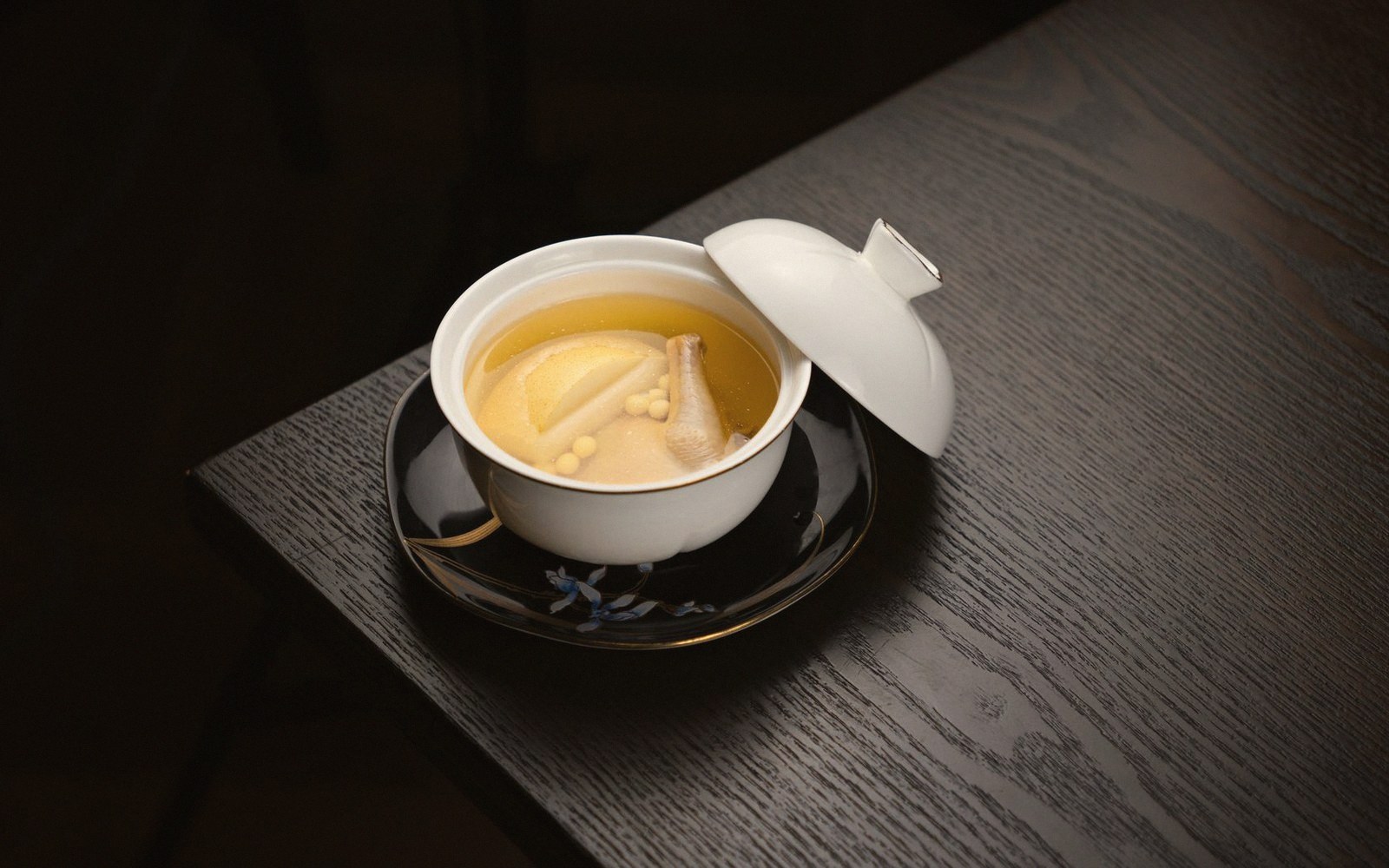
What Turns Liquid to Gel
Collagen is a structural protein, the substance that holds connective tissue together and sheathes the bones. In living muscle it is tough, almost indigestible; put it in hot water for long enough and its triple-helix strands unwind, hydrate, and become gelatine — the same substance that makes a chilled stock set to a trembling jelly in the pot.

The parts of a chicken richest in collagen are the ones people historically threw away or handed to the dog: the feet, the wingtips, the neck, and the cartilage at the ends of the breastbone and joints. A carcass stripped of its meat still carries significant amounts, concentrated at the knuckles and along the back. This is why the carcass is the second half of the bird — not a spent husk but a source of structure that the meat itself cannot provide.
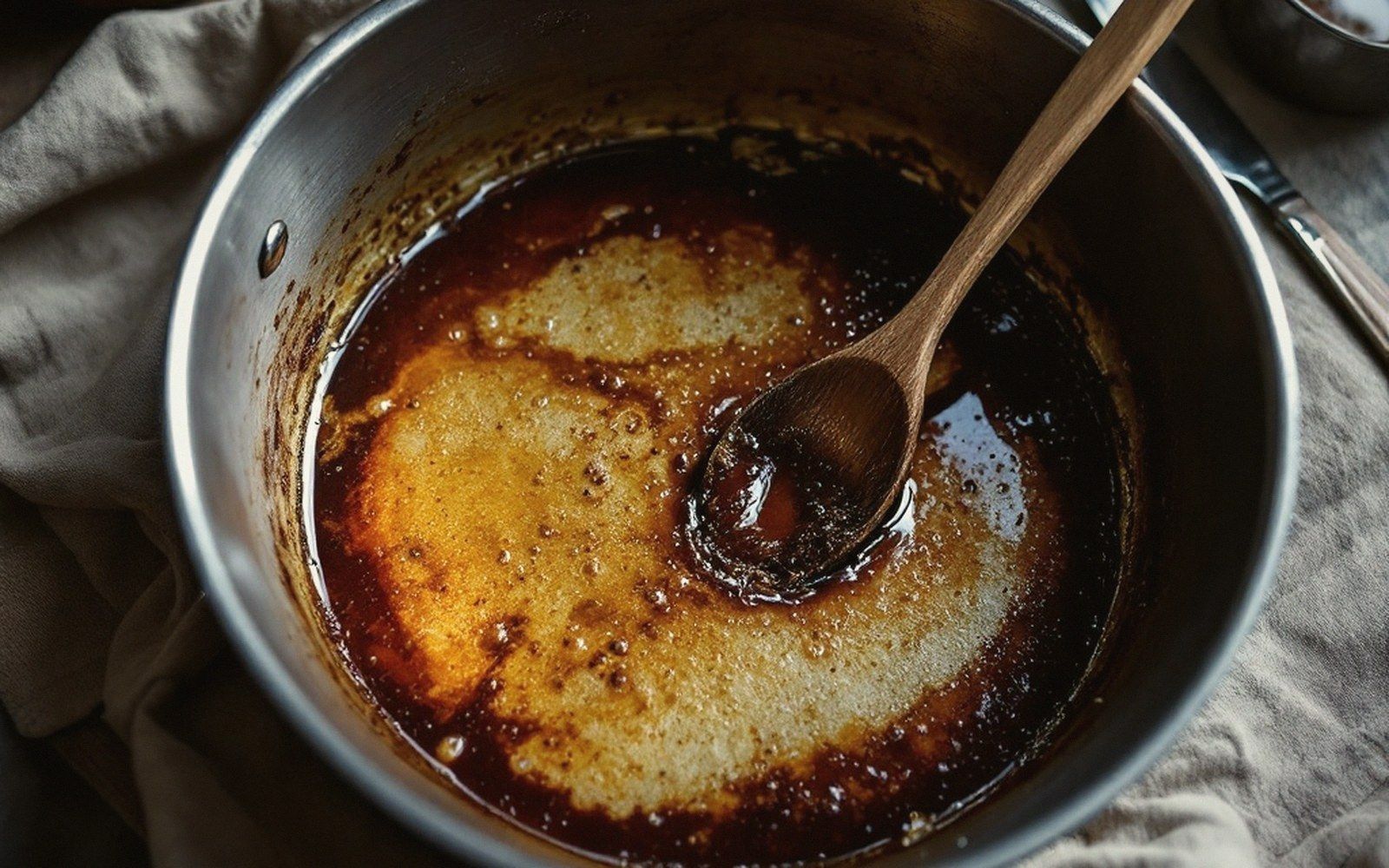
Feet deserve special mention. A chicken foot is almost entirely skin, tendon and cartilage, with very little muscle. The collagen content is extraordinary relative to its small size. Two or three feet added to a pot of carcass bones will push the gelatine yield noticeably higher. The stock will coat a spoon differently, cling to whatever it is used to sauce, and set firmly when cold. A stock made without them can still be good; it will simply be thinner.
Temperature matters here in a specific way. The conversion of collagen to gelatine requires sustained heat — a bare simmer held for an hour and a half to two hours in most home contexts. Boiling hard does not speed this up usefully; it does, however, beat the liquid into a murky emulsion. Low and long is not a stylistic preference but a chemical requirement.
The stock will coat a spoon differently, cling to whatever it is used to sauce, and set firmly when cold.
What you are left with is a liquid that carries the architecture of the animal — its joints, its tendons, its connective scaffolding — dissolved into something that makes everything it touches more coherent.