Skimming, and Why Clarity Matters
A stock that boils turns grey and muddy. The why is in the proteins.
What Rises, and What to Do With It
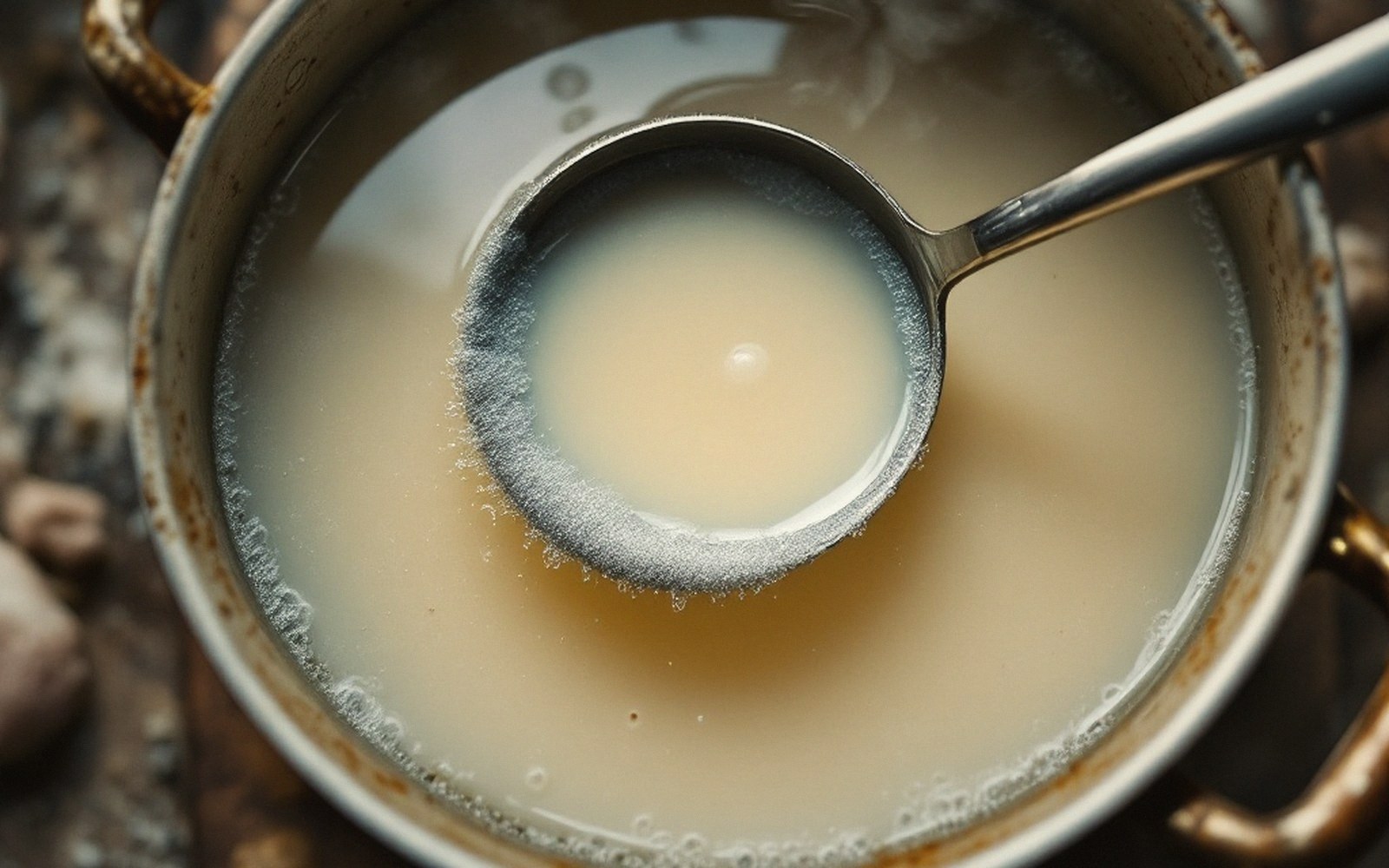
Put a raw carcass in cold water and bring it slowly to a simmer, and within a few minutes something appears on the surface: a pale, brownish-grey foam. This is not fat. It is coagulated protein — mostly myosin and other water-soluble proteins that have leached from the bones and meat into the cold water, then denatured as temperature climbs. They clump into light, loosely structured masses that are less dense than water, so they float.
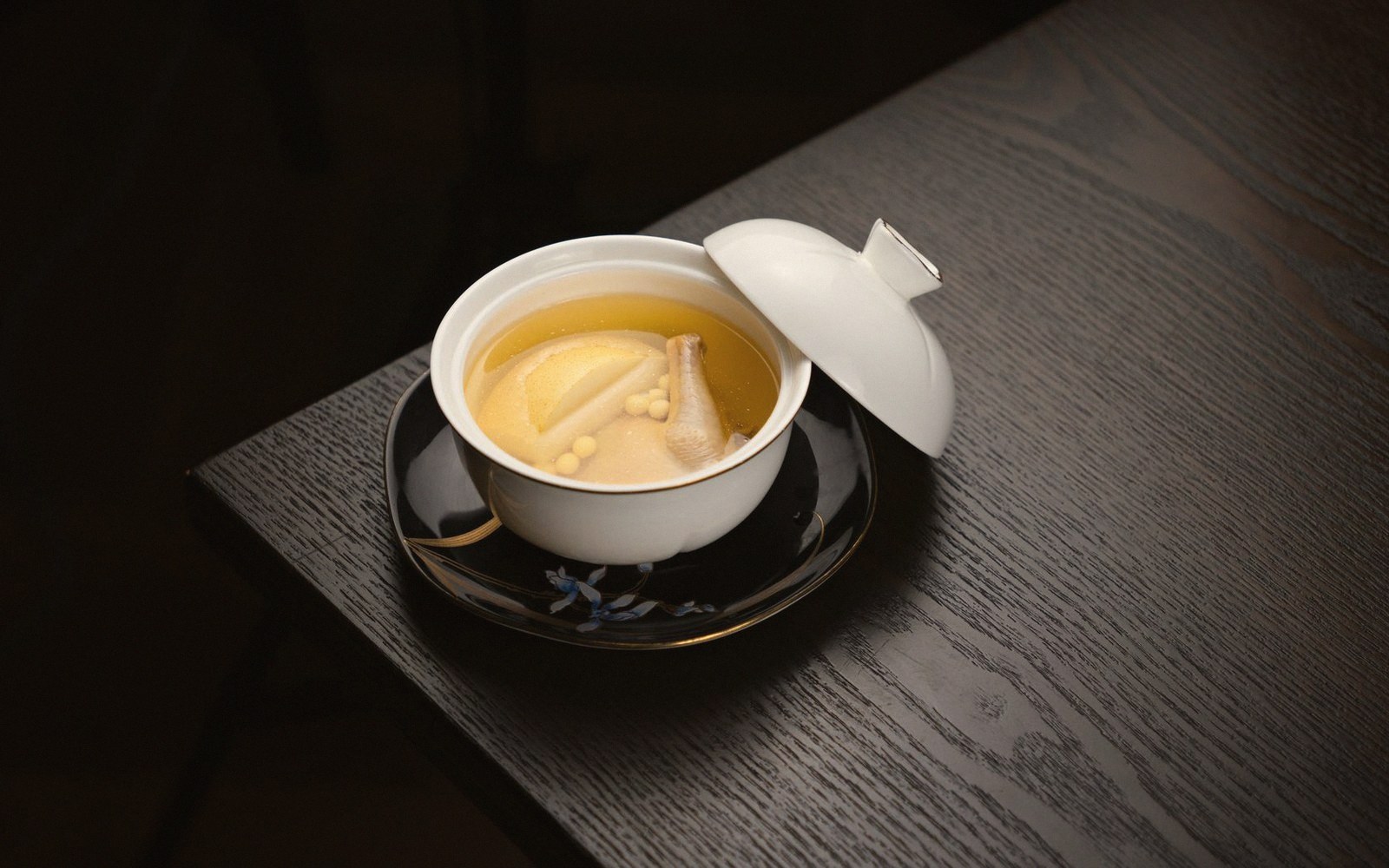
Fat arrives later, once the connective tissue has begun to render. It sits in distinct yellow pools, liquid and separate. The two are easy to tell apart, and they behave differently. The foam should be removed; the fat can be skimmed at the end, or lifted off once the stock is cold and set.
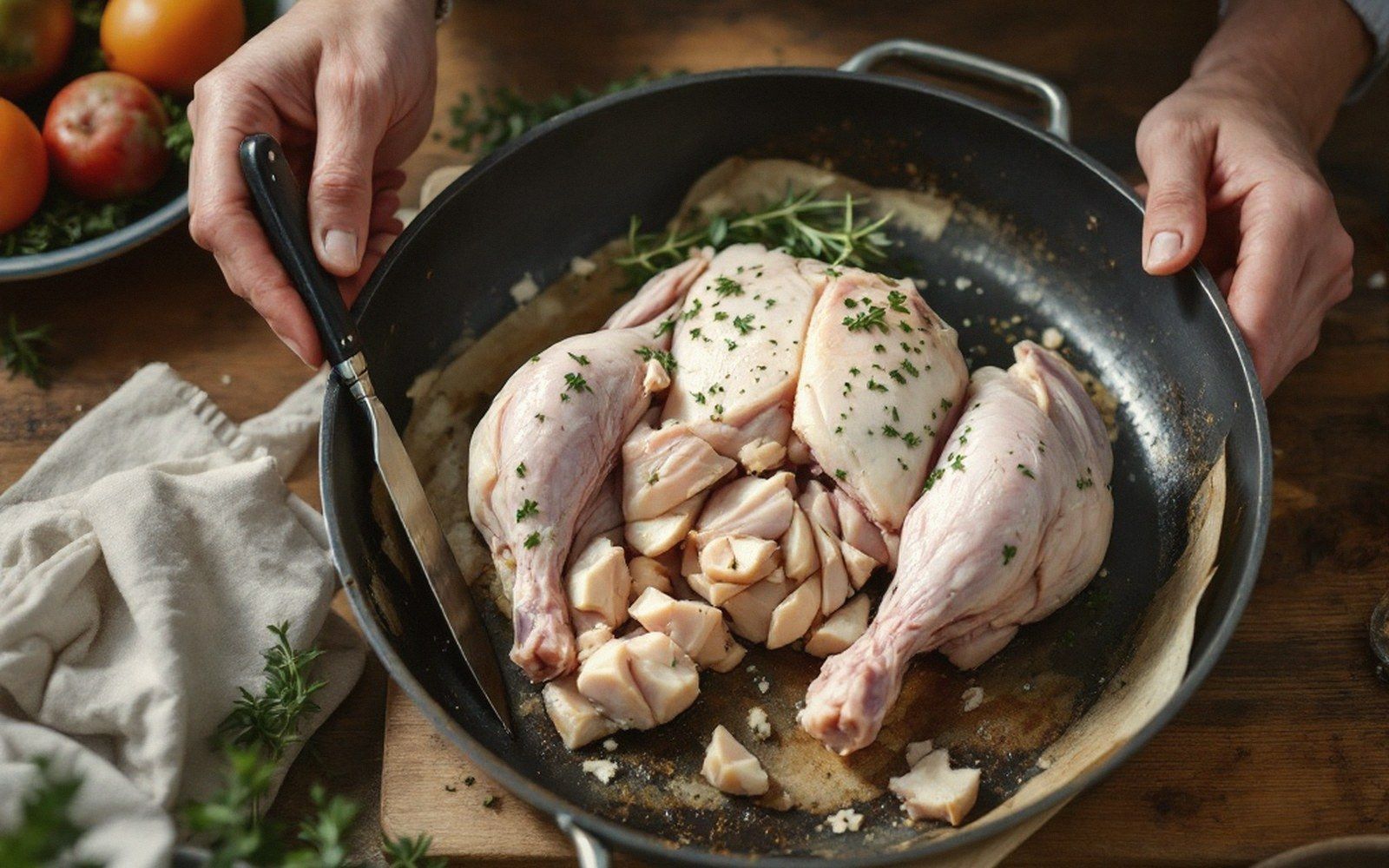
The foam itself is not toxic. If you leave it in, the stock will not harm you. What happens instead is textural and optical: as soon as the liquid crosses from a bare simmer into a real boil, turbulence forces those coagulated proteins back into suspension. They break into particles too fine to rise again, and they stay dispersed throughout the liquid — permanently. The stock turns grey and opaque, with a slightly muddy, sometimes bitter edge to its flavour.
This is why skimming and heat control happen together. Starting the carcass in cold water (rather than boiling) gives the proteins time to coagulate and rise before the stock reaches simmering temperature — that is the window to skim. Once it is clear, drop the heat to a bare shiver, the surface barely moving, and keep it there. A rolling boil is not a shortcut to a faster stock; it is the mechanism that makes the stock cloudy and coarser.
Once it is clear, drop the heat to a bare shiver, the surface barely moving, and keep it there.
The practical method is simple: bring the pot up slowly, skim the foam as it gathers with a wide, flat spoon or a small ladle, then reduce the heat. Do this for the first fifteen or twenty minutes and the foam more or less stops coming. From there the stock is left alone to draw gelatine and flavour from the bones at a gentle, unhurried heat.
A clear stock is not vanity. Clarity is evidence that the proteins were handled correctly — that the liquid was never pushed past the point where it emulsified its own debris back in. The same stock reduced to a sauce, or set as a jelly, will be cleaner in flavour for it. The grey version works; it just works less well.