Brown Against White
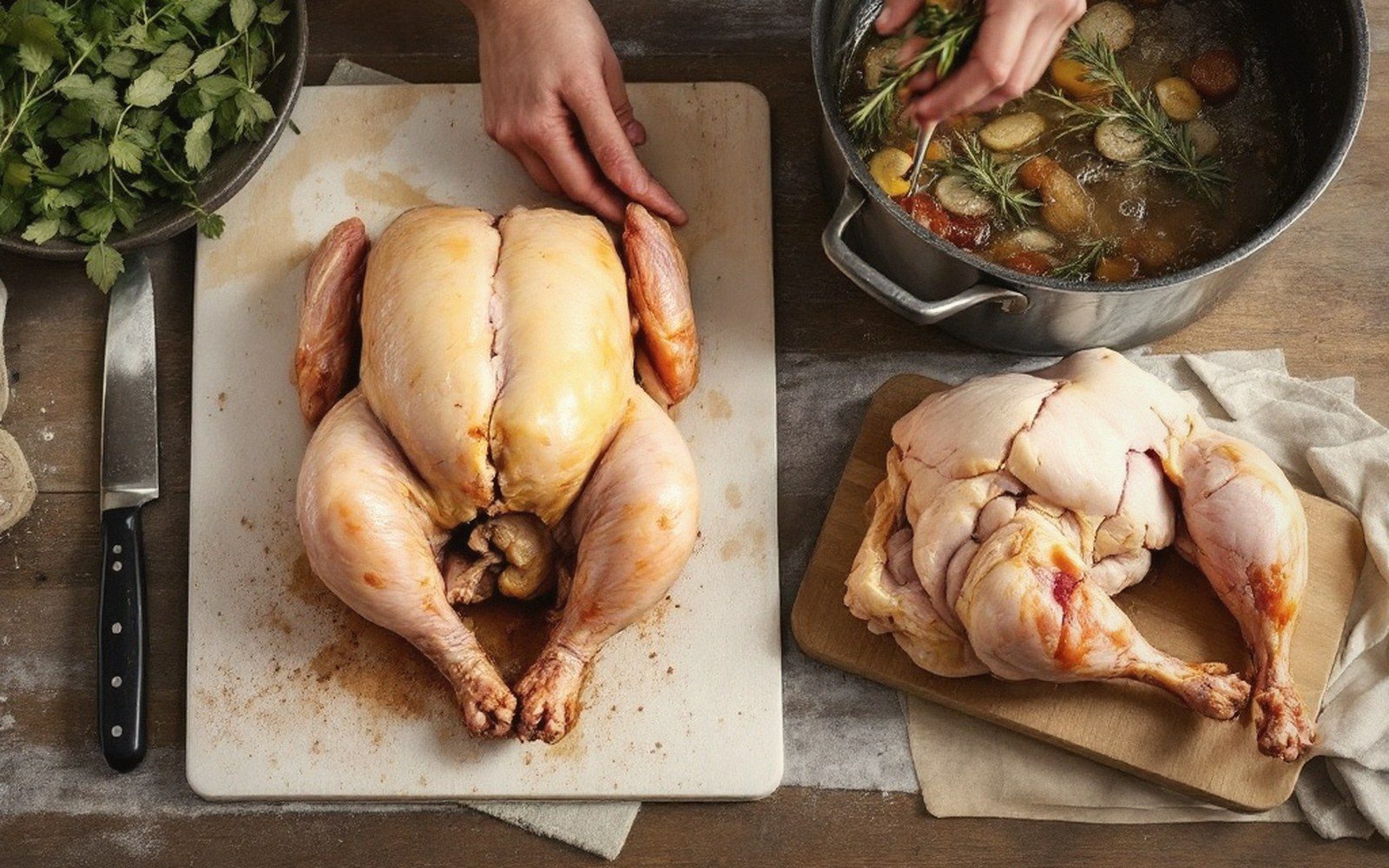
Two Stocks From One Carcass
The difference between brown chicken stock and white chicken stock is not refinement — it is intention. One is roasted first; the other goes into the pot raw. That single decision changes the colour, the flavour and the kitchen work each stock is suited for.
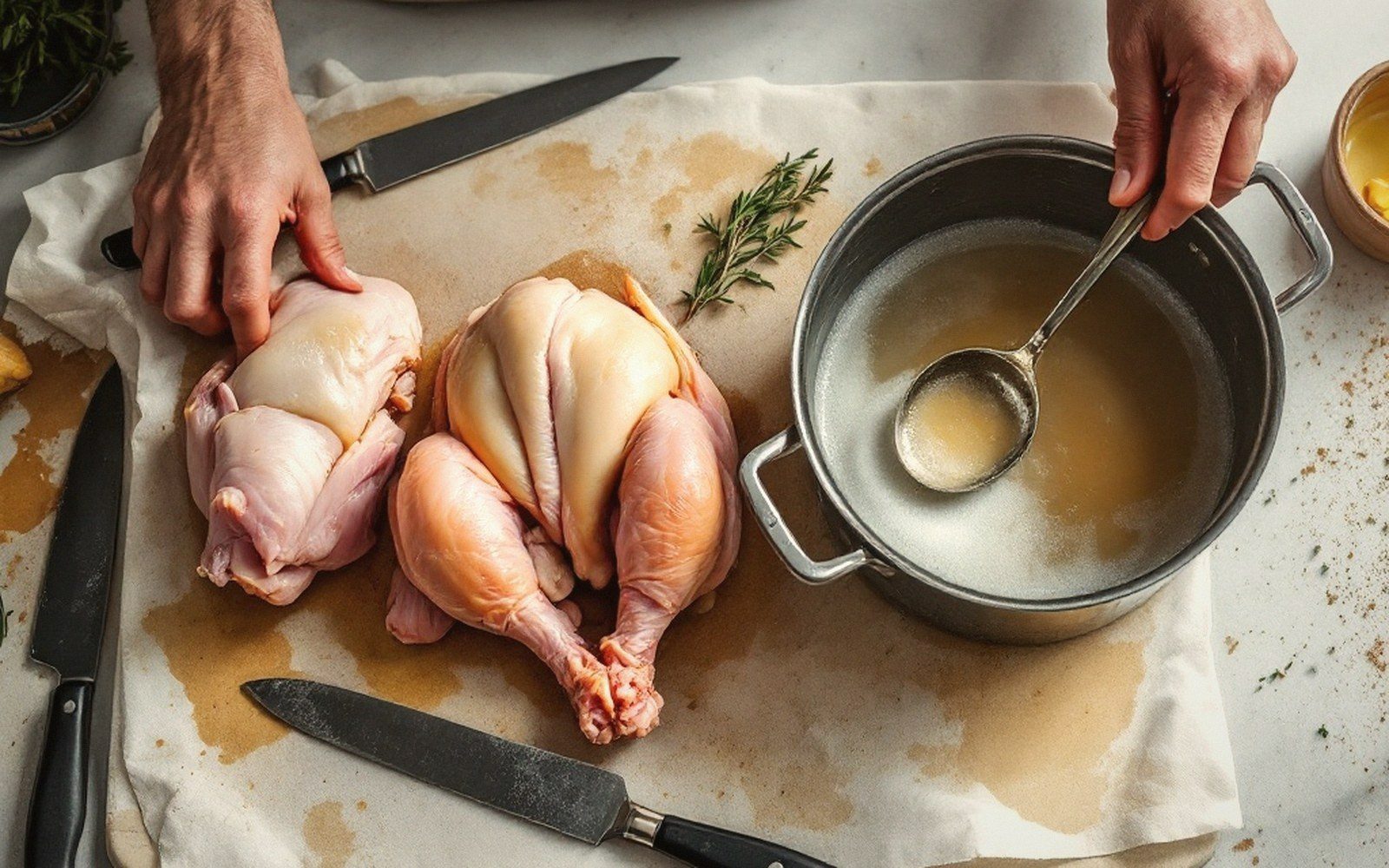
White stock (fond blanc) starts with raw bones, usually blanched briefly in cold water to flush out blood and loose proteins before the long simmer begins. The result is pale, clean and neutral — a liquid that carries flavour without announcing itself. It slides under a cream sauce or a velouté without competition. Sauces that need clarity of taste, not depth, want a white stock underneath them.
Brown stock (fond brun) takes the same carcass and puts it in a hot oven first — around 220°C — until the bones colour and the meat scraps catch. The Maillard reaction works on the proteins; sugars caramelise; the rendered fat browns the vegetable mirepoix alongside. Everything goes into the pot already carrying that roasted character, and the simmer draws it out into the liquid. The stock turns amber, then deep brown, and the carcass that once seemed like a leftover becomes something with real authority.
What the roasting cannot do is create gelatine — that still comes from collagen in the connective tissue breaking down over the long simmer. So both stocks will set in the refrigerator if there is enough cartilage and joint material in the pot; the brown stock simply sets with more flavour. A good brown chicken stock, reduced further, becomes the base of a sauce that could stand on its own.
The Maillard reaction works on the proteins; sugars caramelise; the rendered fat browns the vegetable mirepoix alongside.
The two products are not interchangeable. Brown stock in a white sauce will muddy it; white stock under a braise will seem thin and unresolved. Knowing which you need is a function of knowing what comes next: pale sauces, poaching liquids and rice dishes want white; braises, reductions and pan sauces want brown.
Roasting time runs roughly thirty to forty minutes and costs almost nothing — the bones were going in the bin. The return is a stock that tastes built rather than extracted.