Trussing, and Whether It Helps
Tying a bird into a neat parcel is one of cooking's most taught steps. It is also one of the least necessary.
What the string actually does
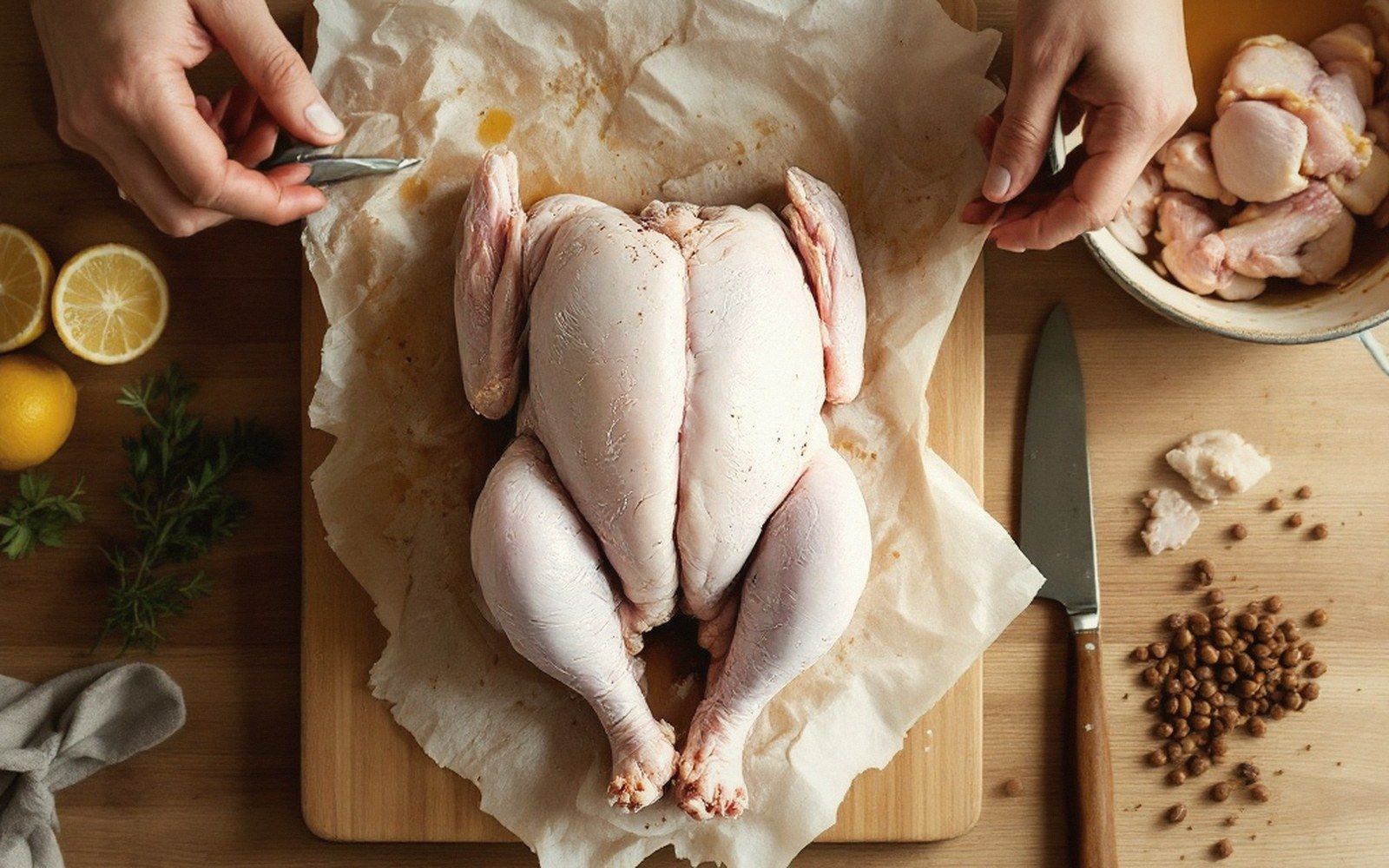
Trussing pulls the legs tight against the body and tucks the wings flat. The argument for it is heat: a compact shape, the theory goes, exposes less surface area and cooks more evenly. The argument looks persuasive until you think about what happens inside the bird.
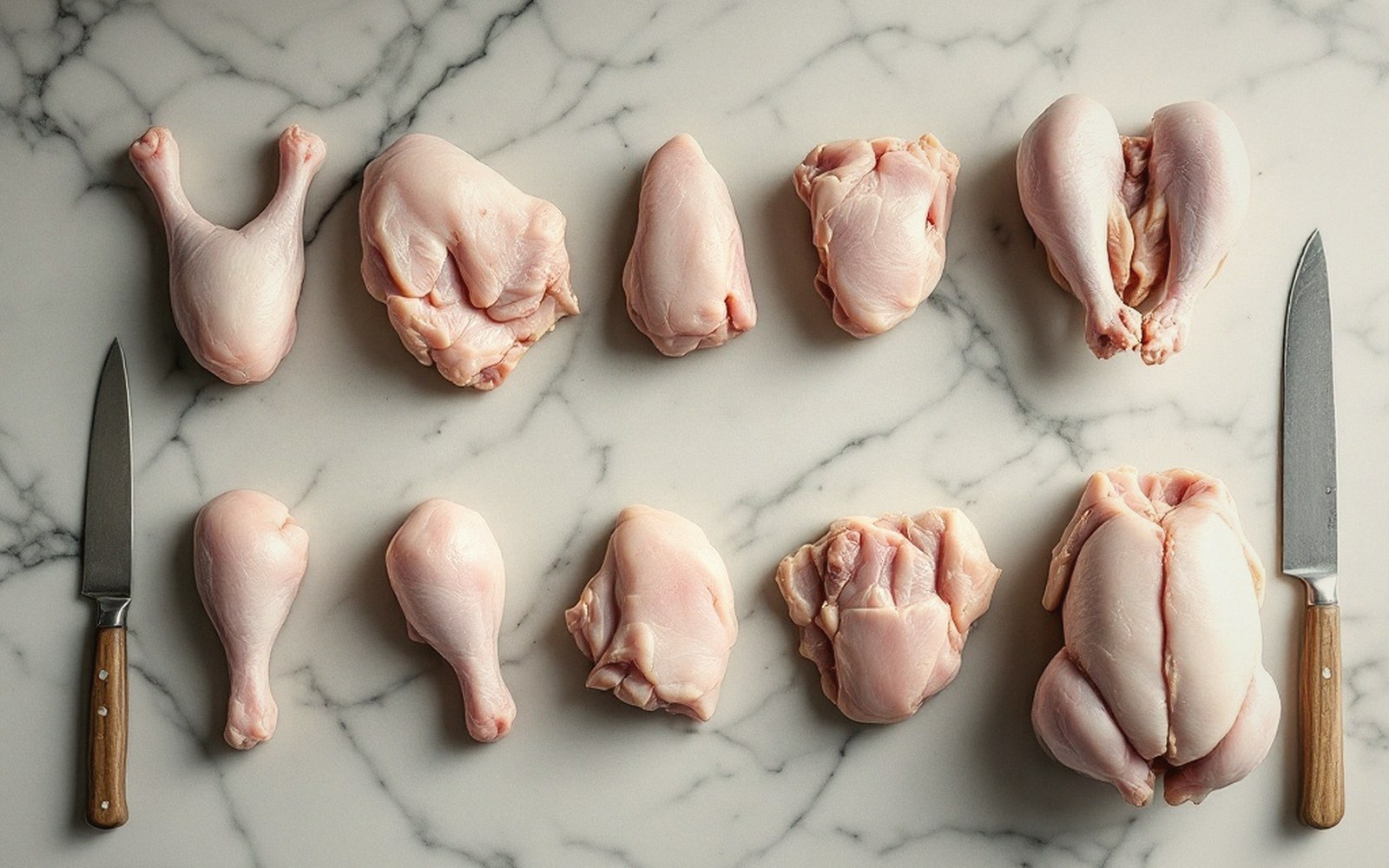
The thigh and the leg are the problem. Left splayed, they get more direct heat than the breast and tend to finish sooner — which sounds convenient until you remember that they need more heat, not less. The breast wants to stop around 65–66 °C at the thickest point; the thigh wants 74 °C or above, where collagen has had time to soften and the meat loses its rawness at the bone. Pulling the legs against the body slows their cooking, which is precisely the wrong direction. The cavity stays more enclosed too, trapping steam and keeping the inner thigh — the last part to reach temperature — even further behind.
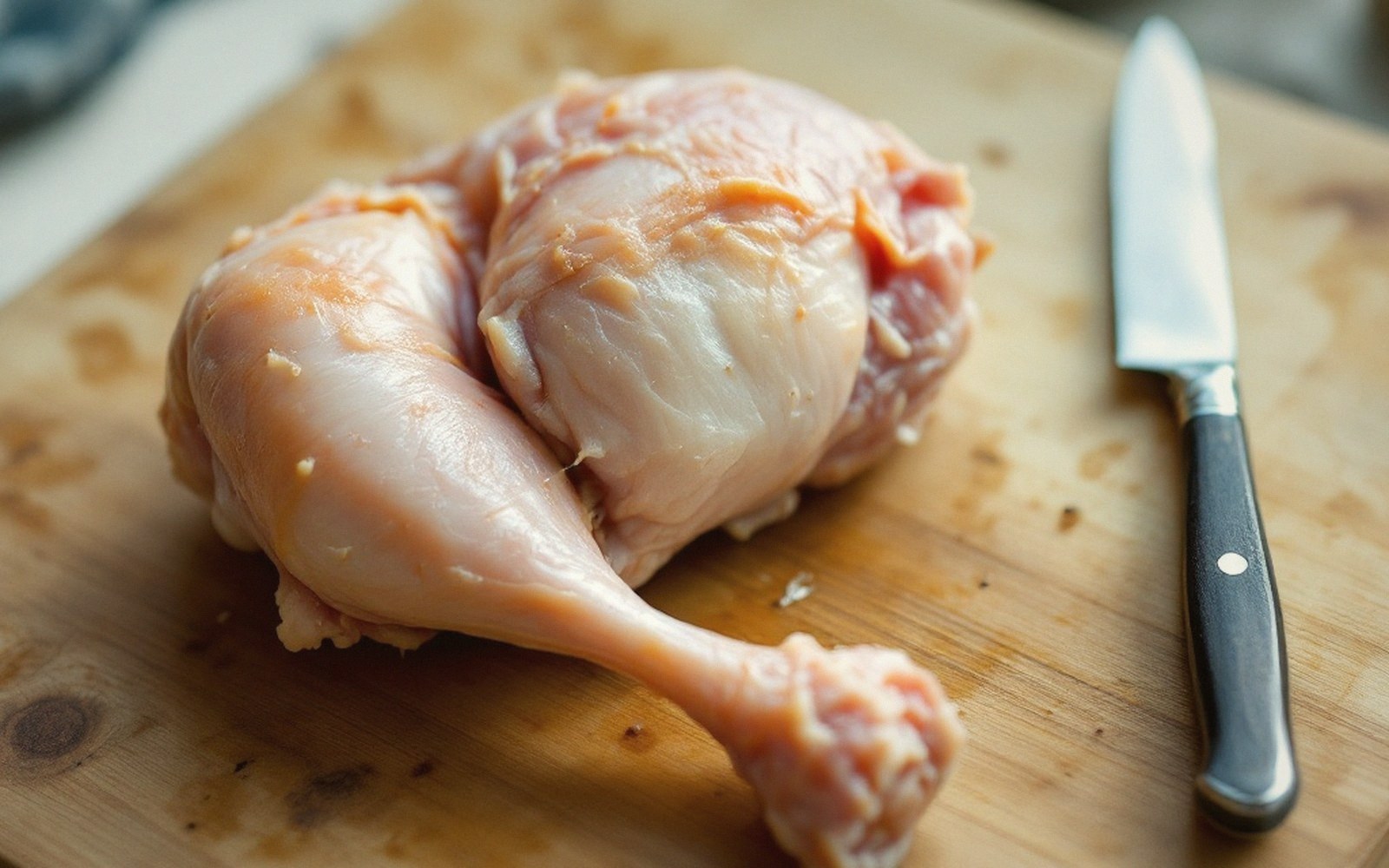
What trussing genuinely changes is appearance. A tied bird sits symmetrically on the platter, legs composed, nothing jutting. That matters in a restaurant or at a formal table; it matters less on a Monday evening. Professional cooks truss partly because a plated bird that looks undressed reads as careless. The technique became a kitchen standard during an era when presentation and service were inseparable from cooking.
The honest alternative is to leave the legs loose — or better still, spatchcock the bird entirely, which removes the geometry problem rather than papering over it. A flat bird gives the thighs more direct heat while shielding the breast, and the skin crisps uniformly across the whole surface.
Trussing is not wrong. It is just rarely the thing that makes a roast better. String costs nothing and takes thirty seconds, so if tidiness matters to you, tie it. But know you are doing it for the table, not the oven.
A tied bird sits symmetrically on the platter, legs composed, nothing jutting.