One Knife, Kept Sharp
The boning knife is designed around a single fact: bones are not flat.
What the flex is actually for
A chef's knife is stiff because that stiffness transfers force — it is built for the chopping board. A boning knife is narrow and, in most versions, flexible because it is built for a different surface entirely: the curved face of a bone. When you are working the tip along a femur or freeing a thigh from its socket, the blade needs to bend slightly to stay flush against the bone rather than skipping away into the meat. That contact is everything. Follow the bone cleanly and you waste nothing; lose contact for a moment and the knife angles off, leaving meat behind or nicking through somewhere it shouldn't.
The flex is not an accident of manufacture. It is the reason the knife exists in this shape. A stiff boning knife is also made — European butchers often prefer them, particularly for beef — but for poultry, where the bones are small, curved and close together, a flexible blade lets you pivot and steer without repositioning your grip. The tip does the navigating; the edge follows.
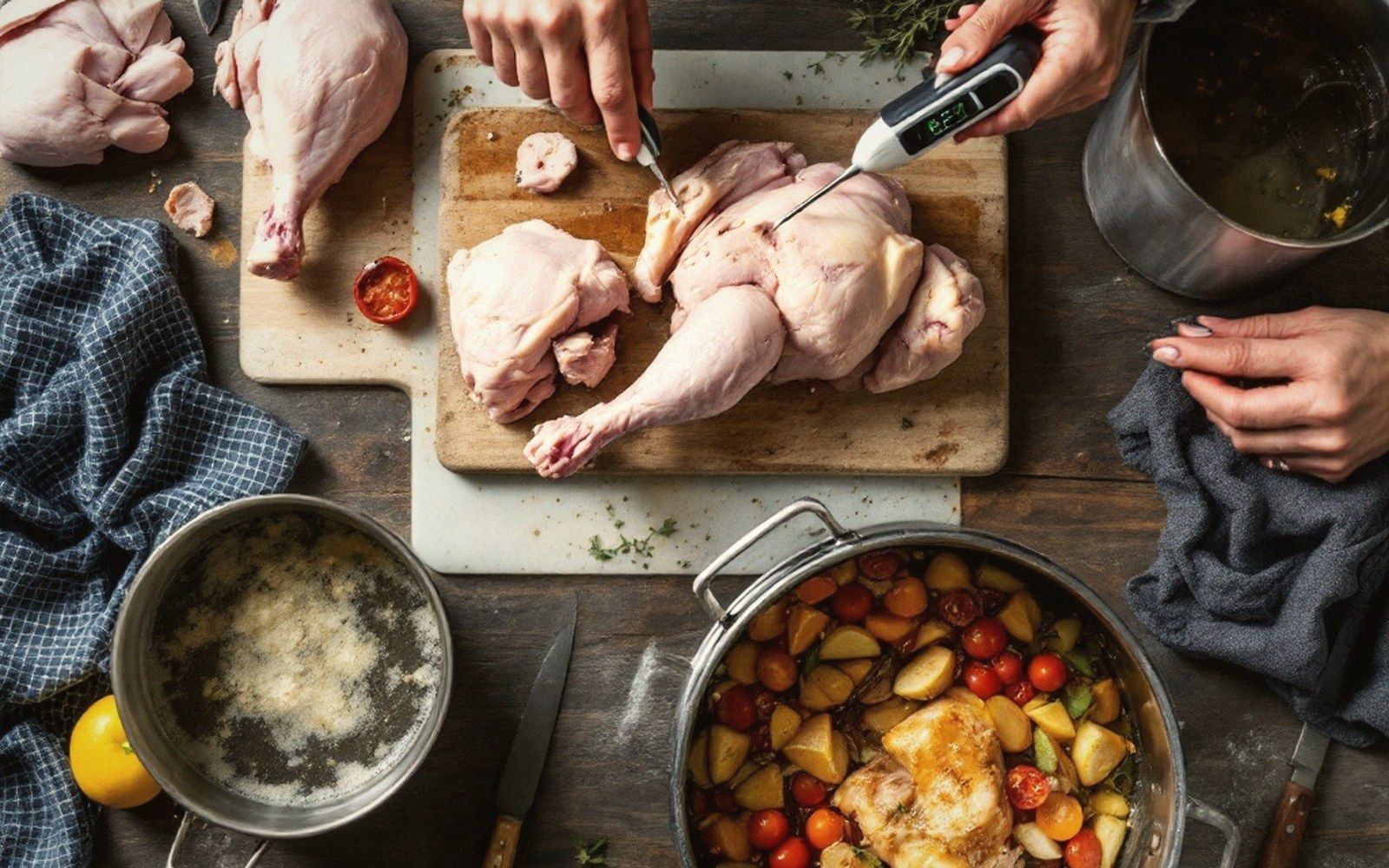
Blade length matters less than people expect. A boning knife typically runs around five to six inches, and that is long enough for any joint in a chicken. Longer would actually be a disadvantage, adding weight behind the tip and reducing the fine control that makes the difference when you are easing around a hip socket or working down the ridge of a wishbone.
Sharpness is the real variable
None of this works with a dull knife. A sharp boning knife finds the joint because the tip is precise enough to probe for it; a dull one drags, tears and requires force — and force is what causes accidents. Sharpness also matters for what the cut looks like afterwards. Clean separation of a thigh from the drumstick, or of the oyster from the backbone, requires an edge that cuts rather than shoves. A whetstone used regularly is the core of the maintenance programme. A honing steel between uses keeps the edge aligned. That is genuinely the complete kit.
One knife, kept sharp, is enough for nearly everything a chicken asks of you. A second knife — a stiff, heavier one — is useful for breaking through the breastbone or spine, where flex becomes a liability. But the boning knife is the one that follows the bird's own architecture, and architecture, not force, is what boning a thigh teaches you to read.
Clean separation of a thigh from the drumstick, or of the oyster from the backbone, requires an edge that cuts rather than shoves.
A Chicken in the Kitchen is an independent publication about cooking. It is not a restaurant, retailer or nutrition service.