Board Hygiene, Conventionally
Raw poultry is handled safely the same way it always has been. There is no new thinking here, and none is needed.
The Rules Are Short
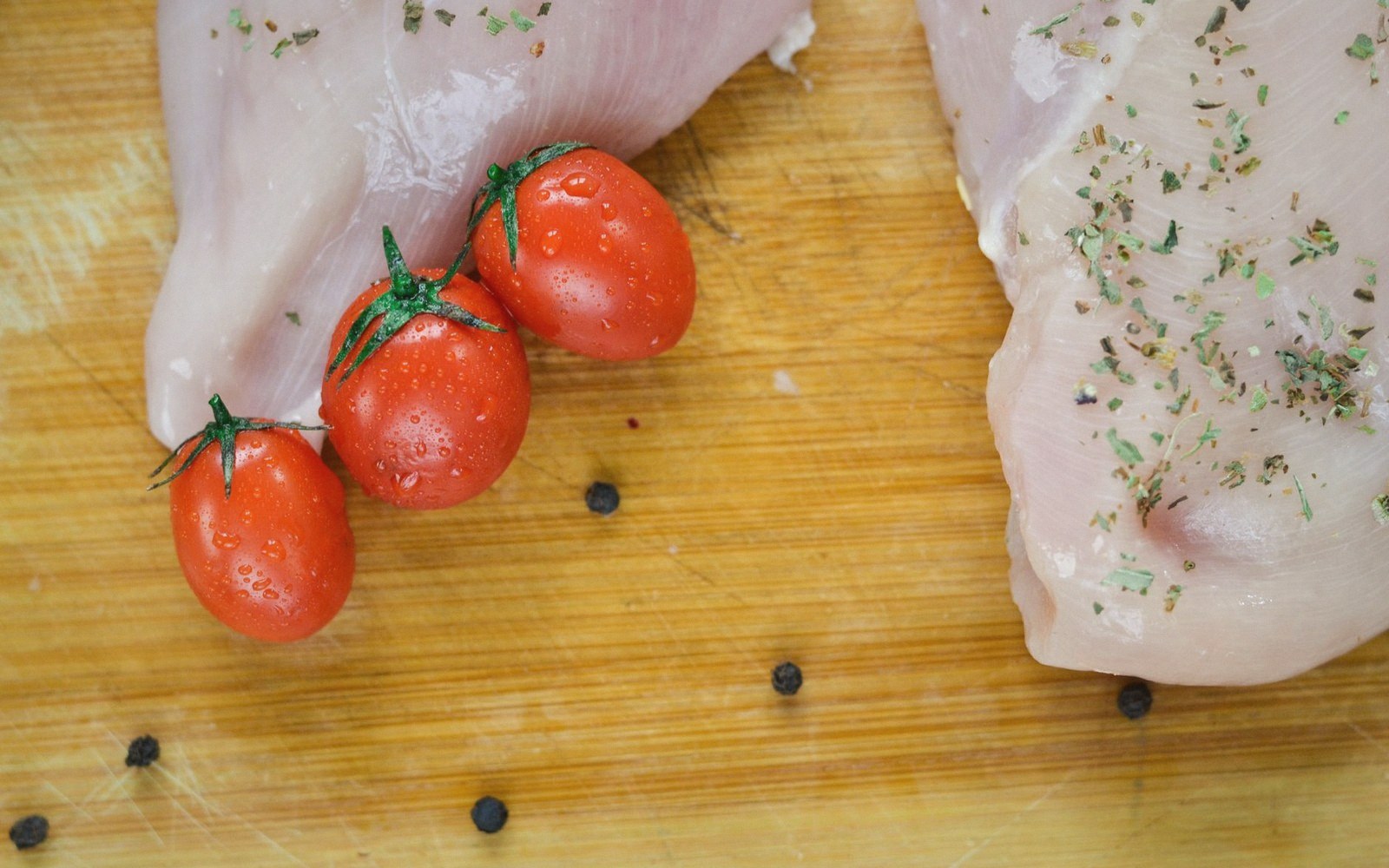
A dedicated board for raw poultry — or at least a thoroughly washed one that has not just held anything else — is the beginning of it. Plastic or composite boards are easier to sanitise than wood; either works if treated properly. The habit that matters is not the material but the sequence: raw chicken goes down, raw chicken comes off, the board is washed before anything else touches it.
Washing means hot water and soap, scrubbing the full surface, then rinsing. A dilute bleach solution — one tablespoon of unscented bleach to a gallon of water — applied afterwards and left for a minute before rinsing will kill what soap misses. This is not complicated, and it does not require specialist products.
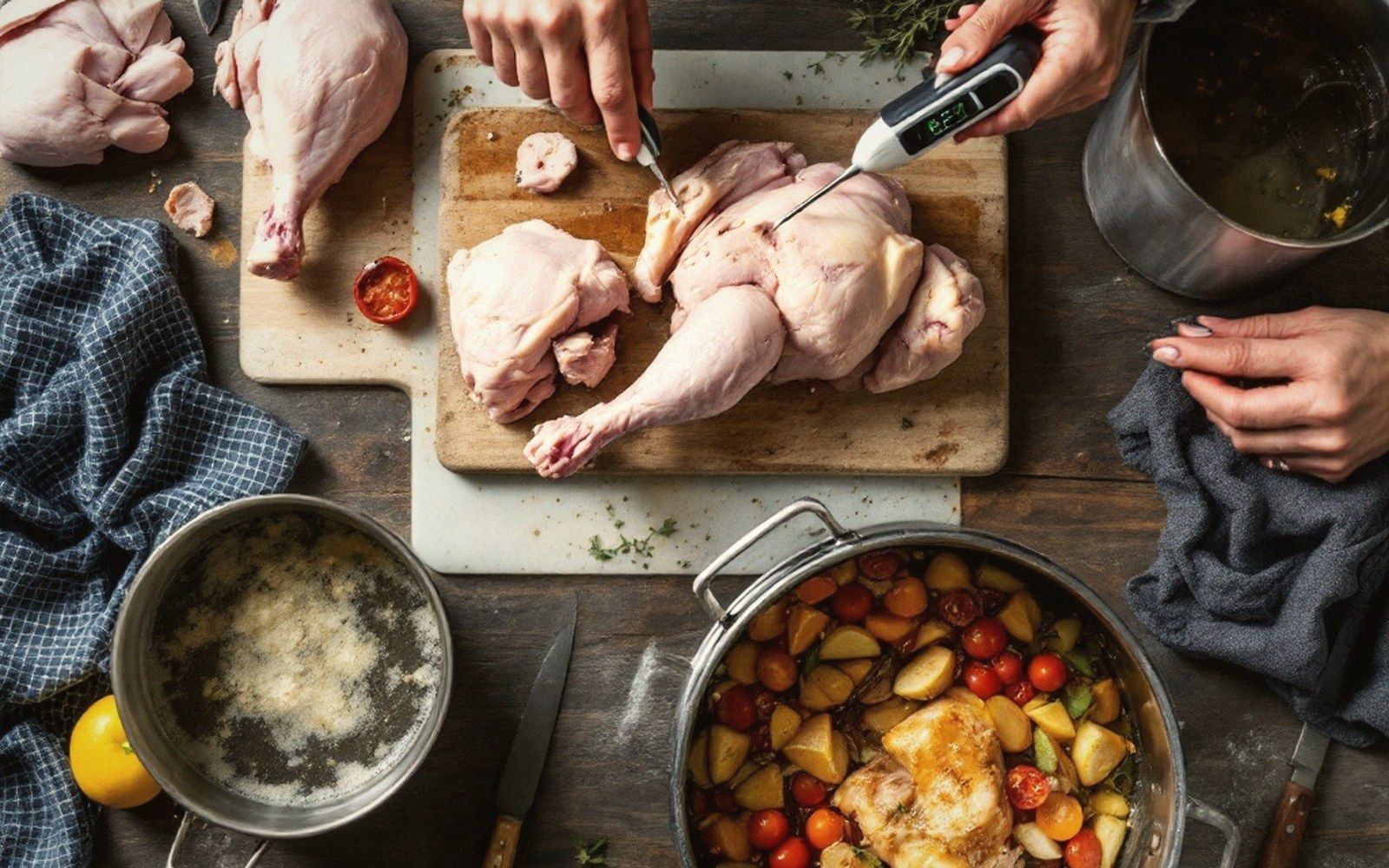
Cross-contamination is the practical hazard. Juices from raw poultry carry Salmonella and Campylobacter; both are destroyed by proper cooking, but both will transfer readily to a salad, a cut fruit or a rested roast if the board, the knife or the hands that touched them are not clean first. The issue is never that the raw chicken is handled at all — it is whether anything that will not be cooked afterwards encounters what was on it.
Hands are as important as the board. Wash them after handling raw poultry and before touching anything else. This is the one step most often skipped mid-prep when a recipe calls for reaching for salt or adjusting heat, and it is the one most worth building into instinct.
Wash them after handling raw poultry and before touching anything else.
Raw poultry should move from the refrigerator to the board and not sit at room temperature for extended periods. There is no conventional food-safety reason to rinse a raw chicken under the tap — the practice spreads fine droplets across the sink and surrounding surfaces without reducing bacterial load on the bird itself, since cooking accomplishes what rinsing cannot. Government food-safety agencies in the UK, US and elsewhere have stated this clearly for years.
Knives that touched raw poultry get washed when the bird goes into the pan. The board follows. Neither is set aside to do later. The sequence — prep, cook, clean — is the whole of it, and the cleaning step is not optional or decorative. It exists because the temperatures that make chicken safe for eating do nothing for the surfaces the raw bird left behind.
None of this is interesting. It is the floor the rest of the cooking stands on.